Killeen Texas Revised Uniform Anatomical Gift Act Donation
Description
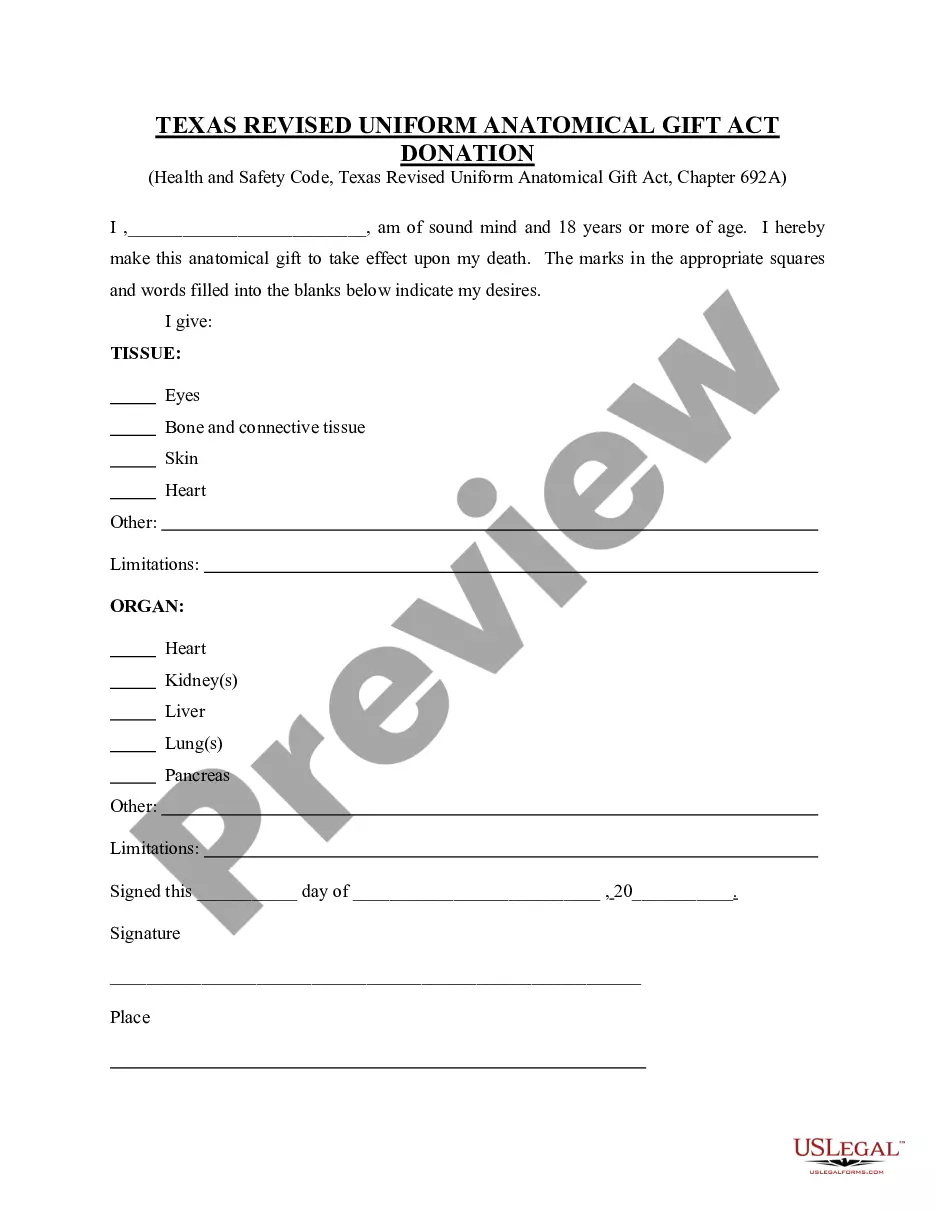
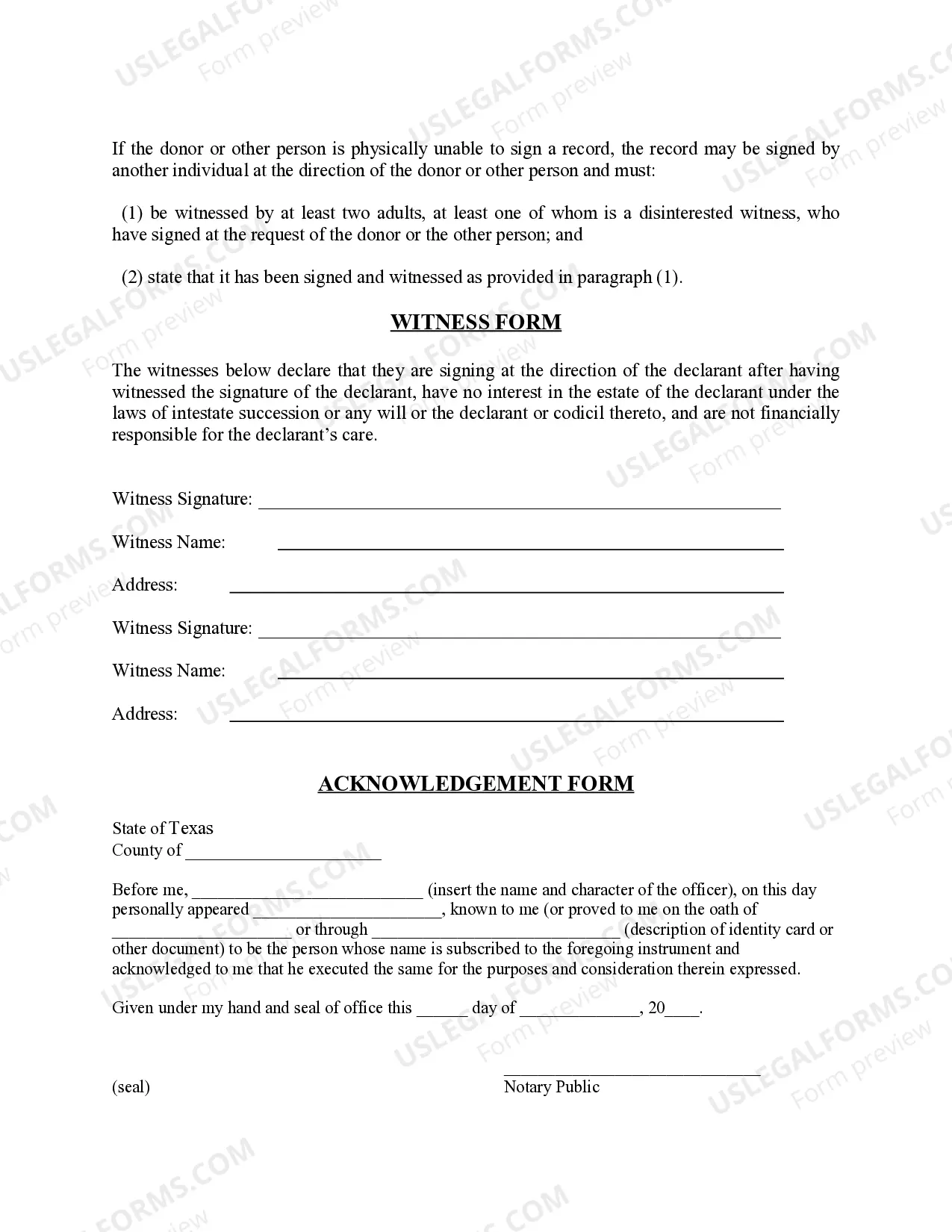

How to fill out Texas Revised Uniform Anatomical Gift Act Donation?
If you have previously utilized our service, Log In to your account and save the Killeen Texas Revised Uniform Anatomical Gift Act Donation onto your device by clicking the Download button. Ensure your subscription is active. If it is not, renew it as per your payment plan.
If this is your initial experience with our service, adhere to these straightforward steps to acquire your document.
You have continuous access to all the documents you have purchased: you can locate them in your profile under the My documents section whenever you need to use them again. Utilize the US Legal Forms service to quickly locate and download any template for your personal or professional requirements!
- Ensure you’ve found an appropriate document. Browse the description and use the Preview option, if accessible, to verify if it fulfills your needs. If it does not meet your criteria, use the Search tab above to discover the correct one.
- Purchase the template. Click the Buy Now button and select a monthly or yearly subscription plan.
- Create an account and process a payment. Use your credit card information or the PayPal option to finalize the purchase.
- Retrieve your Killeen Texas Revised Uniform Anatomical Gift Act Donation. Choose the file format for your document and save it to your device.
- Complete your form. Print it out or utilize professional online editors to fill it out and sign it digitally.
Form popularity
FAQ
You may be deemed ineligible to donate organs for several reasons under the Killeen Texas Revised Uniform Anatomical Gift Act Donation. If you suffer from certain chronic illnesses, or if you have a recent history of high-risk behaviors, such as drug use, eligibility may wane. Also, inadequate organ function due to age or medical conditions can contribute to ineligibility. It’s beneficial to regularly review your health status with medical experts for clarity.
Organ donation exclusions arise from various health and lifestyle conditions. Factors such as severe neurological damage or terminal illnesses can lead to exclusion from the Killeen Texas Revised Uniform Anatomical Gift Act Donation. Moreover, certain infectious diseases can pose risks that prevent donation. Understanding these exclusions can help individuals make informed decisions about their donation status.
Certain conditions may limit you from being an organ donor as outlined by the Killeen Texas Revised Uniform Anatomical Gift Act Donation. Specific medical conditions such as infectious diseases or certain cancers can disqualify potential donors. Moreover, age and overall health are considered during the assessment process. It is important to consult with healthcare professionals to clarify your eligibility.
Several factors may disqualify you from being an organ recipient under the Killeen Texas Revised Uniform Anatomical Gift Act Donation. Age, underlying medical conditions, or a history of substance abuse can affect eligibility. Additionally, a lack of support systems and psychological readiness also play a role. Understanding these factors can guide your decisions and help you navigate your options.
Yes, in Texas, families can override a registered decision to donate organs. Even if an individual has expressed their wish to donate, the Killeen Texas Revised Uniform Anatomical Gift Act Donation allows family members to discuss and potentially change that decision. It is essential for donors to communicate their desires with family, ensuring everyone understands their intentions to aid clarity during difficult moments.
In Texas, organ donation is governed by the Killeen Texas Revised Uniform Anatomical Gift Act Donation, which outlines the legal framework for this compassionate act. Individuals can register to be donors via the state's online registry or by indicating their wishes on a driver's license. Healthcare professionals coordinate with transplant organizations to ensure that donations happen smoothly and ethically once the donor's wishes are confirmed.
The organ donation process typically involves five key steps: registration, evaluation, consent, recovery, and transplantation. Initially, individuals register their wish to donate, influenced by the Killeen Texas Revised Uniform Anatomical Gift Act Donation. Next, a medical team evaluates the potential donor, obtains consent, recovers the organs, and finally, they are transplanted to recipients in need. This structured process ensures efficiency and respect for all involved.
Several factors can disqualify someone from organ donation, such as certain medical conditions and infectious diseases. However, many health issues do not automatically exclude you from being a donor. The Killeen Texas Revised Uniform Anatomical Gift Act Donation encourages individuals to discuss their medical history with healthcare providers, who can determine eligibility on a case-by-case basis.
After death, organs are typically removed for donation within hours. The precise timing depends on various factors, including the individual's medical condition and the transportation logistics. Under the Killeen Texas Revised Uniform Anatomical Gift Act Donation, hospitals work swiftly to assess donor eligibility and prepare for organ recovery. Prompt action is vital to ensure that organs remain viable for transplantation.
To register as an organ donor in Texas, visit the Texas Department of Public Safety's website or submit an application through uslegalforms. The process is user-friendly and typically requires basic personal information. By registering, you take a significant step towards contributing to Killeen Texas Revised Uniform Anatomical Gift Act Donation and helping those in need.