This form is a Consignment Agreement. The consignor agrees to deliver to the consignee certain property for the purpose of conducting a sale of the property. The form must be signed in the presence of a notary public.
Nassau New York Consignment Agreement
Category:
State:
Multi-State
County:
Nassau
Control #:
US-00461
Format:
Word;
Rich Text
Instant download
Description
Free preview

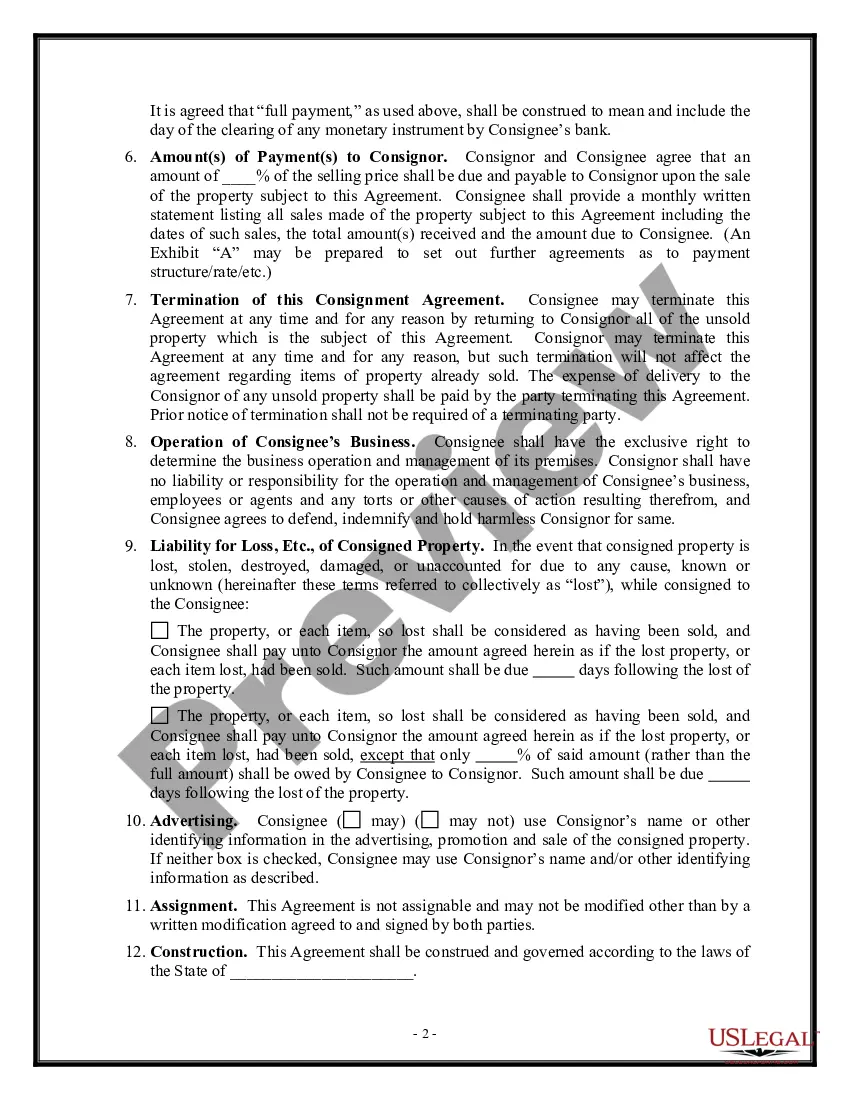
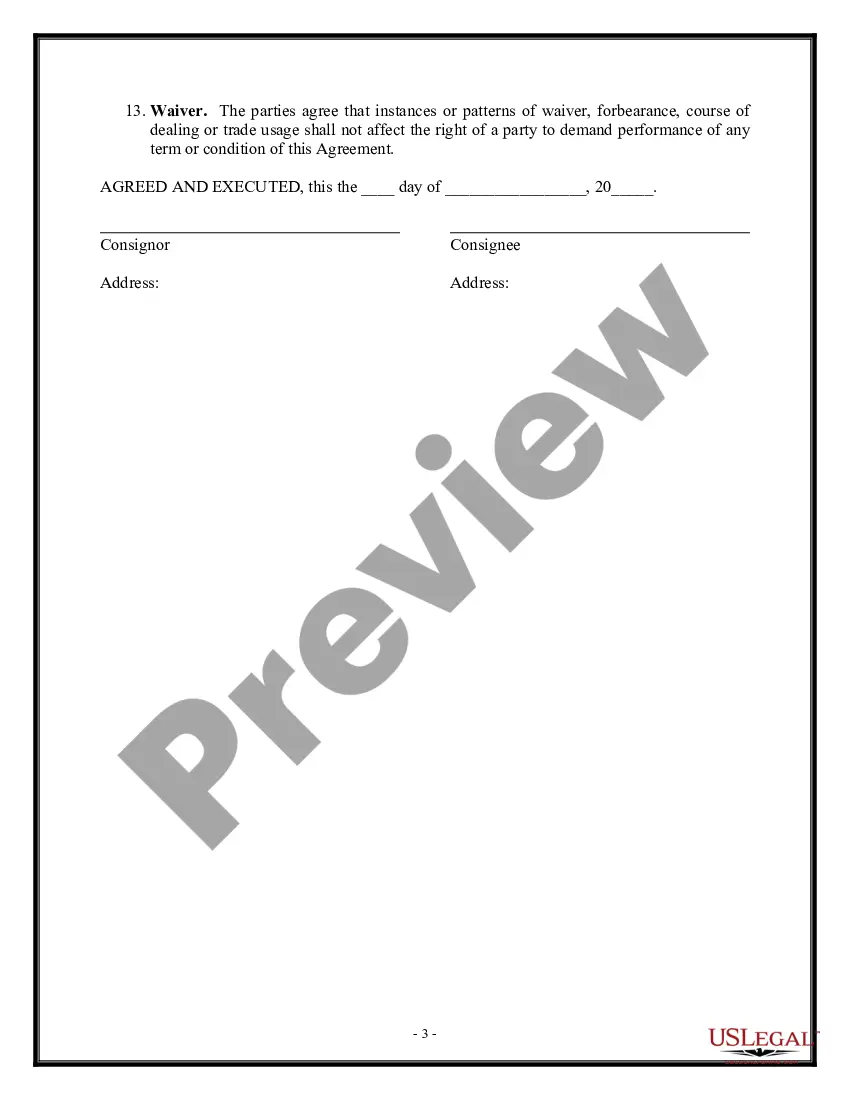
How to fill out Consignment Agreement?
Drafting legal documents can be challenging.
Moreover, if you opt to employ a legal expert to create a commercial agreement, ownership transfer documents, prenuptial contract, dissolution papers, or the Nassau Consignment Agreement, it could be quite expensive. Therefore, what is the most sensible approach to save both time and money while preparing authentic forms compliant with your state and local regulations.
Review the form description and utilize the Preview option, if provided, to verify it's the sample you require. Don't fret if the form does not meet your needs—search for the appropriate one in the header. Click Buy Now when you locate the desired sample and select the most suitable subscription. Log In or create an account to complete your subscription payment. Complete the purchase using a credit card or via PayPal. Choose the file format for your Nassau Consignment Agreement and save it. Once done, you can print it out and fill it out manually or upload the samples to an online editor for a quicker and more convenient completion. US Legal Forms enables you to use all purchased documents multiple times—you can find your templates in the My documents tab in your profile. Give it a try today!
- US Legal Forms is a superb alternative, whether you're looking for templates for personal or business purposes.
- US Legal Forms is the largest online collection of state-specific legal documents, offering users access to current and professionally validated forms for any situation, all organized in one location.
- Thus, if you need the latest version of the Nassau Consignment Agreement, you can effortlessly find it on our site.
- Acquiring the documents requires only a short amount of time.
- If you already possess an account, ensure your subscription is active, Log In, and select the sample with the Download button.
- If you haven't yet subscribed, here's how you can obtain the Nassau Consignment Agreement.
- Browse the page and confirm that there is a sample available for your area.
Form popularity
FAQ
In New York, there is no specified minimum amount for a mechanic's lien. The amount arises from the unpaid work or material provided. It's crucial to gather all relevant documentation and, if you are working under a Nassau New York Consignment Agreement, ensure this information is included. This clarity can help reinforce your claim.
The agreement should list each party's name along with their roles and responsibilities in the business transaction. The consignor should describe the goods the consignee will receive, including the quantity and model numbers of the consigned goods and any serial numbers or factory codes.
Consignment is an arrangement in which goods are left with a third party to sell. The party that sells the goods on consignment receives a portion of the profits, either as a flat rate fee or commission. Selling via a consignment arrangement can be a low-commission, low-time-investment way of selling items or services.
A consignment agreement allows someone else to sell something you own, on your behalf. Even after the consignor's fee or commission, selling this way may result in your receiving a better price.
A consignment agreement is a contract between the consignor and the consignee and should include the following basic provisions:Parties. Identify the consignor and consignee with their names and addresses.Item(s) for Sale.Pricing.Payment.Expenses.Record-Keeping.Ownership.Insurance.More items...
A consignment agreement is an agreement between a consignee and consignor for the storage, transfer, sale or resale and use of the commodity. The consignee may take goods from the consignment stock for use or resale subject to payment to the consignor agreeably to the terms bargained in the consignment agreement.
It allows a seller (manufacturer) to place merchandise in wholesale and retail outlets for additional exposure to the buying market. It can provide an incentive for the wholesaler and retailer to stock goods in inventory because their capital is not tied up in inventory.
A consignment agreement is a contract that places an item the consignor (or owner) owns with the consignee (or seller) for the consignee to sell. The consignee often takes a commission or fee and then the remainder of the sale price is paid to the consignor.
What Percentage Do Consignment Shops Take? Consignment shops typically take a 40% commission, which is considered a 60/40 split. 40/60 or 50/50 split is also appropriate, depending on the products you're selling and the type of consignment shop you're selling through.