Arlington Texas Guide for Protecting Deceased Persons from Identity Theft
Description
Form popularity
FAQ
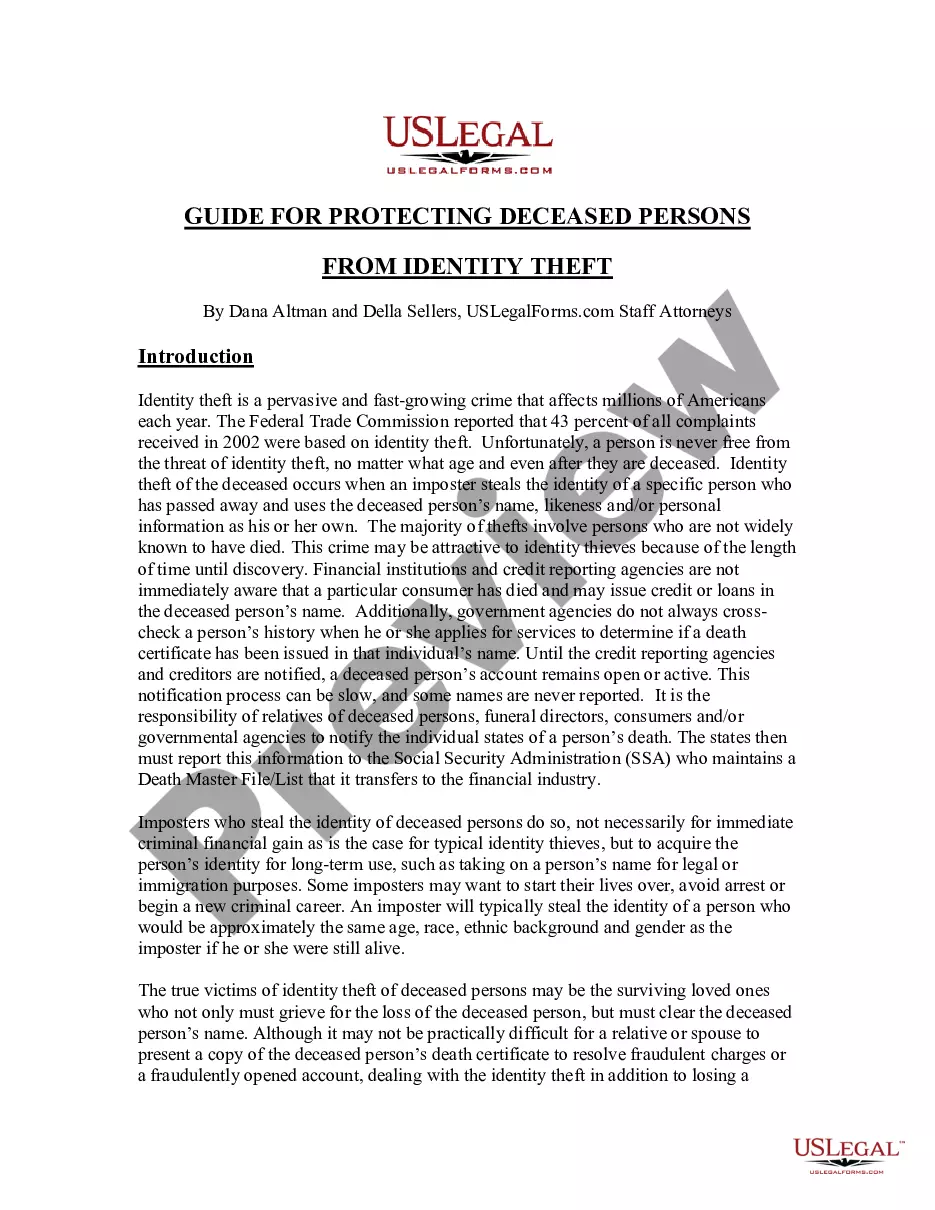
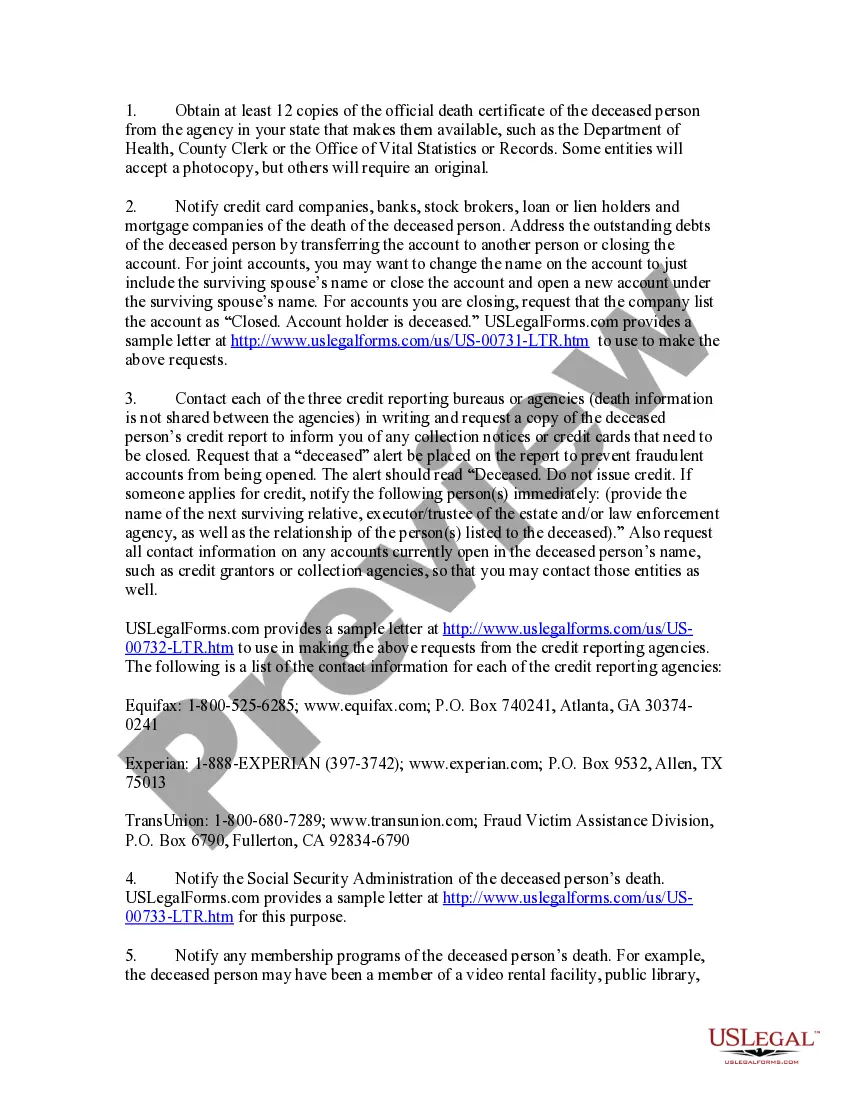
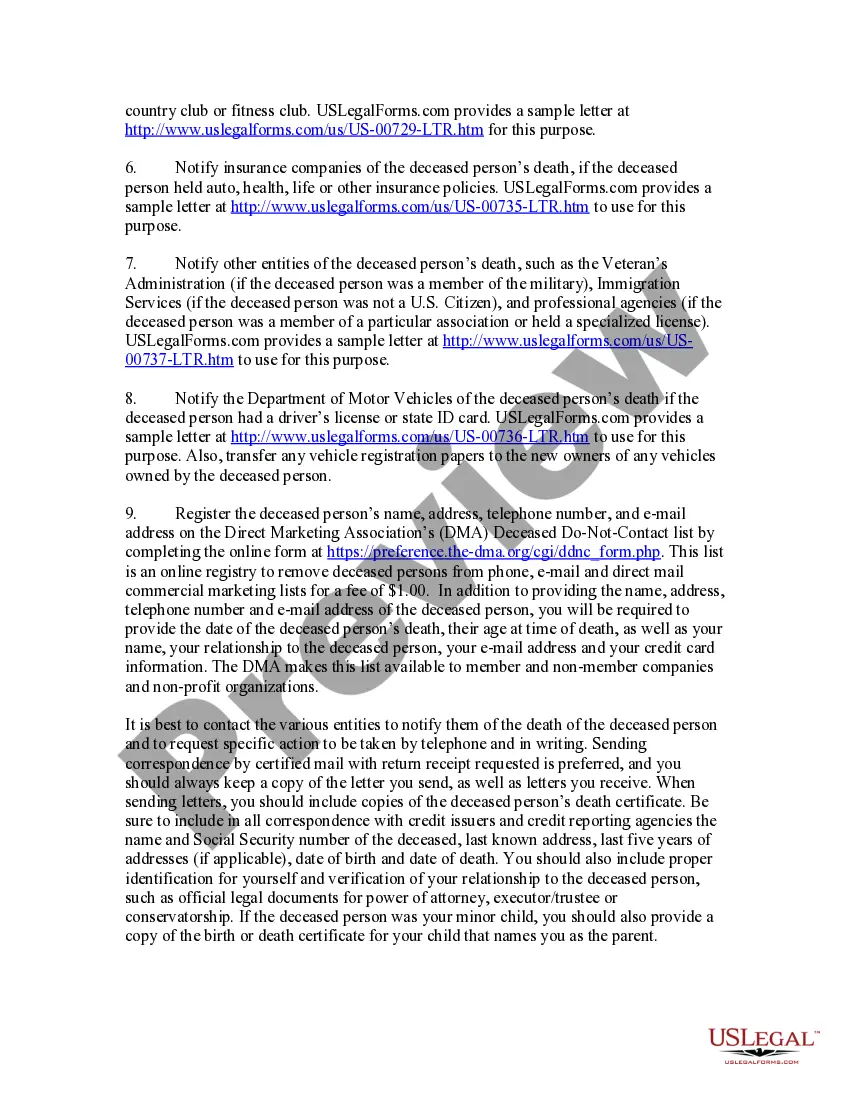
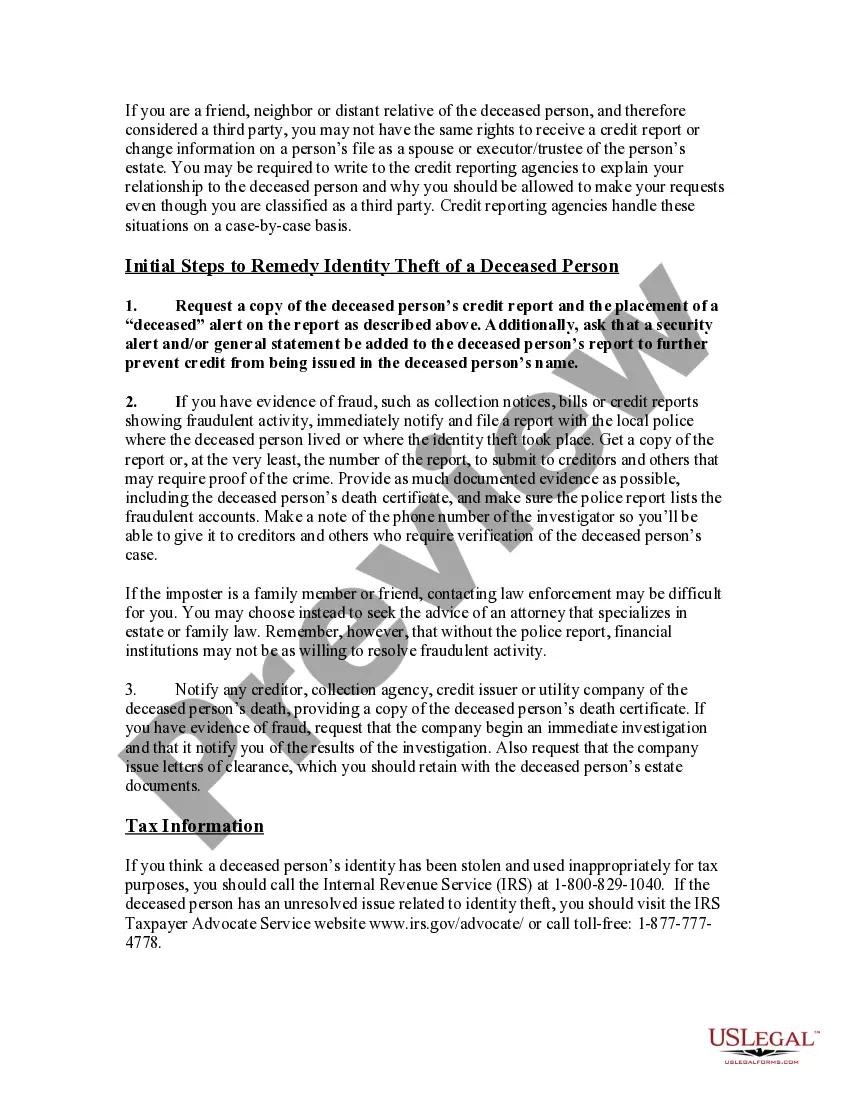
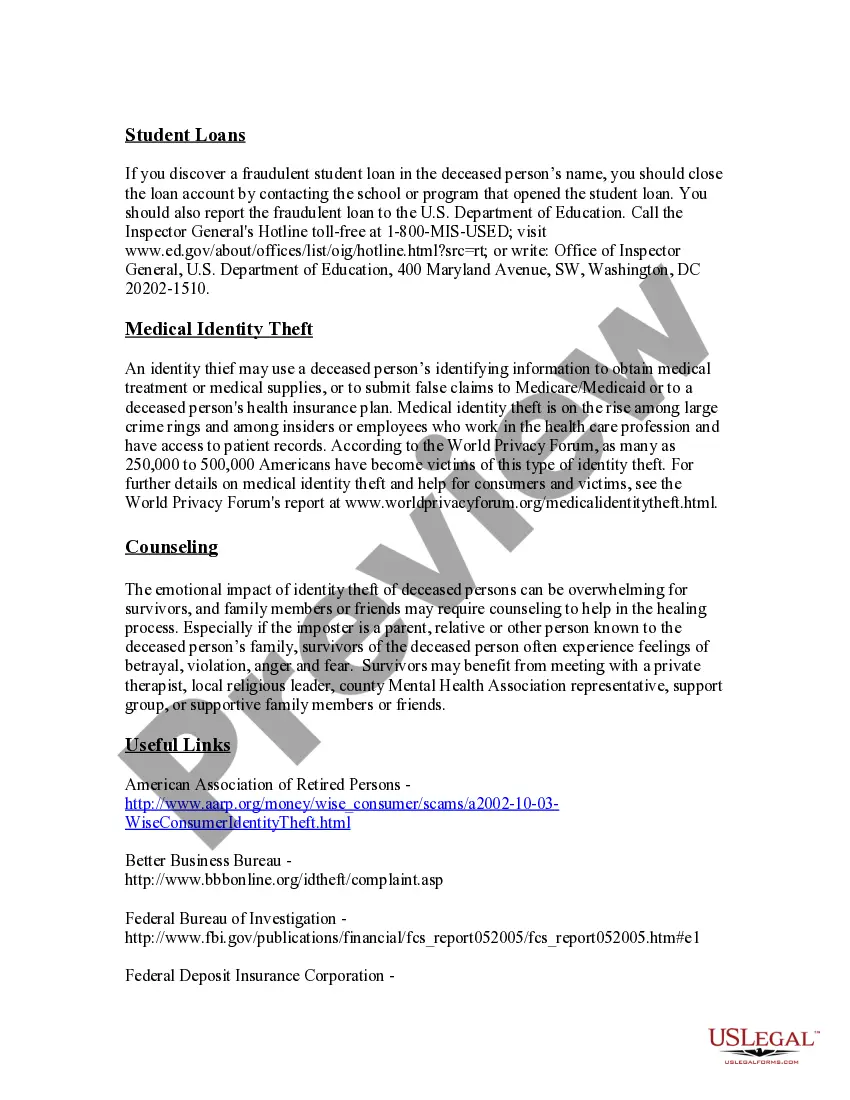
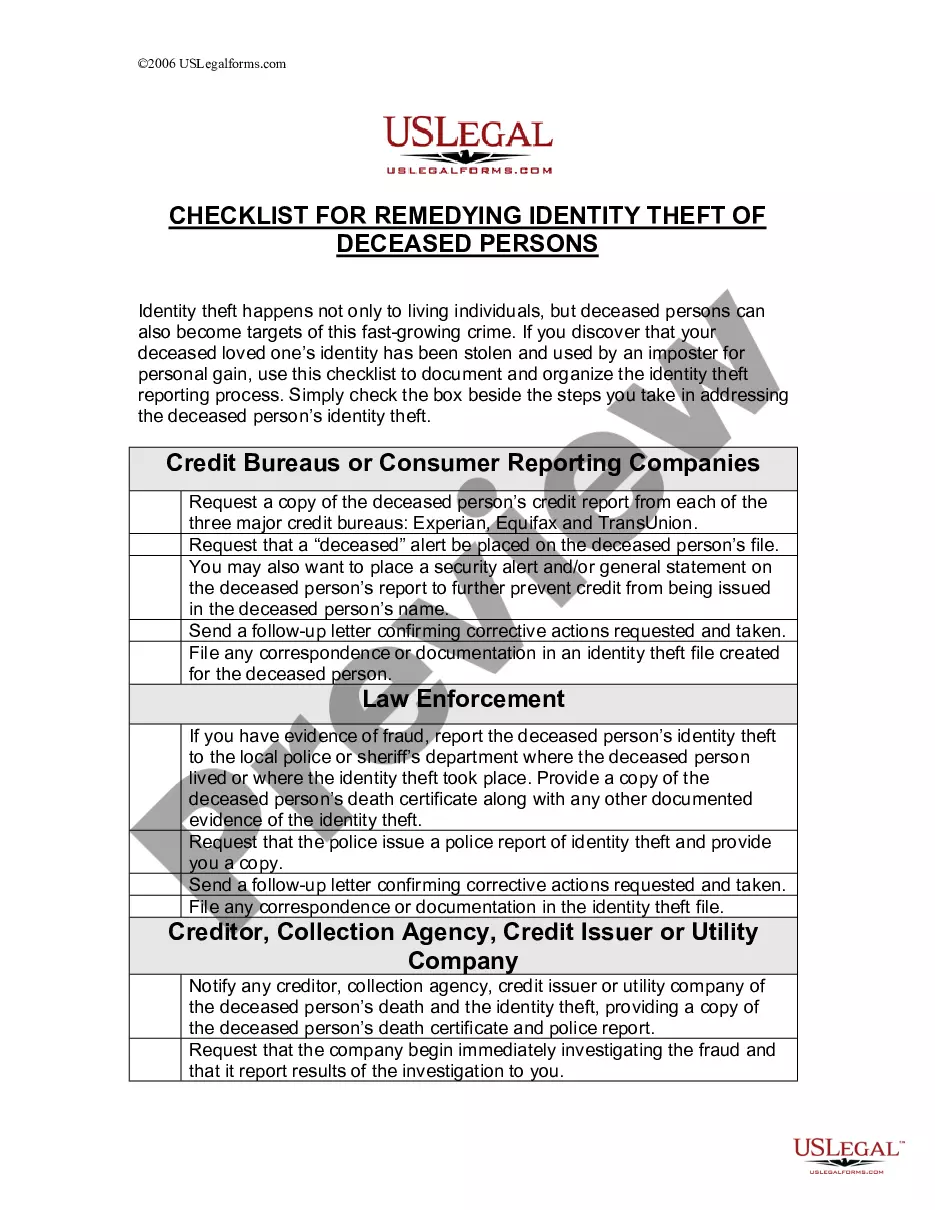
Protecting a deceased person from identity theft involves several important steps. First, gather all relevant documents and report the death to necessary agencies. Following the Arlington Texas Guide for Protecting Deceased Persons from Identity Theft will help you understand the essential actions to take, such as monitoring accounts and using USLegalForms to create necessary legal documents to safeguard their identity.
To prevent identity theft of a deceased person, you should take proactive measures immediately after their passing. Notify credit bureaus and financial institutions about the death, and consider placing a fraud alert on their credit report. The Arlington Texas Guide for Protecting Deceased Persons from Identity Theft provides detailed steps and resources, including using platforms like USLegalForms, to help you manage and secure the deceased's information effectively.
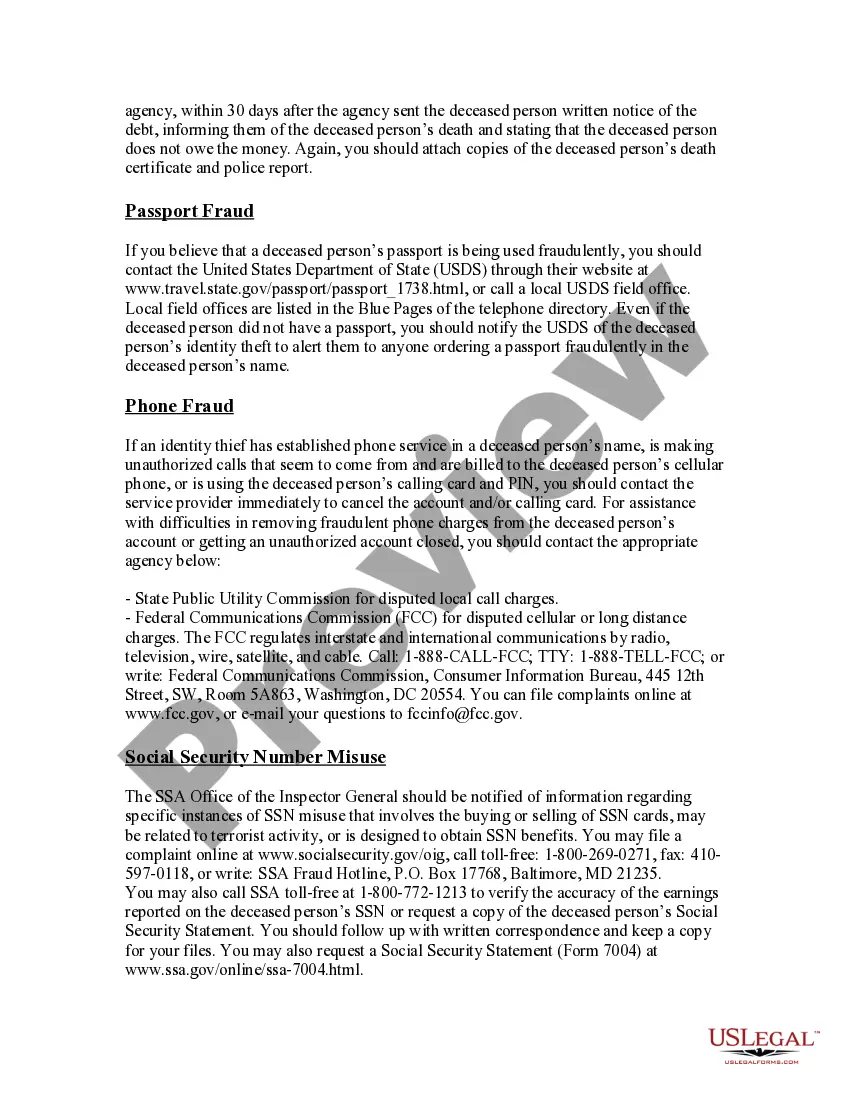
Yes, protecting a deceased person's Social Security number is crucial to prevent identity theft. Once a person passes away, their personal information can be exploited by identity thieves. The Arlington Texas Guide for Protecting Deceased Persons from Identity Theft emphasizes the importance of safeguarding this sensitive information to ensure it does not fall into the wrong hands.
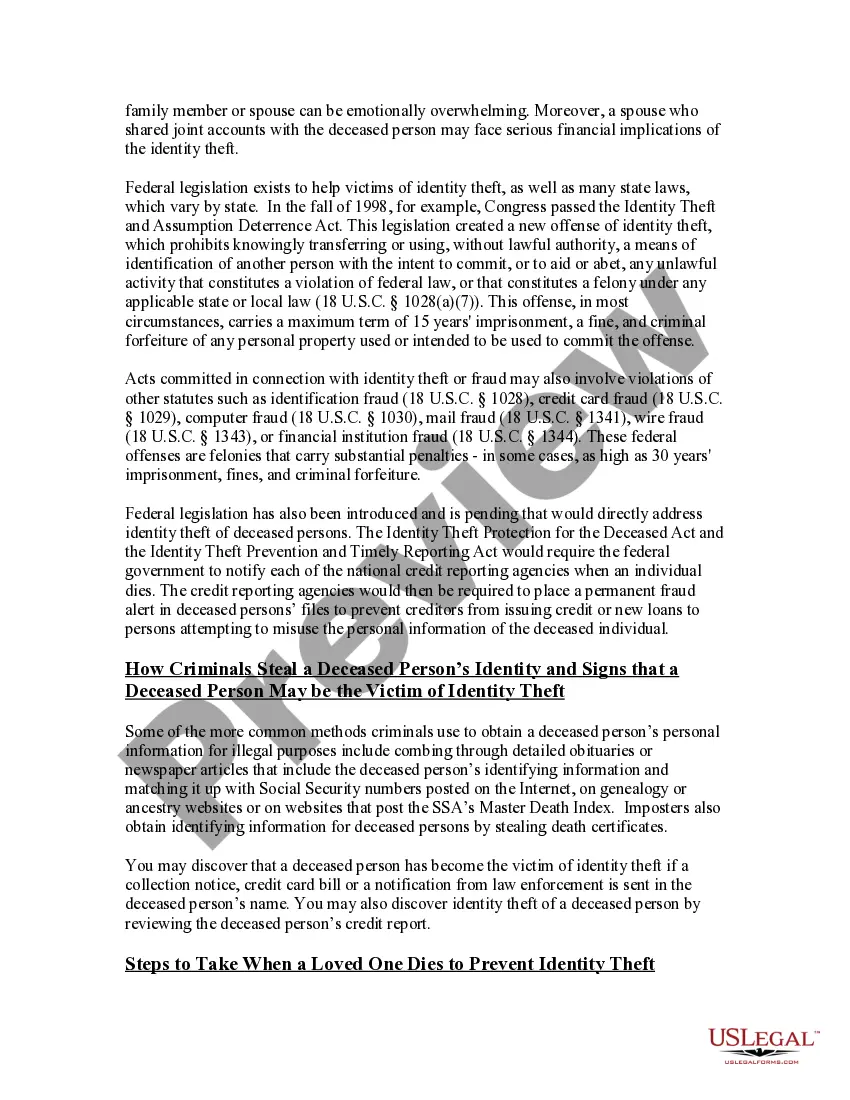
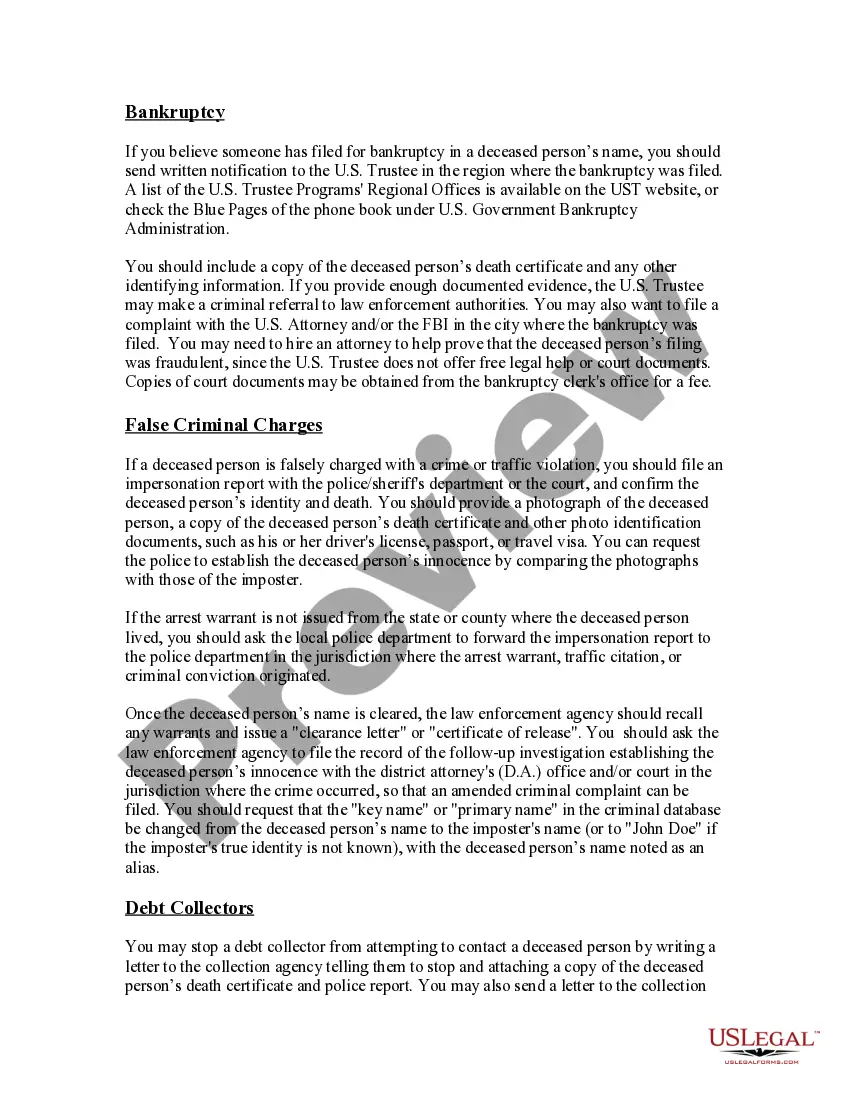
To report identity theft of a deceased person, begin by contacting the Federal Trade Commission (FTC) and providing necessary details. Next, file a report with local law enforcement to document the theft. Following these steps can help mitigate further damage. For comprehensive assistance, the Arlington Texas Guide for Protecting Deceased Persons from Identity Theft offers valuable insights, and uslegalforms can help you file the necessary paperwork.
If you discover that someone is stealing from a deceased person, act quickly to protect their estate. First, gather evidence and report the theft to the authorities. Additionally, consider using the Arlington Texas Guide for Protecting Deceased Persons from Identity Theft, which provides steps for securing assets and preventing future thefts. Resources like uslegalforms can help you navigate the legal process efficiently.
When someone steals the identity of a deceased person, it can lead to significant financial fraud. The thief may open credit accounts, take out loans, or commit other frauds using the deceased's information. This not only harms the estate but also creates complications for surviving family members. To safeguard against this, refer to the Arlington Texas Guide for Protecting Deceased Persons from Identity Theft.
Arlington House is located inside Arlington National Cemetery. From Washington, D.C. you can drive to the cemetery by crossing the Memorial Bridge.
Arlington is well connected to Washington, D.C. and the greater region with 11 Metro stations on the Orange, Silver, Blue and Yellow lines, plus easy connections to the Red Line for access to Amtrak Washington, D.C. Union Station. Check out Metro's Trip Planner for more info.
If you enjoy outdoor activities, then you may enjoy Arlington more than DC. The county offers many large parks and long hiking trails that you won't find in DC. If you are more interested in exploring a big city, then you may want to select DC.
From 1801 to 1847, what are now Arlington and a portion of the were known as Alexandria County, District of Columbia. In 1847, at the request of the local residents, Congress retroceded Alexandria County to the Commonwealth of Virginia.