Aurora Colorado Guide for Protecting Deceased Persons from Identity Theft
Description
Form popularity
FAQ
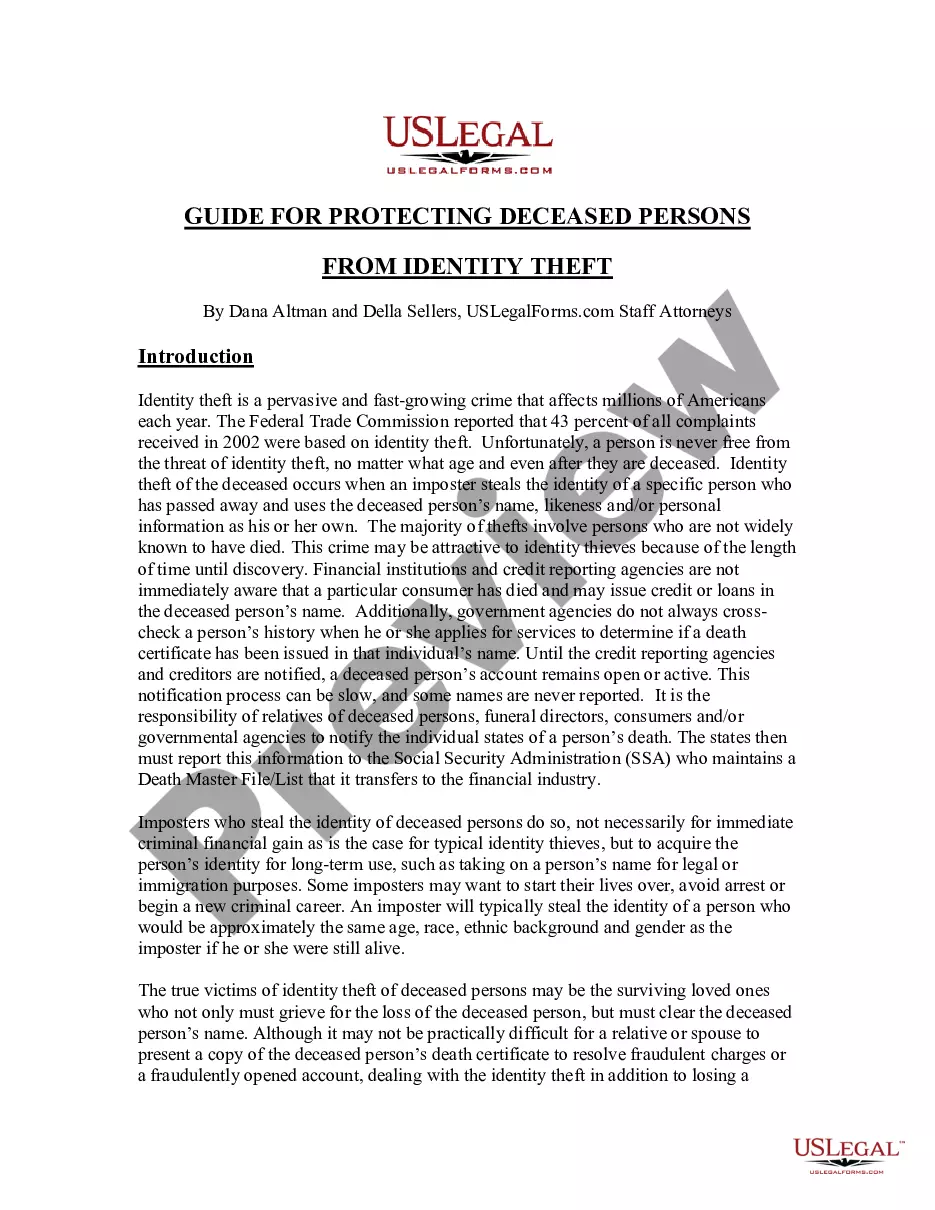
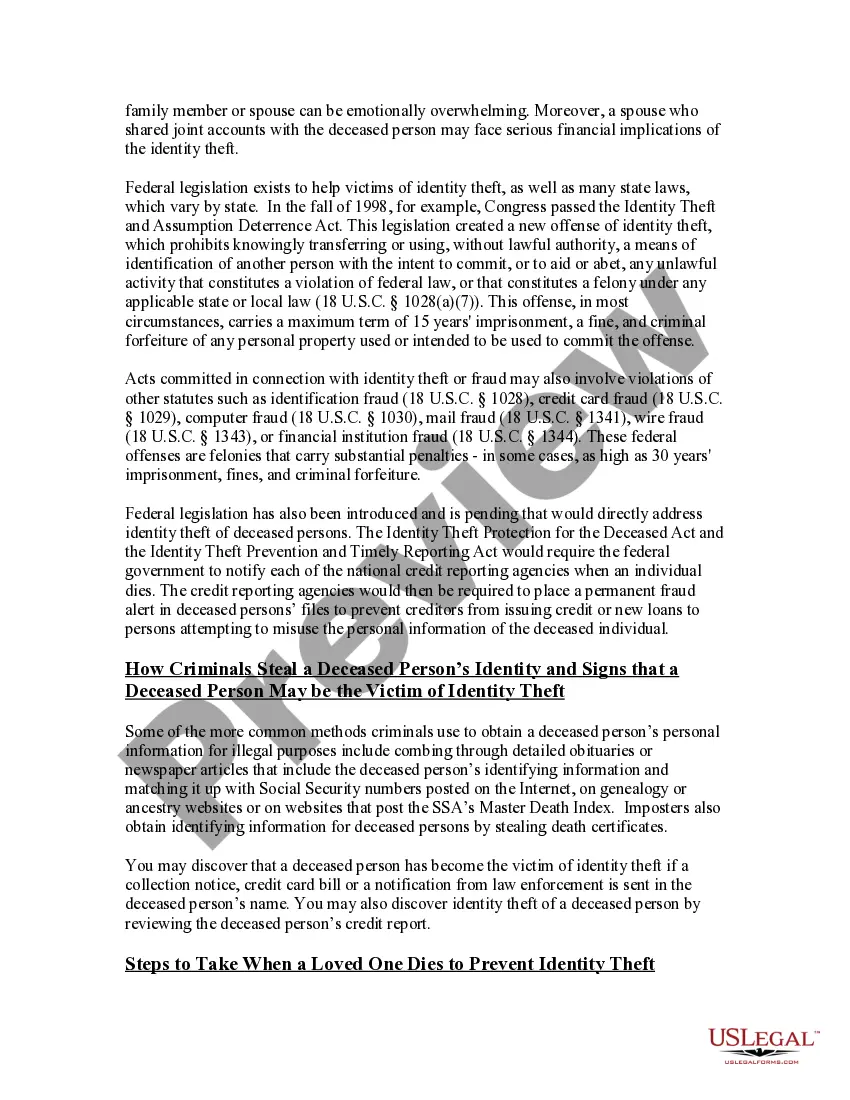
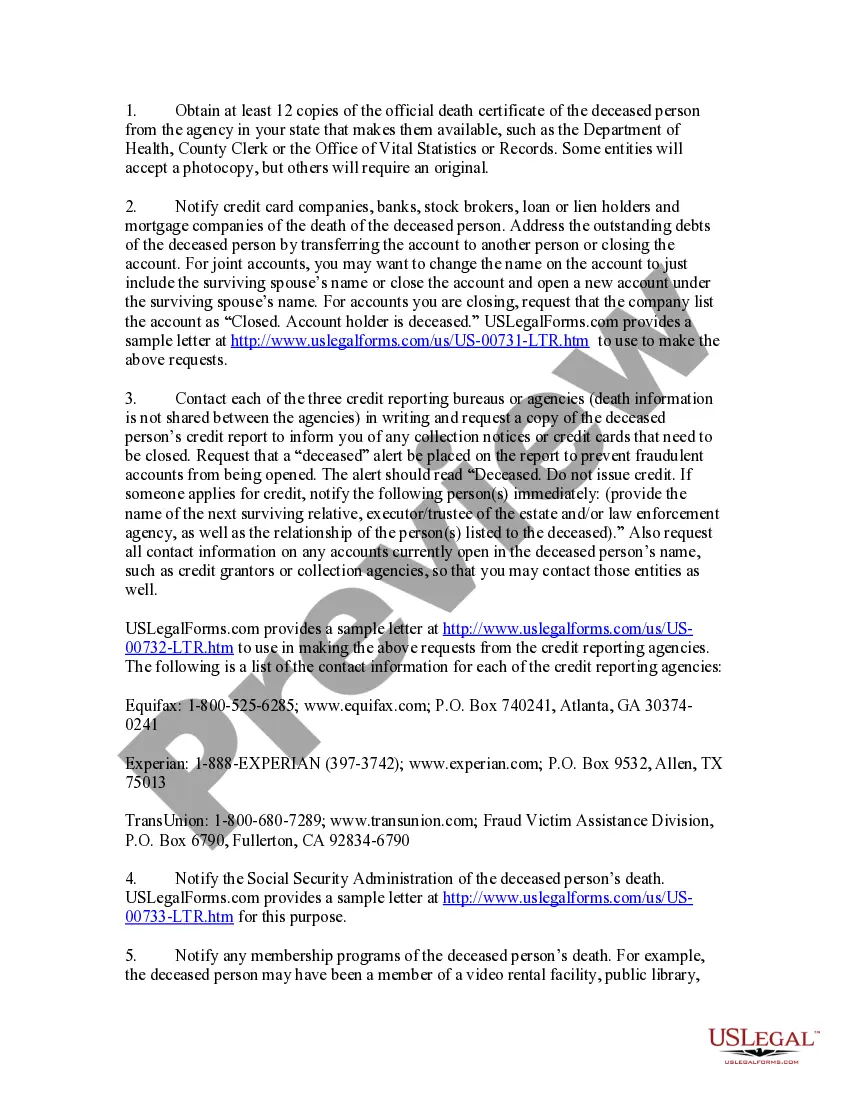
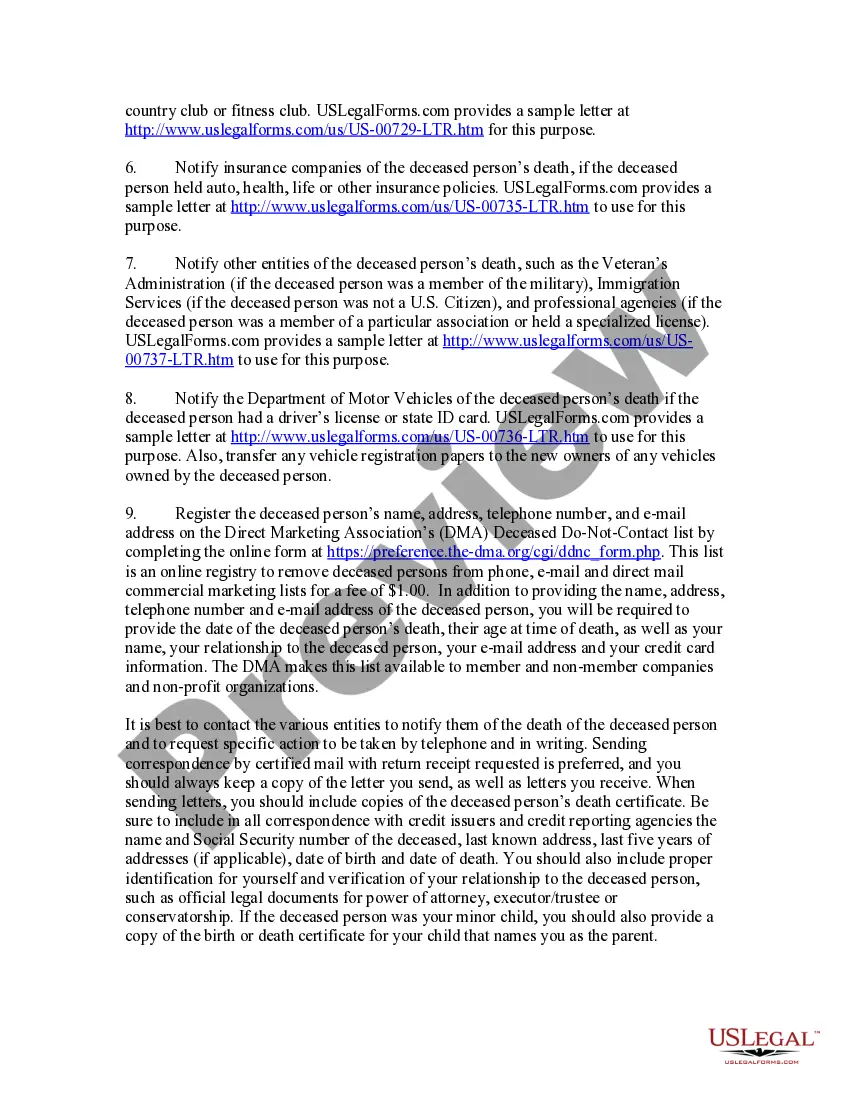
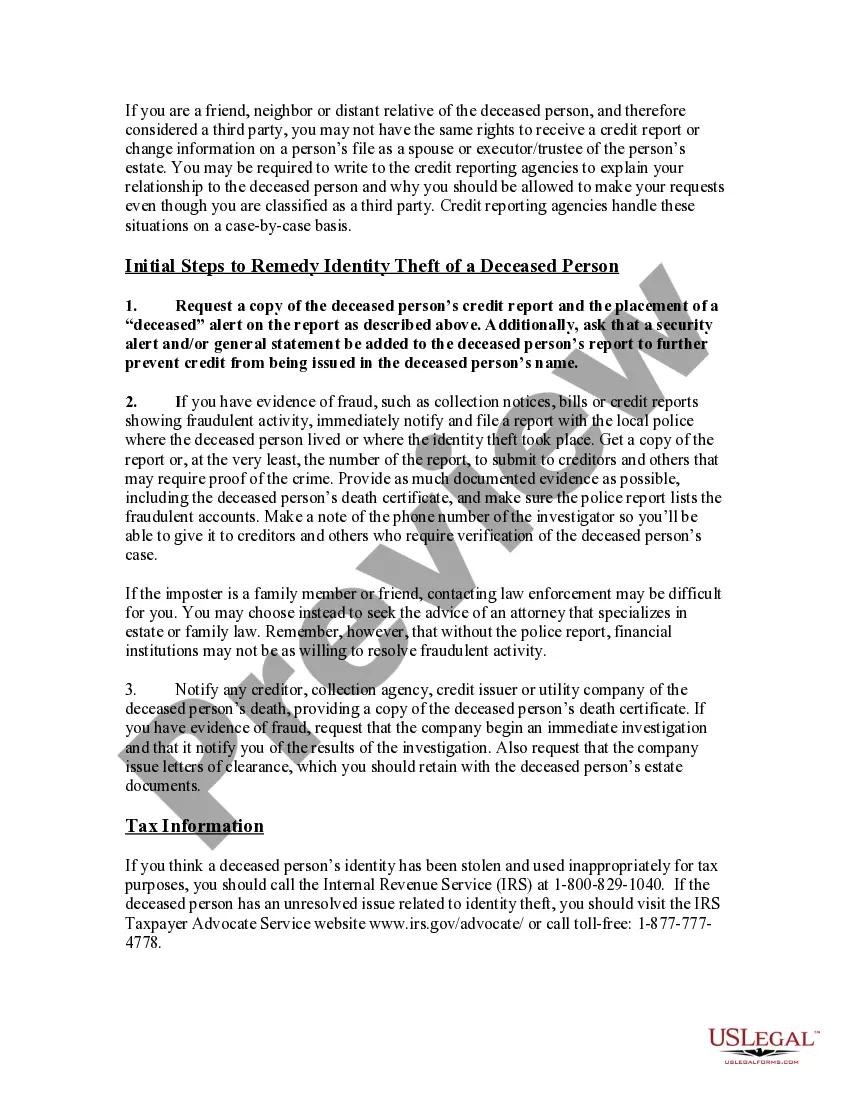
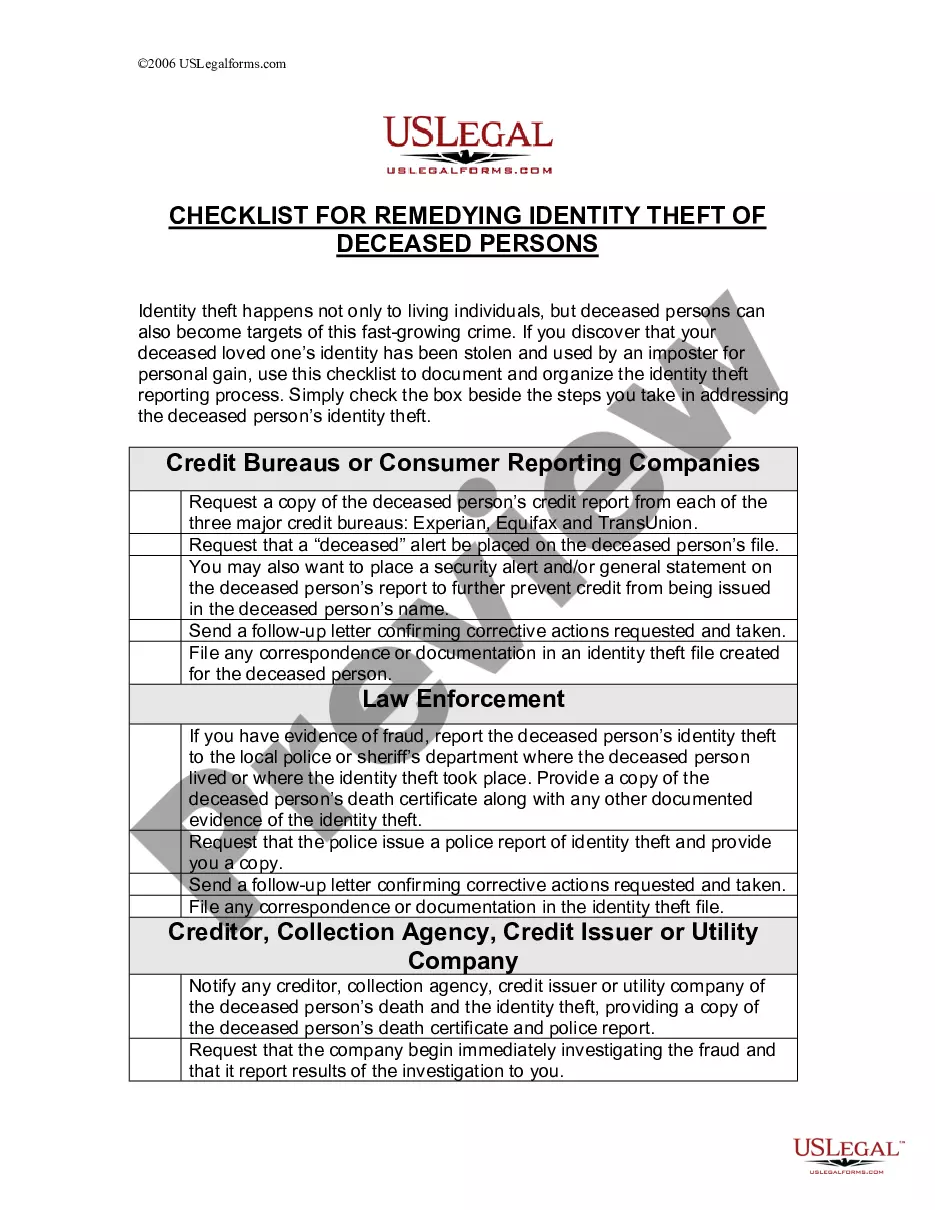
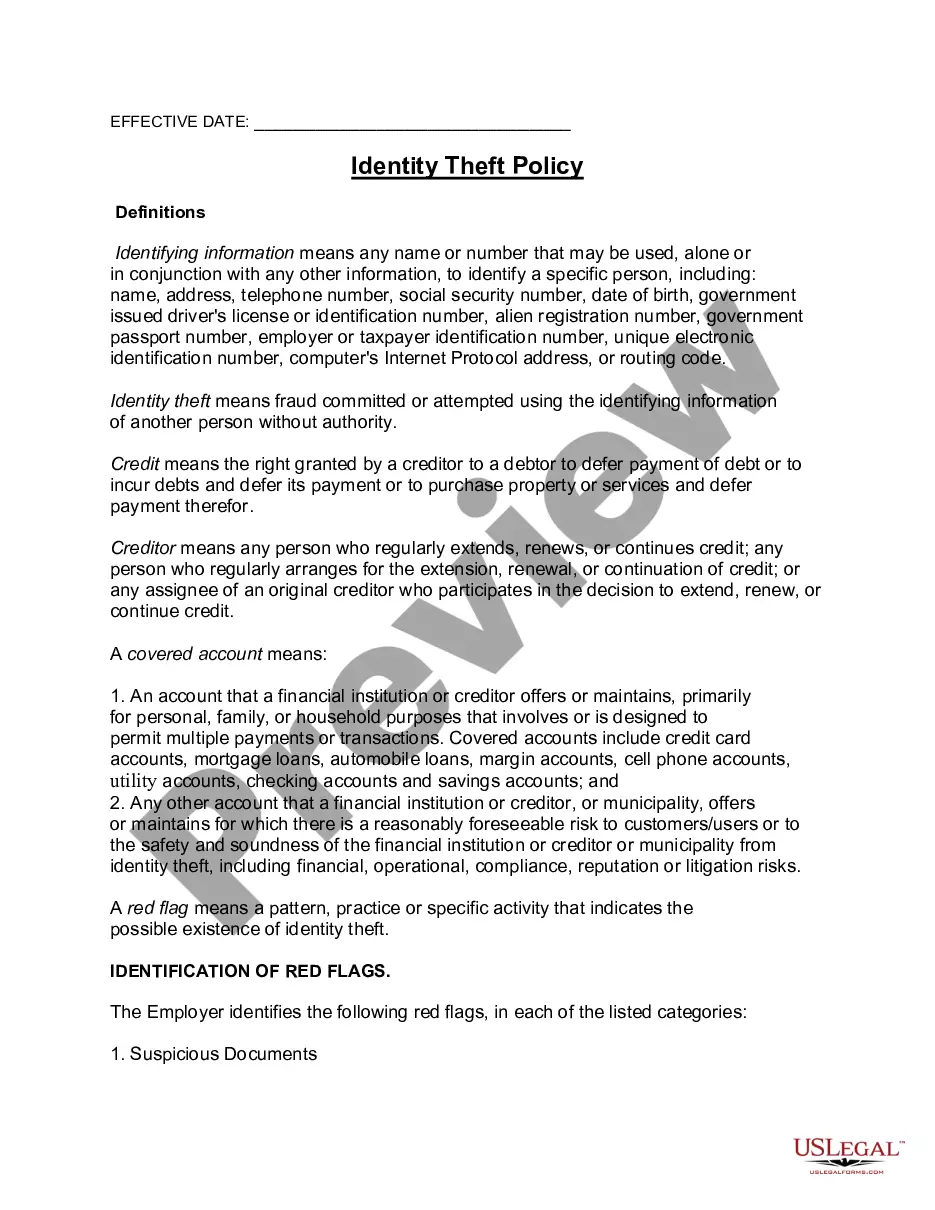
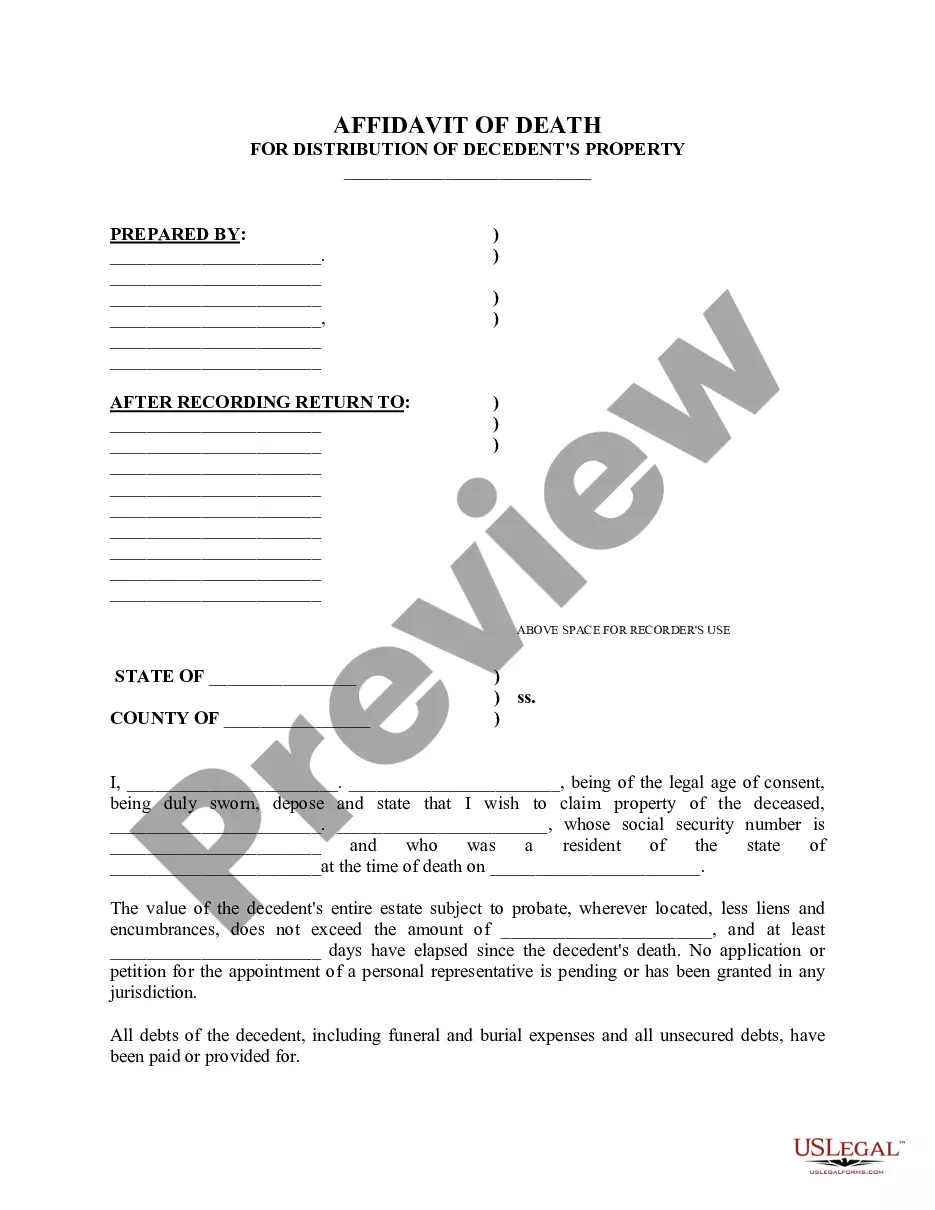
Preventing identity theft for a deceased person involves several proactive steps. First, ensure that you notify credit bureaus and financial institutions about the death. Additionally, the Aurora Colorado Guide for Protecting Deceased Persons from Identity Theft offers valuable advice on monitoring accounts and safeguarding personal information. Utilizing platforms like USLegalForms can help create the necessary documents to protect your loved one's identity effectively.
Identity theft can occur long after a person has passed away. In many cases, criminals may continue to use the identity of a deceased individual for several years if the estate is not properly managed. To prevent this, it is essential to follow the Aurora Colorado Guide for Protecting Deceased Persons from Identity Theft, which provides steps to secure important documents and notify relevant agencies.
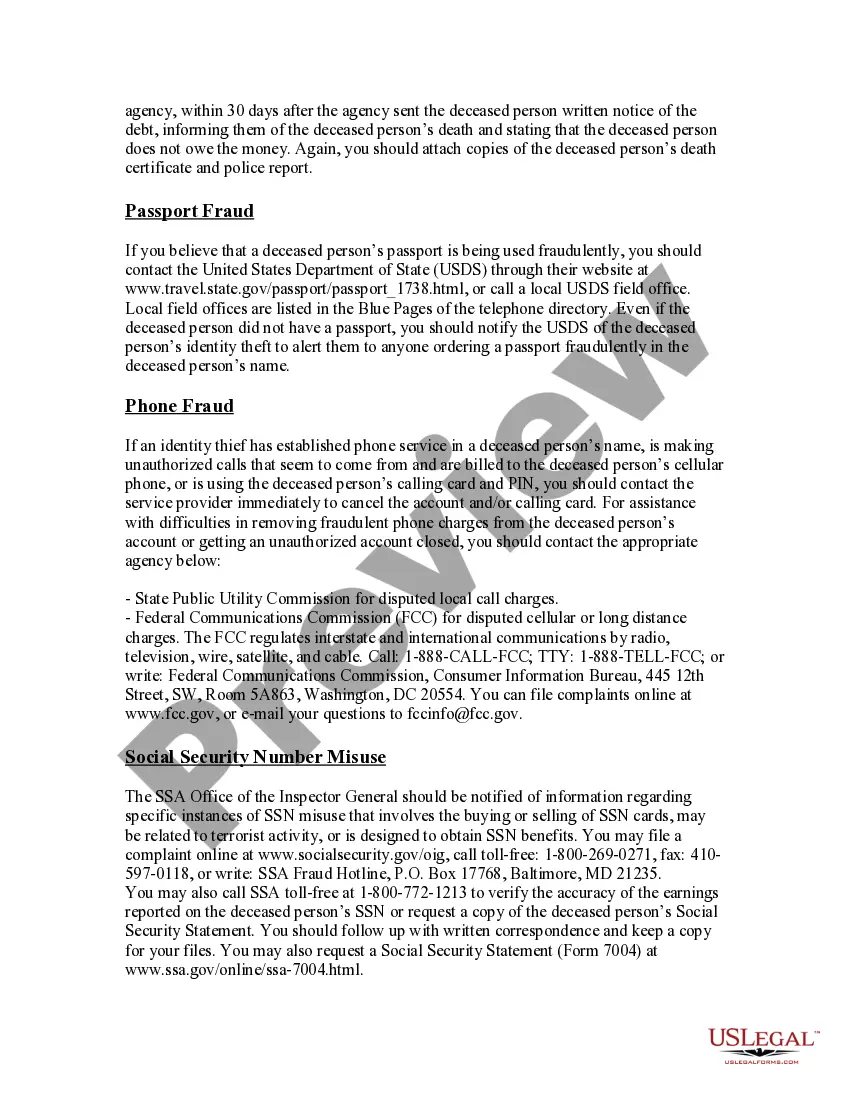
A deceased person's Social Security number can be misused for fraudulent activities, such as opening new accounts or applying for loans. This risk highlights the importance of taking proactive measures to protect their identity. Utilizing the Aurora Colorado Guide for Protecting Deceased Persons from Identity Theft can help you understand the implications and the necessary actions to safeguard against such misuse.
In Colorado, identity theft is a serious crime that can result in severe penalties. The state law defines identity theft as the unauthorized use of someone else's personal information for financial gain or other benefits. Understanding the law is crucial, and the Aurora Colorado Guide for Protecting Deceased Persons from Identity Theft offers insights into legal protections and the steps you can take to secure a deceased person's identity.
To prevent identity theft of a deceased person, start by notifying the credit reporting agencies about the death. Secure the deceased person's personal documents, such as Social Security cards and bank statements, to limit access. Additionally, consider using the Aurora Colorado Guide for Protecting Deceased Persons from Identity Theft, which provides valuable steps and resources for managing and safeguarding their identity.
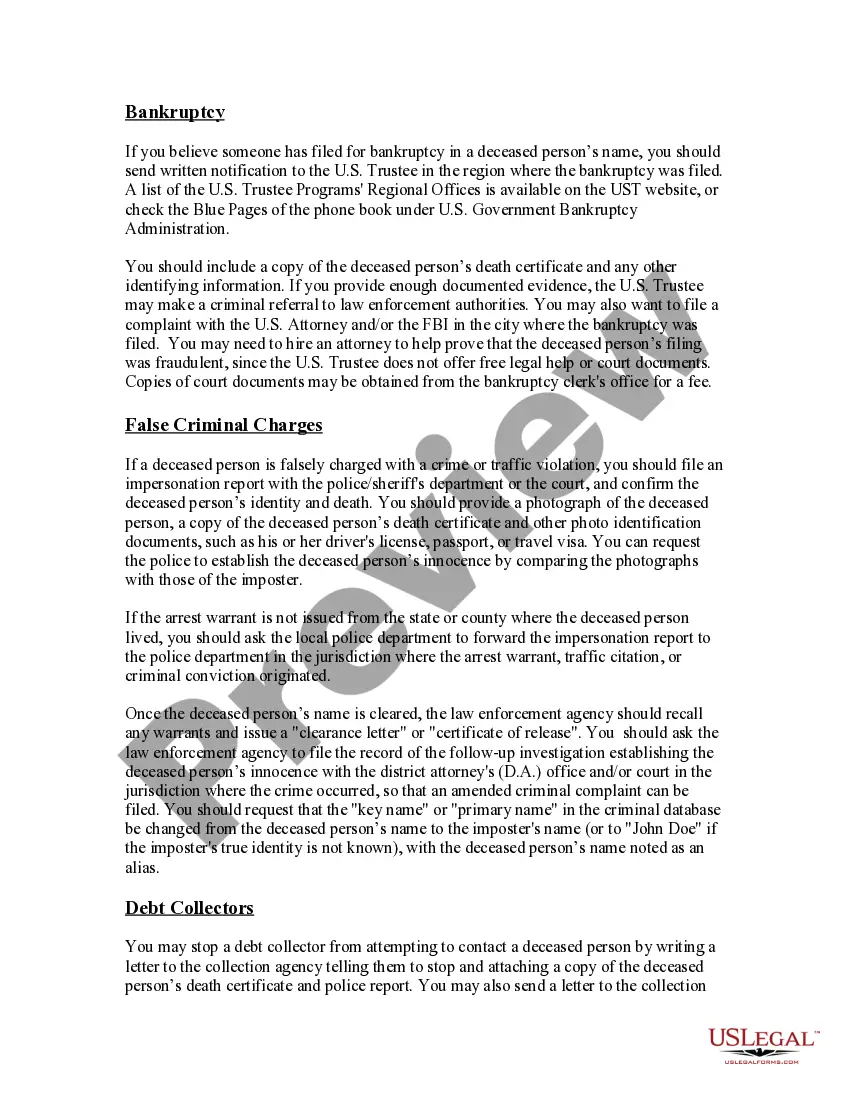
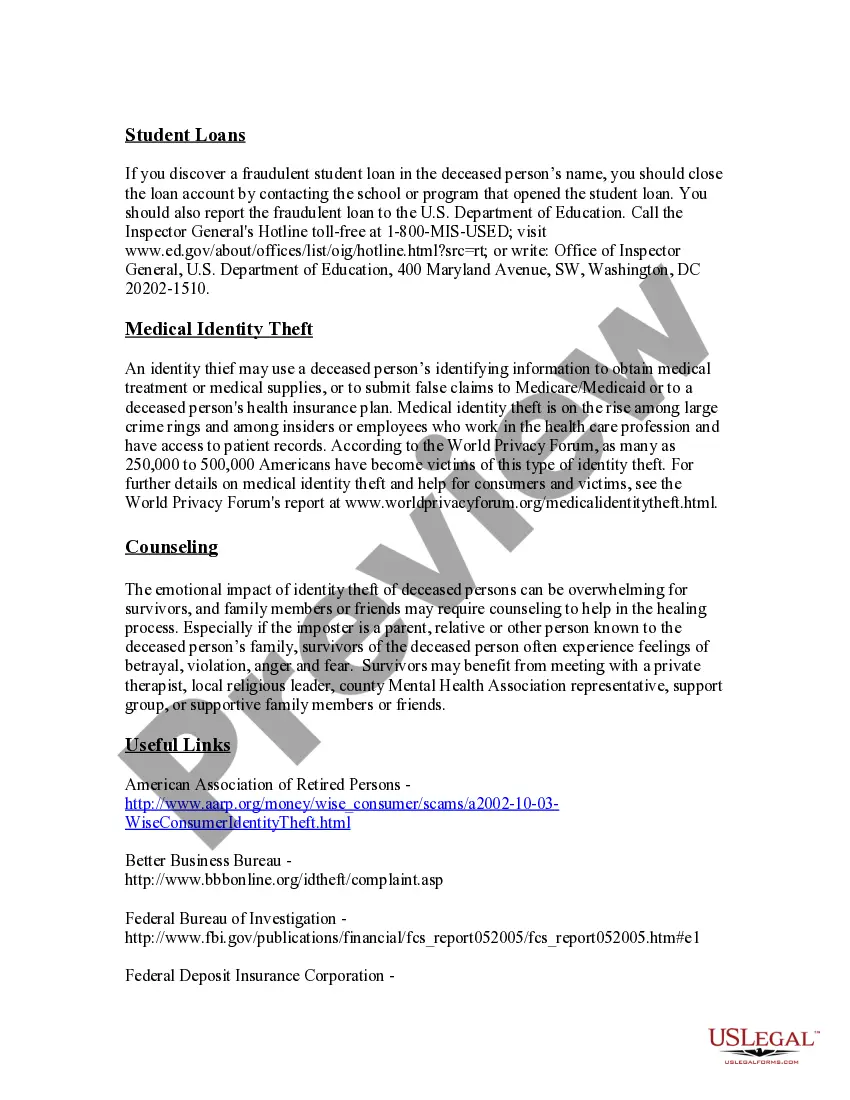
If someone is stealing from a deceased person, you should first secure all financial accounts and inform banks and creditors of the death. Next, collect any evidence of theft and report it to local law enforcement. It's also beneficial to consult with an attorney to understand your rights and next steps. Utilizing resources like the Aurora Colorado Guide for Protecting Deceased Persons from Identity Theft can help you navigate these challenging circumstances.
If someone steals the identity of a deceased person, they may open accounts, incur debts, or commit fraud using the deceased's personal information. This can lead to complications for the estate, and it may create additional burdens for surviving family members. It's crucial to act quickly to minimize financial damage and legal issues. The Aurora Colorado Guide for Protecting Deceased Persons from Identity Theft can provide valuable insights on how to handle such situations effectively.
To report identity theft of a deceased person, you should start by gathering necessary documents such as the death certificate and any evidence of fraudulent activity. Next, contact the Federal Trade Commission (FTC) to file a report and provide them with the details. Additionally, consider notifying credit reporting agencies to freeze the deceased person's credit. For more comprehensive guidance, refer to the Aurora Colorado Guide for Protecting Deceased Persons from Identity Theft.
To protect a deceased person from identity theft, start by securing their personal information. Obtain multiple copies of the death certificate and notify credit bureaus, banks, and other financial institutions of the death. Additionally, consider placing a fraud alert or credit freeze on the deceased's accounts. For a comprehensive approach, refer to the 'Aurora Colorado Guide for Protecting Deceased Persons from Identity Theft,' which provides essential steps and resources to safeguard sensitive information effectively.