Salt Lake Utah Motion in Limine
Description

Get your form ready online
Our built-in tools help you complete, sign, share, and store your documents in one place.
Make edits, fill in missing information, and update formatting in US Legal Forms—just like you would in MS Word.
Download a copy, print it, send it by email, or mail it via USPS—whatever works best for your next step.
Sign and collect signatures with our SignNow integration. Send to multiple recipients, set reminders, and more. Go Premium to unlock E-Sign.
If this form requires notarization, complete it online through a secure video call—no need to meet a notary in person or wait for an appointment.
We protect your documents and personal data by following strict security and privacy standards.

Make edits, fill in missing information, and update formatting in US Legal Forms—just like you would in MS Word.

Download a copy, print it, send it by email, or mail it via USPS—whatever works best for your next step.

Sign and collect signatures with our SignNow integration. Send to multiple recipients, set reminders, and more. Go Premium to unlock E-Sign.

If this form requires notarization, complete it online through a secure video call—no need to meet a notary in person or wait for an appointment.

We protect your documents and personal data by following strict security and privacy standards.
Looking for another form?



How to fill out Motion In Limine?
Organizing documents for business or personal requirements is consistently a significant duty.
When composing a contract, a public service application, or a power of attorney, it is essential to take into account all federal and state laws and regulations of the specific area.
However, smaller counties and even towns also have legislative rules that you must take into consideration.
The remarkable aspect of the US Legal Forms library is that all documents you’ve ever acquired remain accessible - you can retrieve them from your profile under the My documents tab at any time. Join the platform and effortlessly acquire verified legal templates for any scenario with just a few clicks!
- All these aspects render it stressful and lengthy to draft Salt Lake Motion in Limine without professional assistance.
- It is feasible to prevent unnecessary expenditure on lawyers preparing your paperwork and formulate a legally binding Salt Lake Motion in Limine independently, using the US Legal Forms online library.
- This is the largest online directory of state-specific legal templates that are professionally verified, ensuring their legitimacy when choosing a sample for your county.
- Previously subscribed users only need to Log In to their accounts to retrieve the necessary document.
- If you do not yet have a subscription, follow the step-by-step guide below to obtain the Salt Lake Motion in Limine.
- Review the page you’ve accessed and confirm if it contains the sample you need.
- To do this, use the form description and preview if these features are present.
Form popularity
FAQ
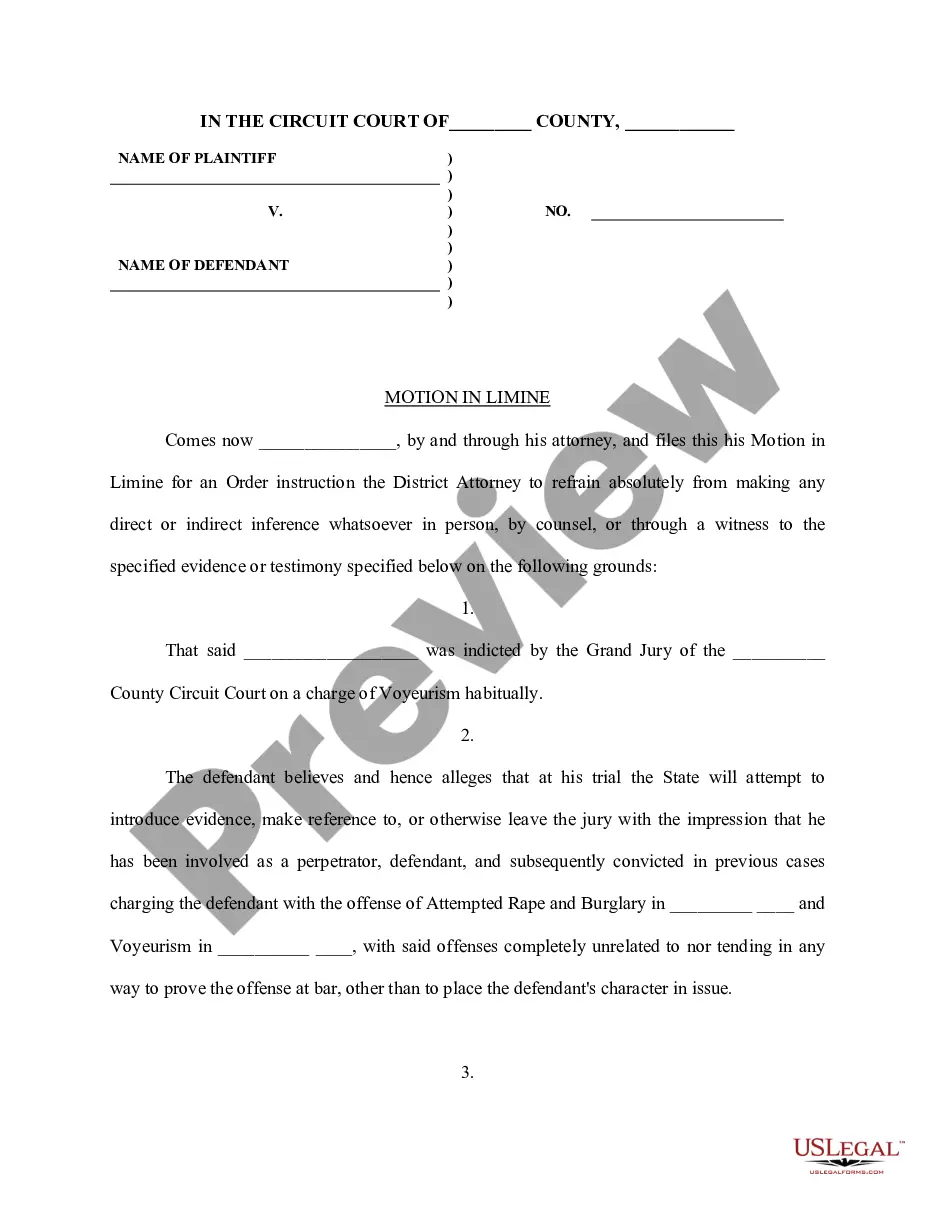
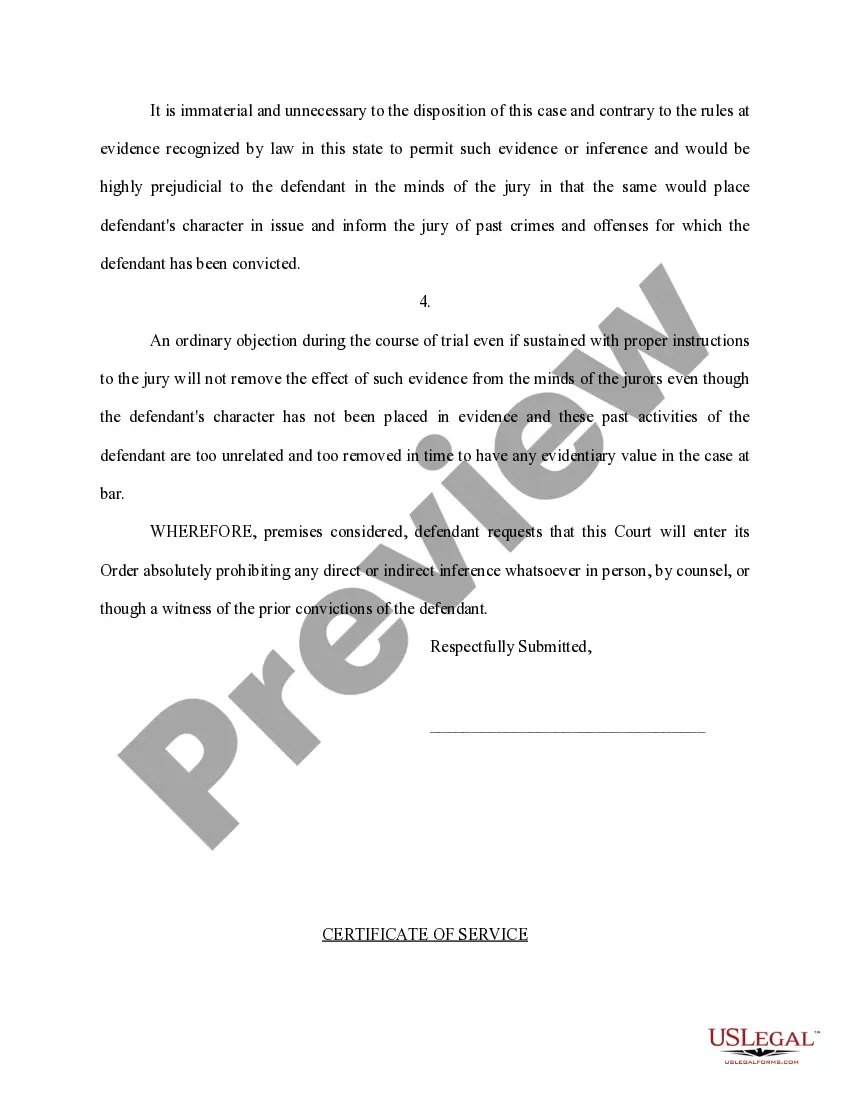
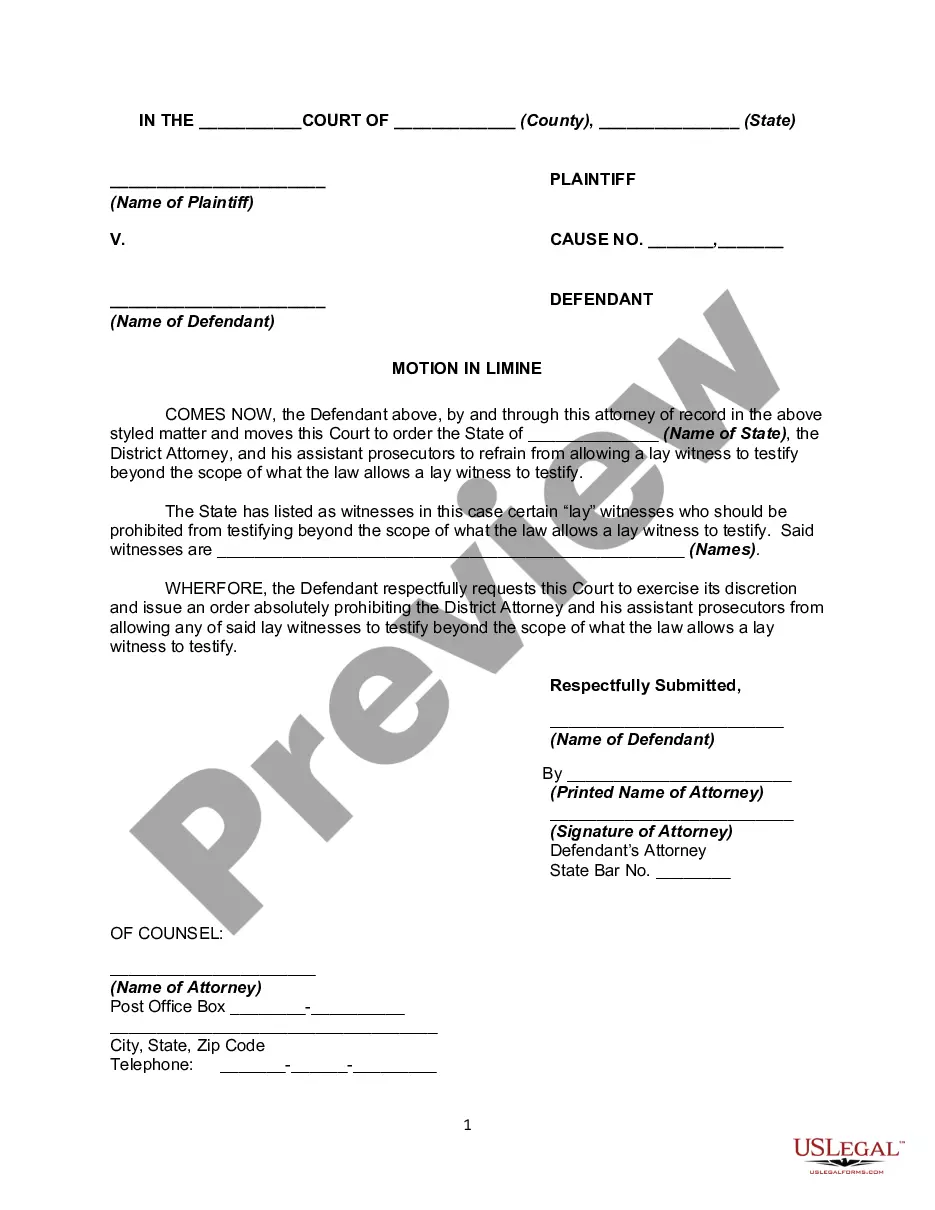
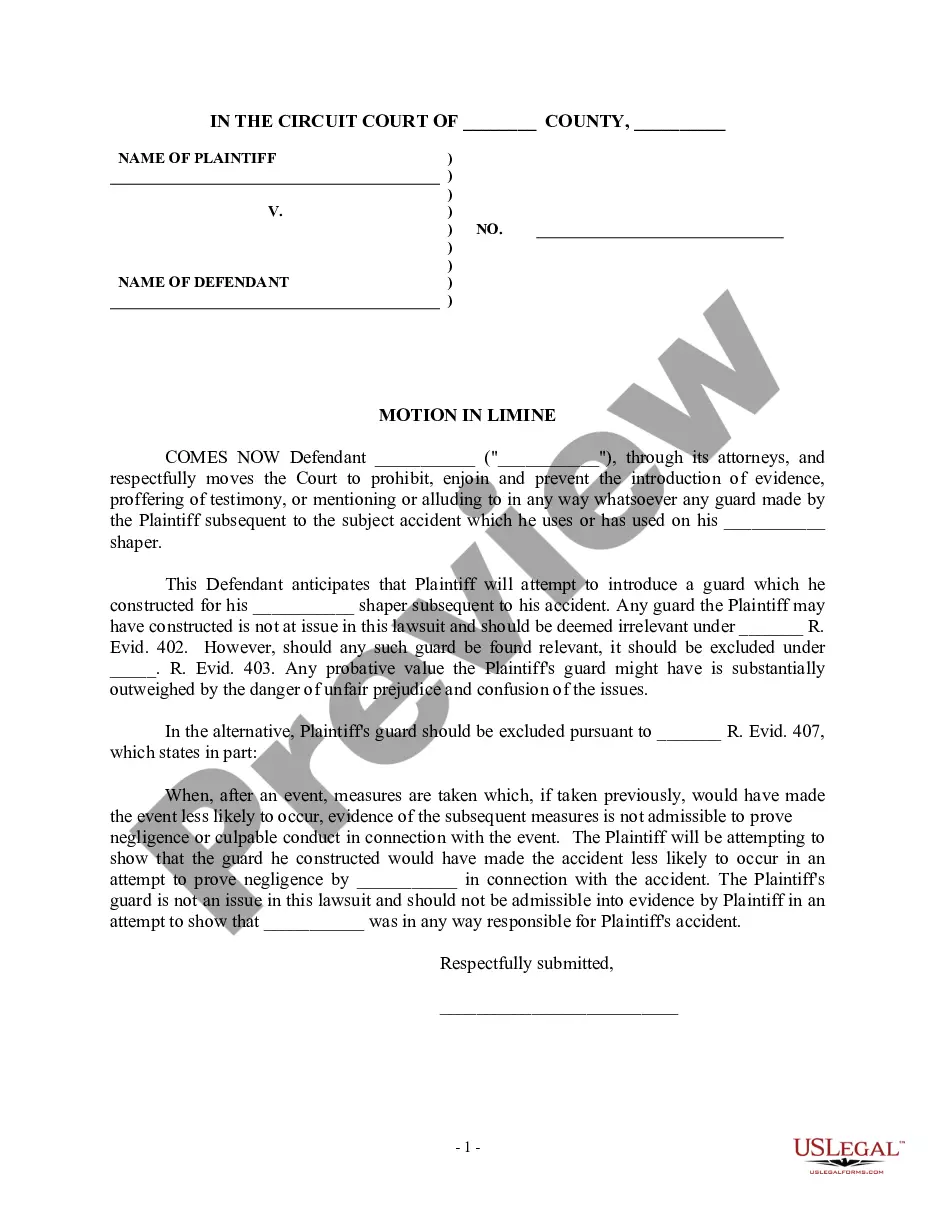
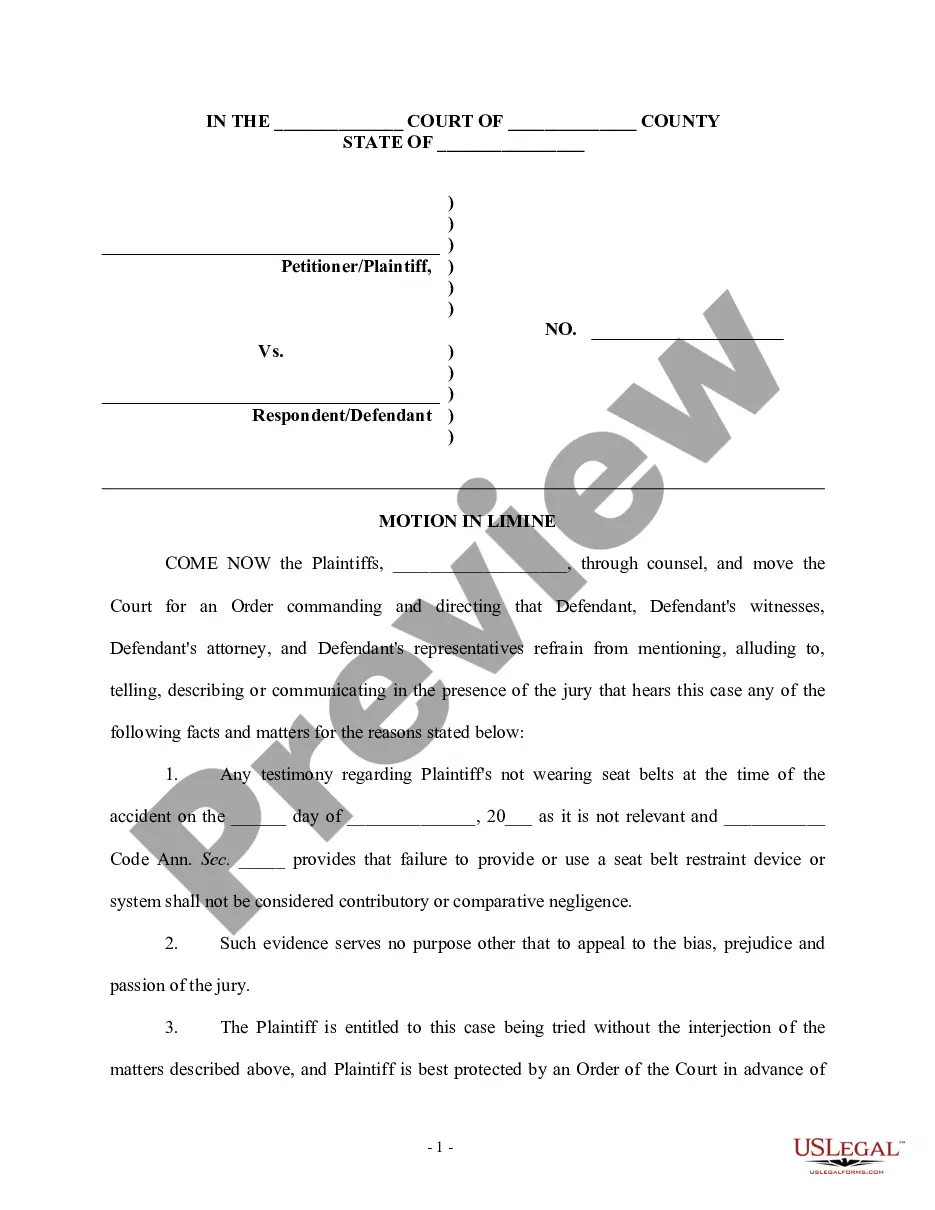
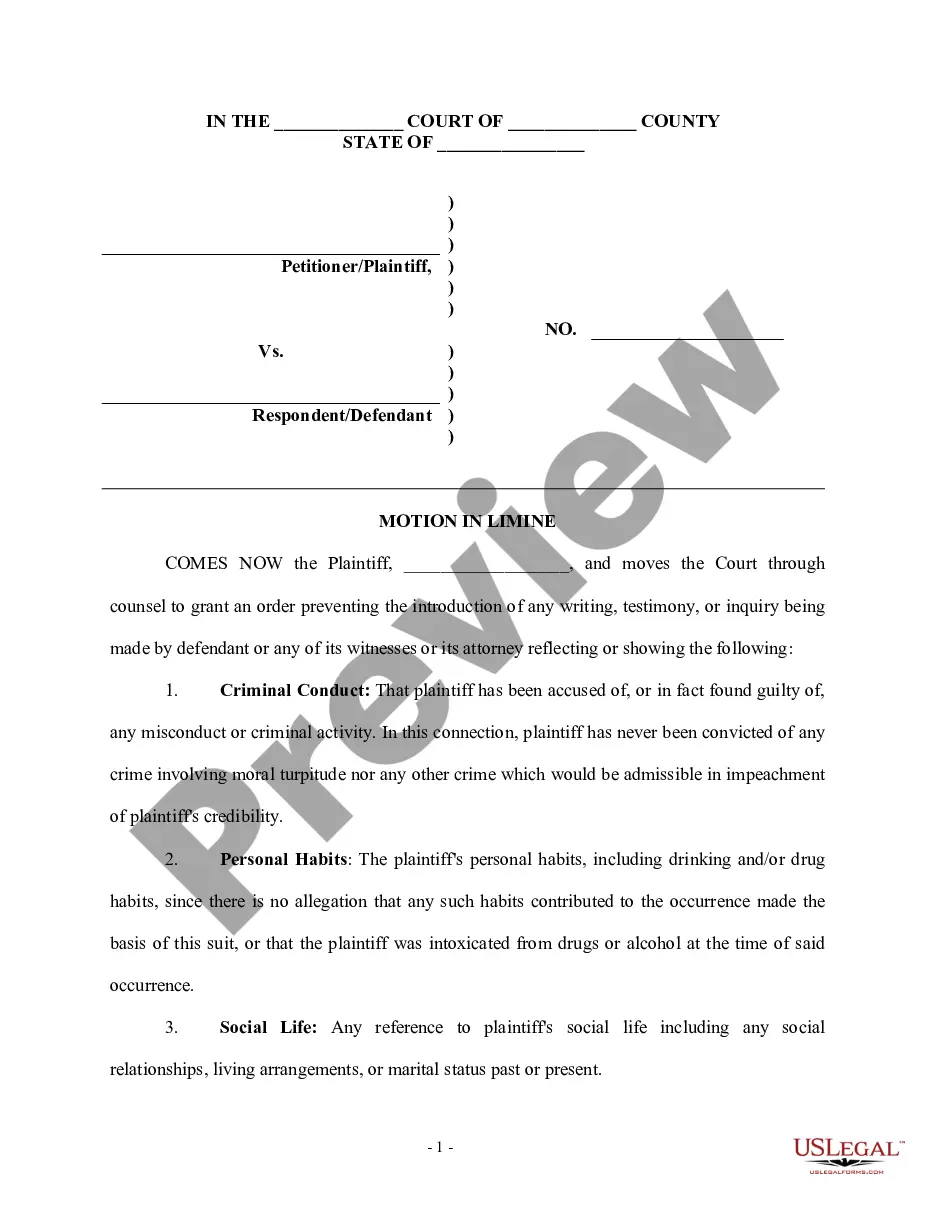
To execute a motion in limine, first, draft a written motion clearly stating the reasons for excluding the specific evidence. Next, file the motion with the court and serve it to other parties involved in the case. Lastly, be prepared to present your arguments at a hearing. If you're unsure about the process, USLegalForms provides valuable resources and templates for your Salt Lake Utah Motion in Limine.
Rule 7 of the Utah Rules of Civil Procedure governs the types of pleadings and motions that parties can file in civil cases. It outlines the requirements for writing, serving, and filing various documents, ensuring clarity and order in legal processes. Understanding this rule is crucial, particularly when preparing a Salt Lake Utah Motion in Limine, as it helps comply with procedural standards. Utilizing resources like USLegalForms can provide the guidance necessary to navigate these legal requirements smoothly.
There is also authority for the proposition that if a motion in limine is denied, the party opposing the evidence can be the first to offer the objectionable evidence without waiving the merits of the evidentiary objection on appeal.
Generally, it means that the court will not approve the motion. This means that the evidence can be used in a criminal case.
Whereas the motion in limine is based on the trial court's inherent discretion to exclude prejudicial evidence, the motion to suppress is based on the court's duty to exclude evidence which has been im- properly Qbtained.
A motion in limine is an evidentiary motion brought on the threshold of trial by which a party seeks to exclude arguably inadmissible or highly prejudicial evidence from trial. The purpose of these motions is to avoid having to unring the bell by objecting to the evidence after the jury sees or hears it.
This type of motion is a pretrial request of the court to rule on the admissibility of a certain piece of evidence. typical use for a motion in limine is to exclude admission of and any reference to a certain piece of evidence.
Definition of in limine : on the threshold : as a preliminary matter used for motions regarding the admissibility of evidence brought up at a pretrial hearing.
Importantly, motions in limine are generally made before a trial begins, and always argued outside the presence of the jury. Thus, a motion in limine allows key evidentiary questions to be decided without the jury present and, if the motion is granted, will preclude the jury from ever learning of the disputed evidence.
Add a conclusion. Simply request that the court deny the other side's motion in limine. For example, you could write: "For the foregoing reasons, the Defendant's Motion in Limine to Exclude Evidence of Liability Insurance should be denied."