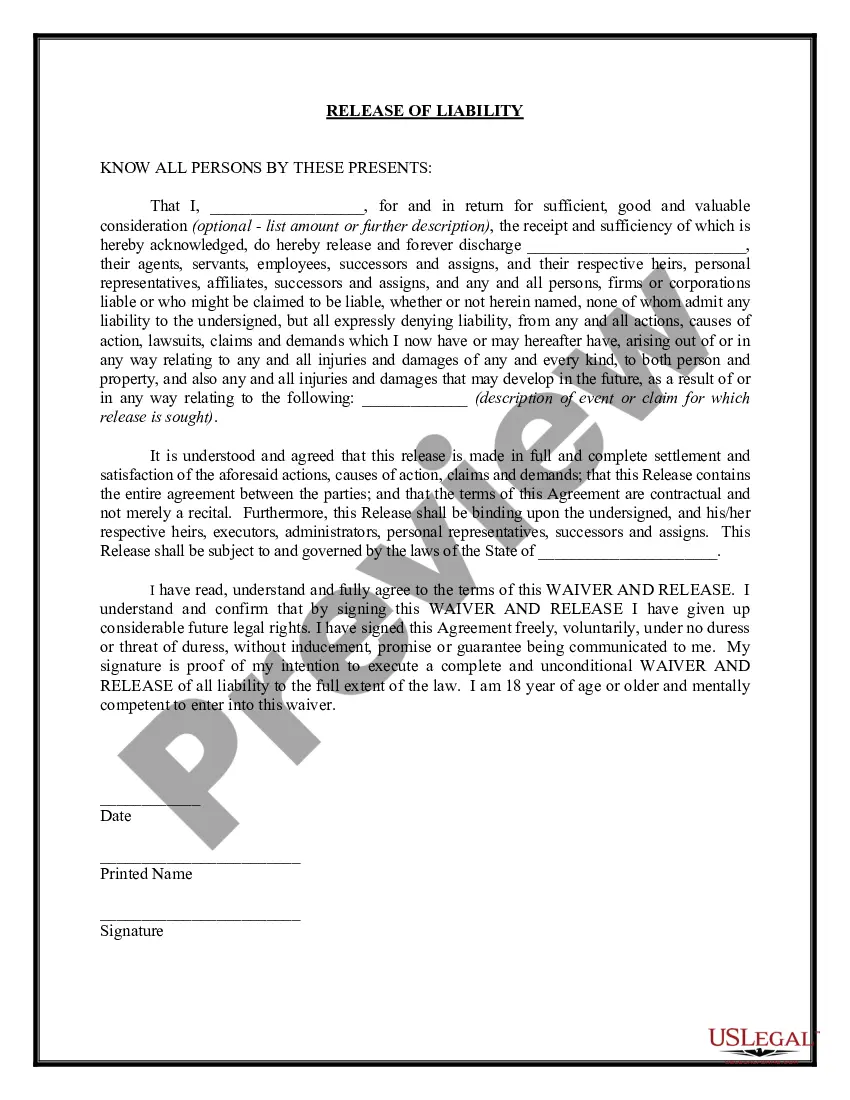
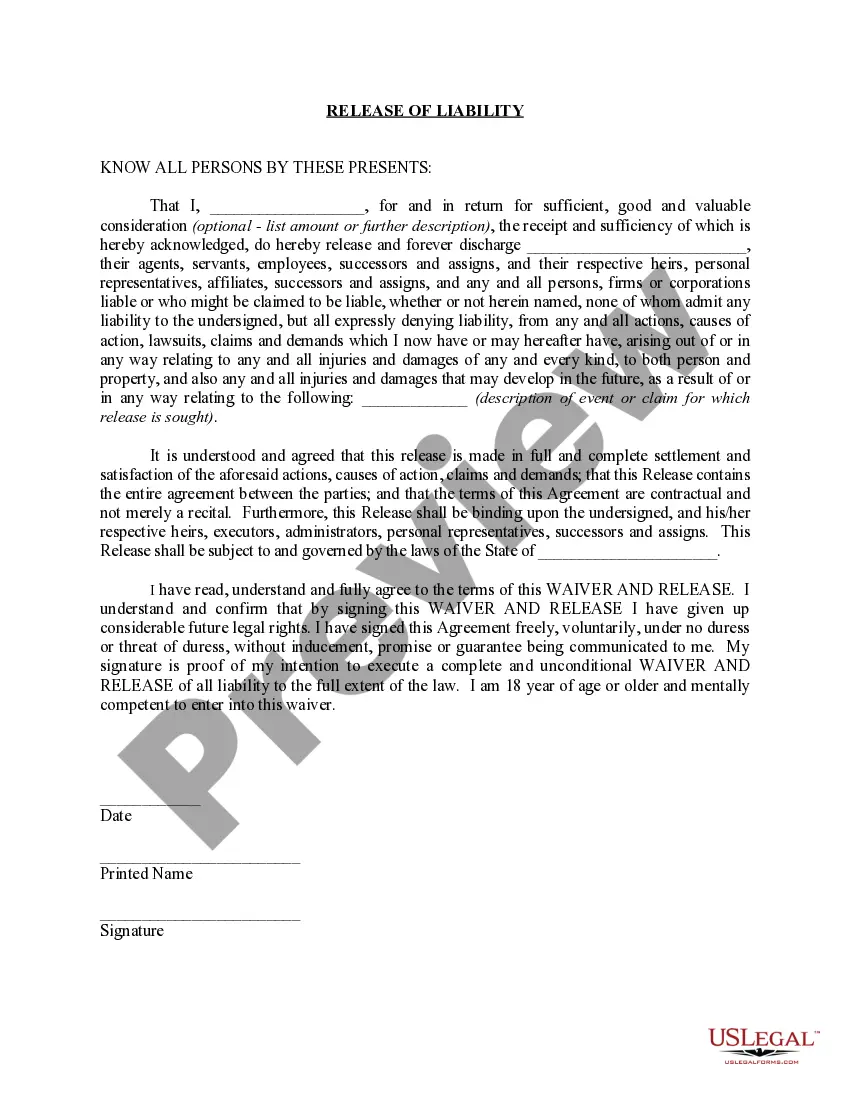
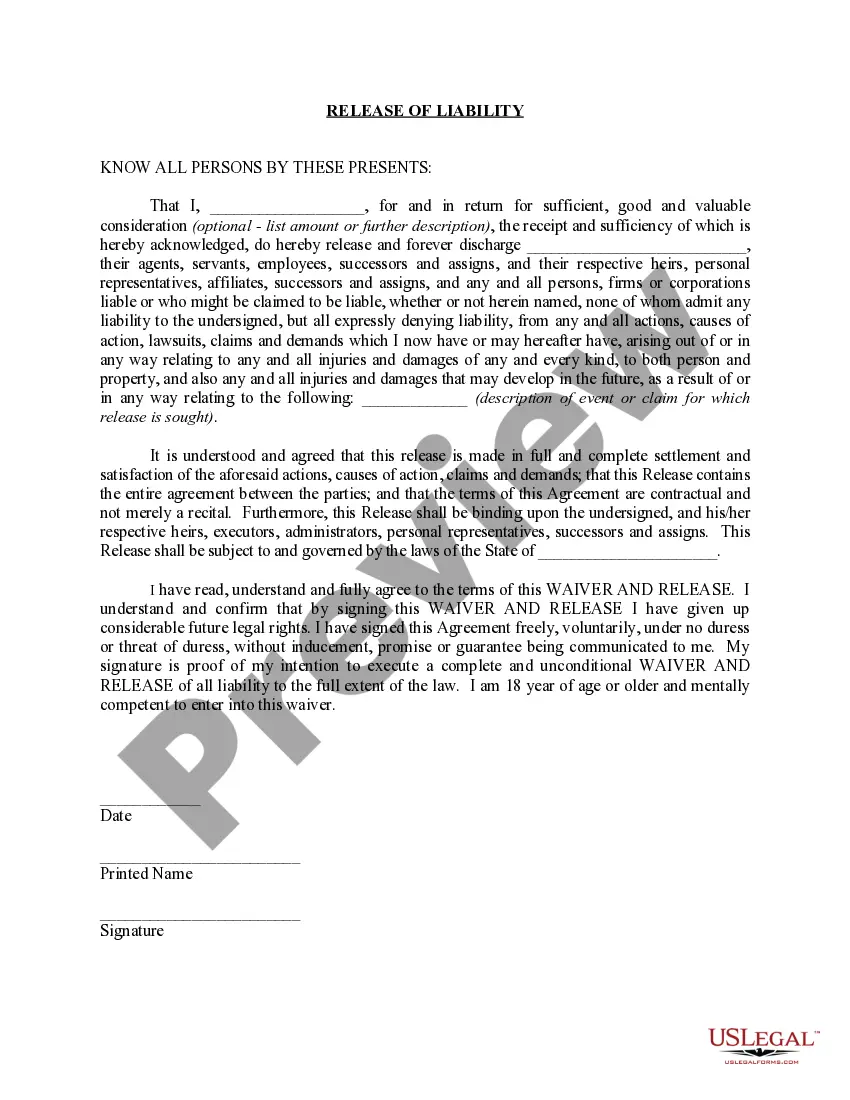
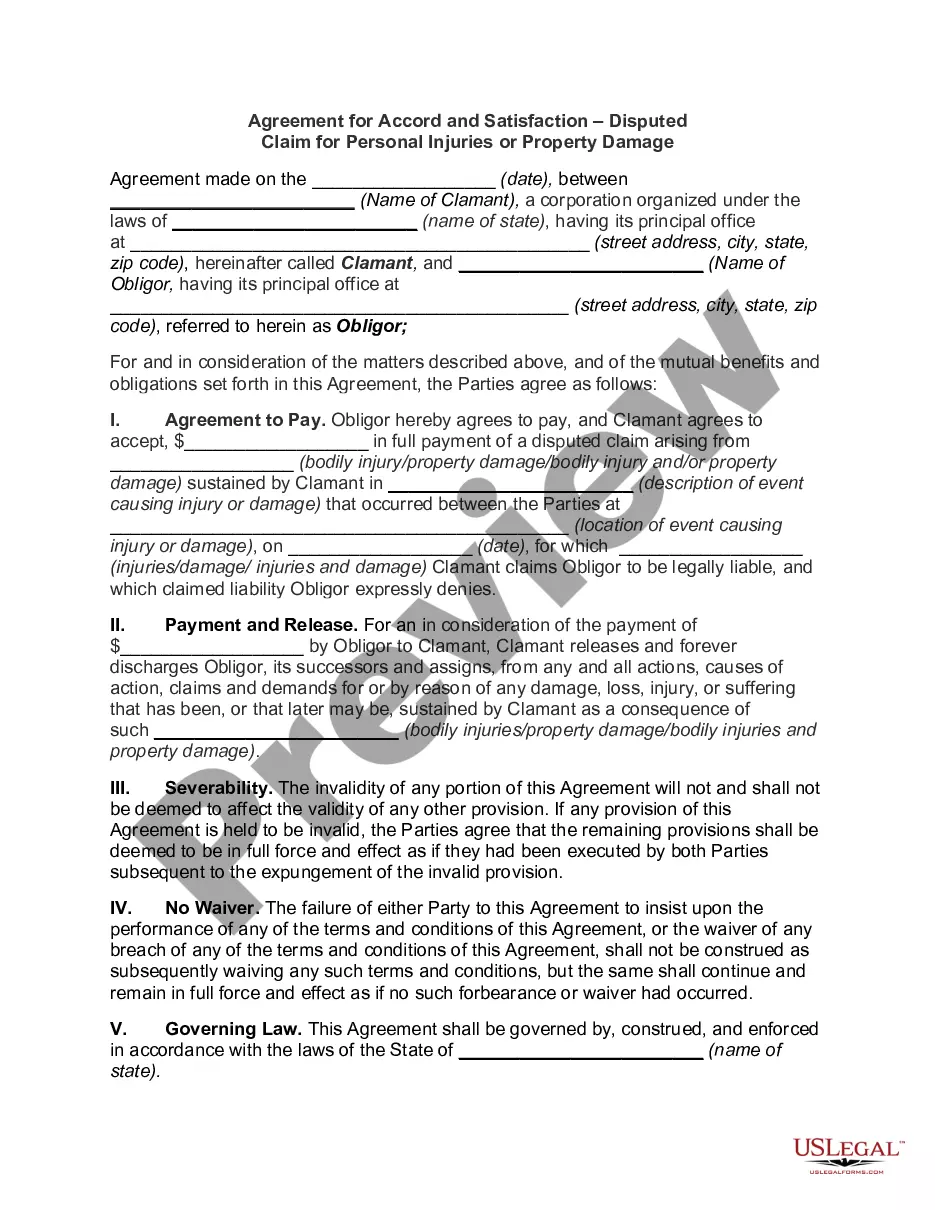
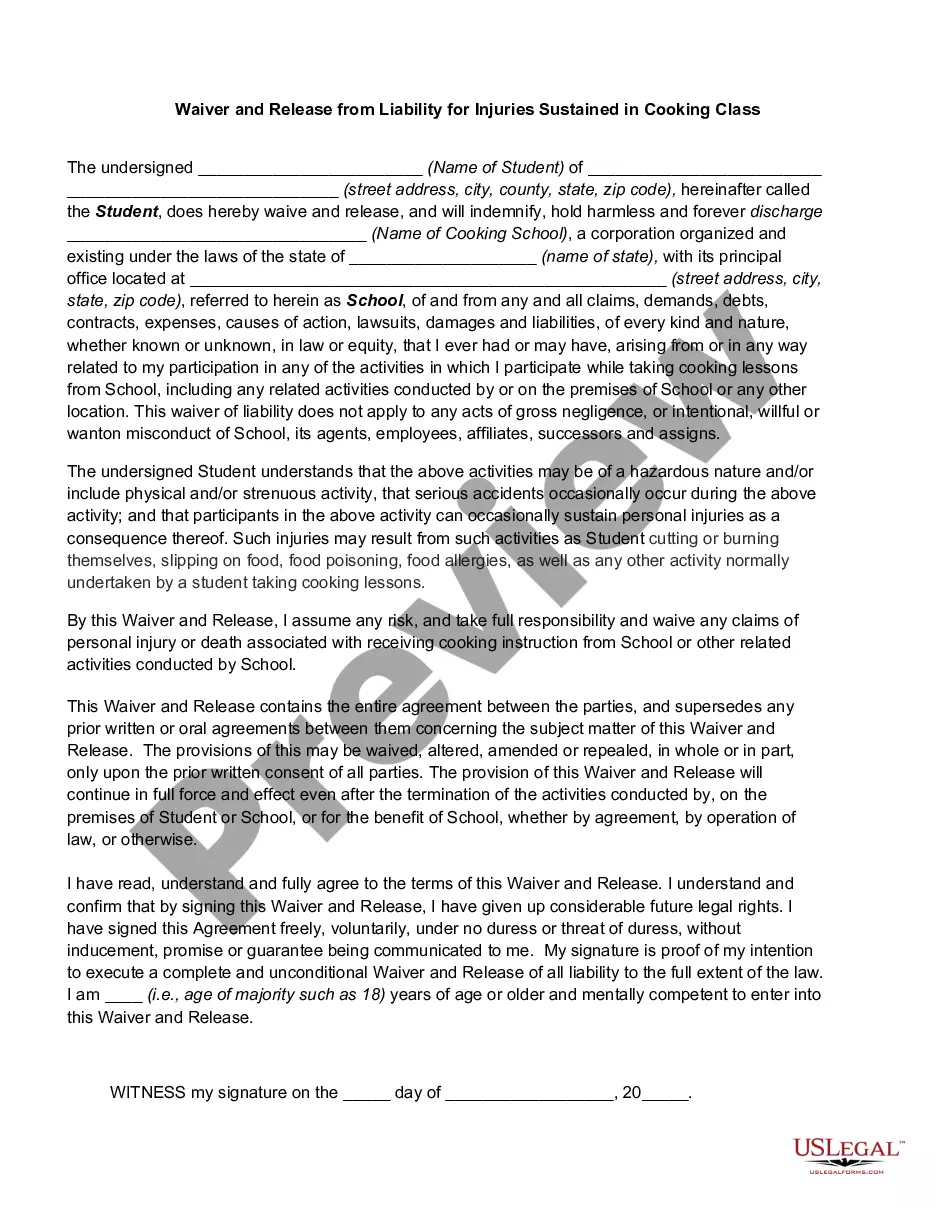
This form is a release of liability. The releasor forever discharges and acquits the releasee of all damages and injuries resulting from the event described in the document.
Louisville Kentucky Release of Liability - General
Category:
State:
Multi-State
City:
Louisville
Control #:
US-01764
Format:
Word;
Rich Text
Instant download
Description



Form popularity
FAQ
In most cases, a liability waiver does not need to be notarized to be valid. However, notarization can add an extra layer of authenticity and may be required for certain situations or jurisdictions. For the Louisville Kentucky Release of Liability - General, it’s best to check local regulations or consult with a legal professional. Using a reputable platform like US Legal Forms can provide guidance on these requirements.
To create a liability waiver, start by identifying the specific activities and risks involved. Next, write the waiver in clear and straightforward language, outlining the risks and the participant's agreement to waive certain rights. Utilizing resources like US Legal Forms can streamline this process and help you design a robust Louisville Kentucky Release of Liability - General that meets legal standards. Finally, have the waiver signed by all participants.
Yes, you can write your own liability waiver, but it requires careful consideration of legal requirements. A well-crafted waiver should address all potential risks and be clear enough for participants to understand. Using a template, such as those provided by US Legal Forms, can simplify the process of creating a Louisville Kentucky Release of Liability - General. This ensures that you include all necessary information for legal protection.
A liability waiver becomes legal when it meets specific criteria defined by law. It must clearly state the risks involved, be written in plain language, and be signed voluntarily by the participant. In the context of the Louisville Kentucky Release of Liability - General, the waiver should also comply with local laws. Ensuring these elements are present can protect you from future claims.
The enforceability of a liability waiver depends on several factors, including its clarity, the context in which it was signed, and applicable state laws. Courts typically uphold waivers that are specific and comprehensive, but they may invalidate those that are ambiguous or overly broad. To maximize enforceability, consider using uslegalforms to draft your Louisville Kentucky Release of Liability - General.
Yes, you can still sue after signing a waiver, especially if the waiver does not cover the specific circumstances of your case. If you can demonstrate negligence or intentional harm, a court may allow your lawsuit to proceed. Always consider the details outlined in the Louisville Kentucky Release of Liability - General to understand your rights.
You can write your own liability waiver, but it is crucial to follow legal guidelines to ensure its enforceability. A poorly drafted waiver may not provide the protection you seek. You might find it beneficial to use templates from uslegalforms, which offer a solid foundation for the Louisville Kentucky Release of Liability - General.
Yes, liability waivers are generally enforceable in Kentucky, provided they are written clearly and meet legal requirements. Courts will evaluate the language used in the waiver and ensure it is not unconscionable or overly vague. To ensure your waiver is effective, consider utilizing a well-crafted template from platforms like uslegalforms for the Louisville Kentucky Release of Liability - General.
Waivers can be legally binding if they meet specific criteria, such as being clear, voluntary, and signed by the individual. However, courts may not enforce a waiver that is overly broad or that waives liability for gross negligence. Therefore, it is essential to ensure that your waiver complies with local laws, especially regarding the Louisville Kentucky Release of Liability - General.
Waivers can limit your ability to sue, but they do not automatically prevent it. If a waiver is properly drafted and signed, it may protect the organization from liability for certain activities. However, if negligence or misconduct occurs, you may still have grounds for legal action despite having signed a waiver in the context of the Louisville Kentucky Release of Liability - General.