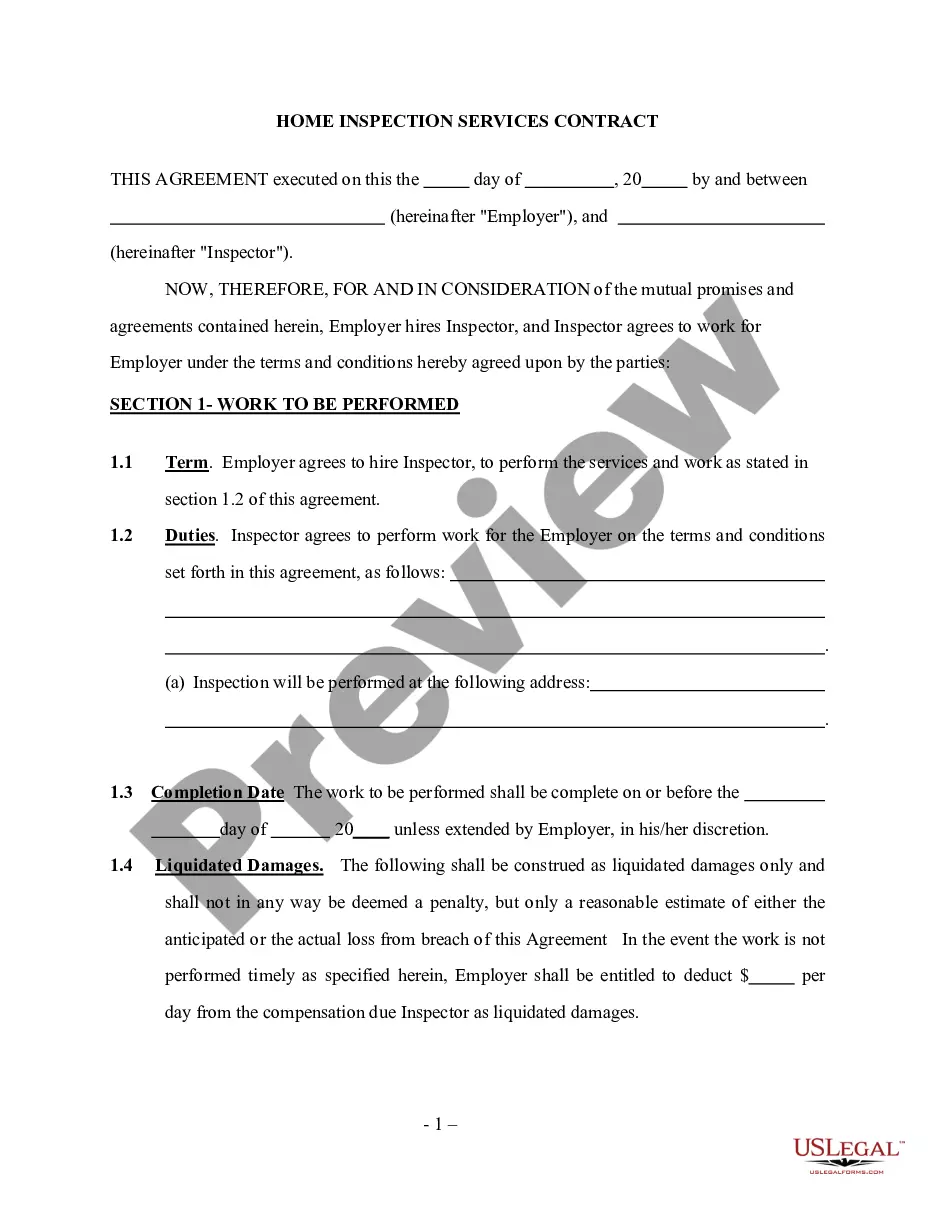
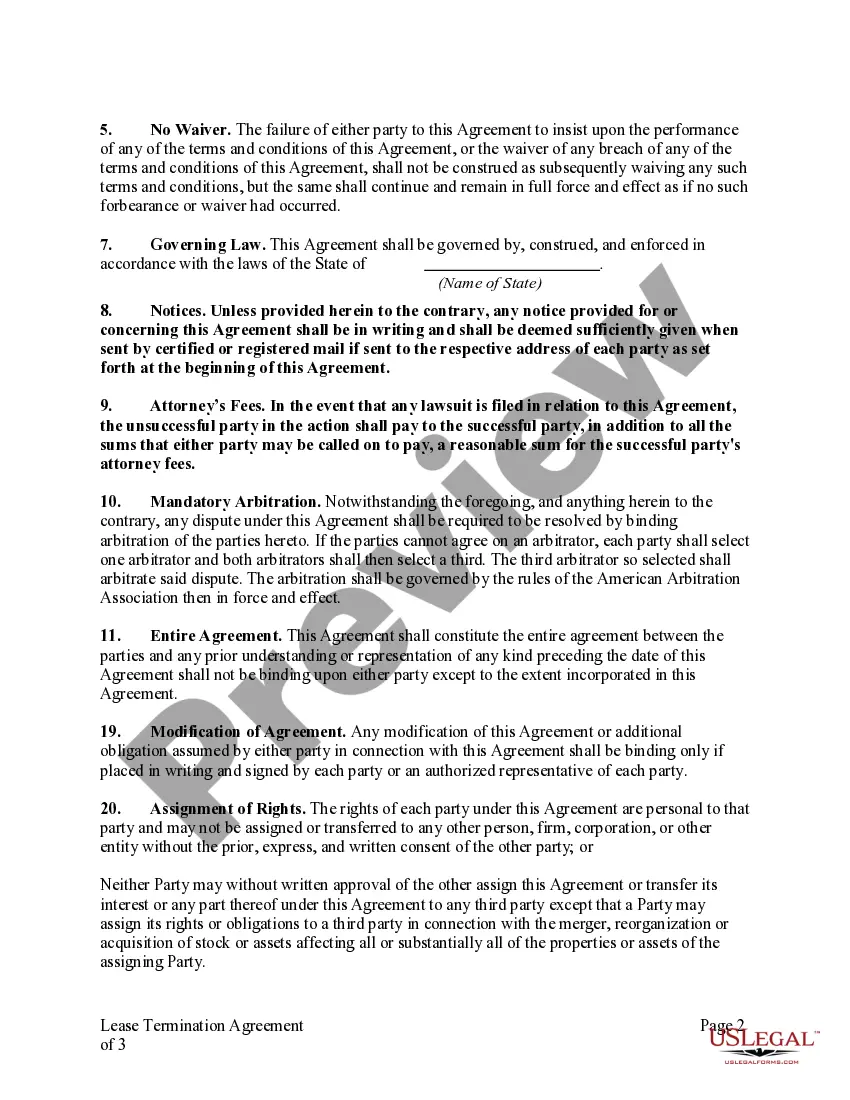
Mecklenburg North Carolina Lease Termination Letter for Non Payment
Description
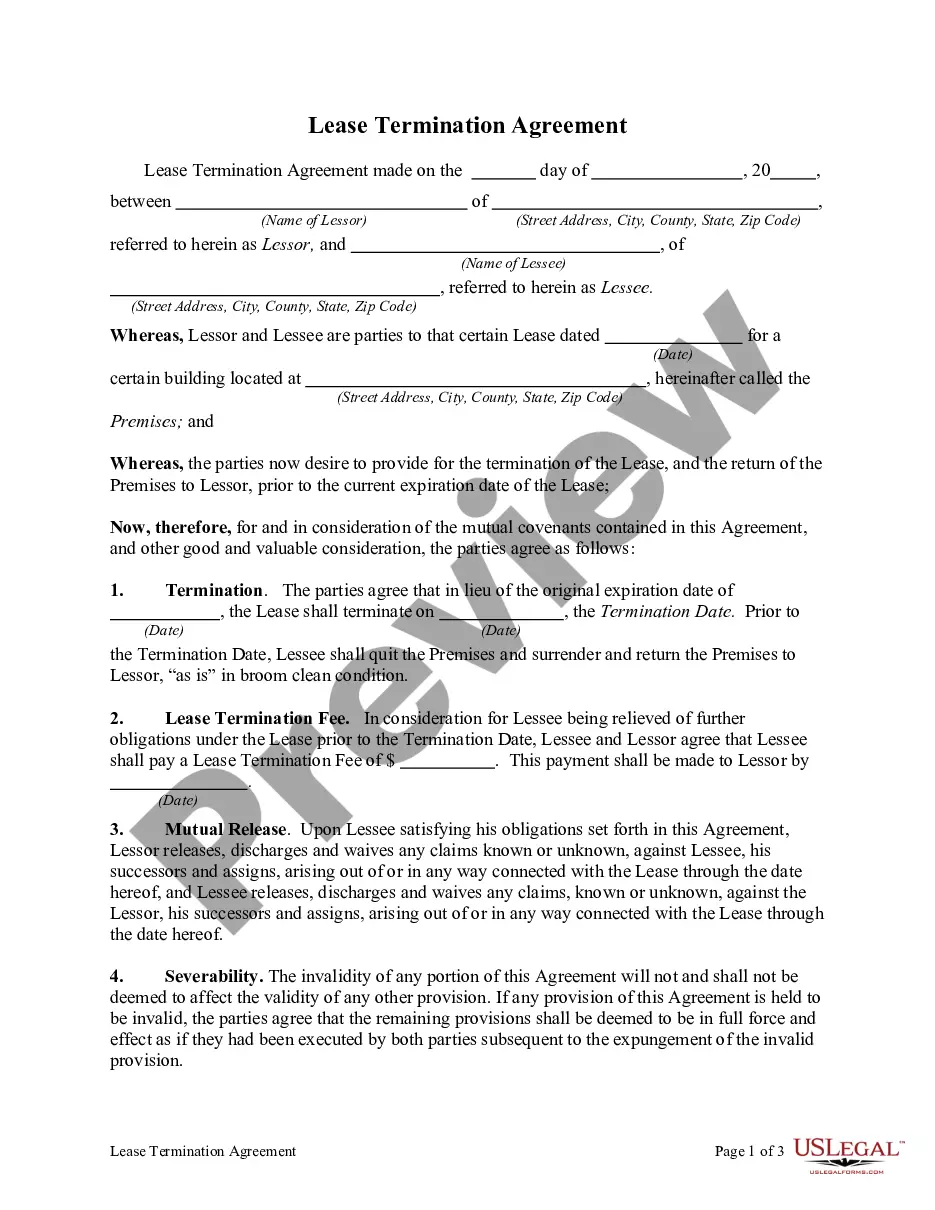
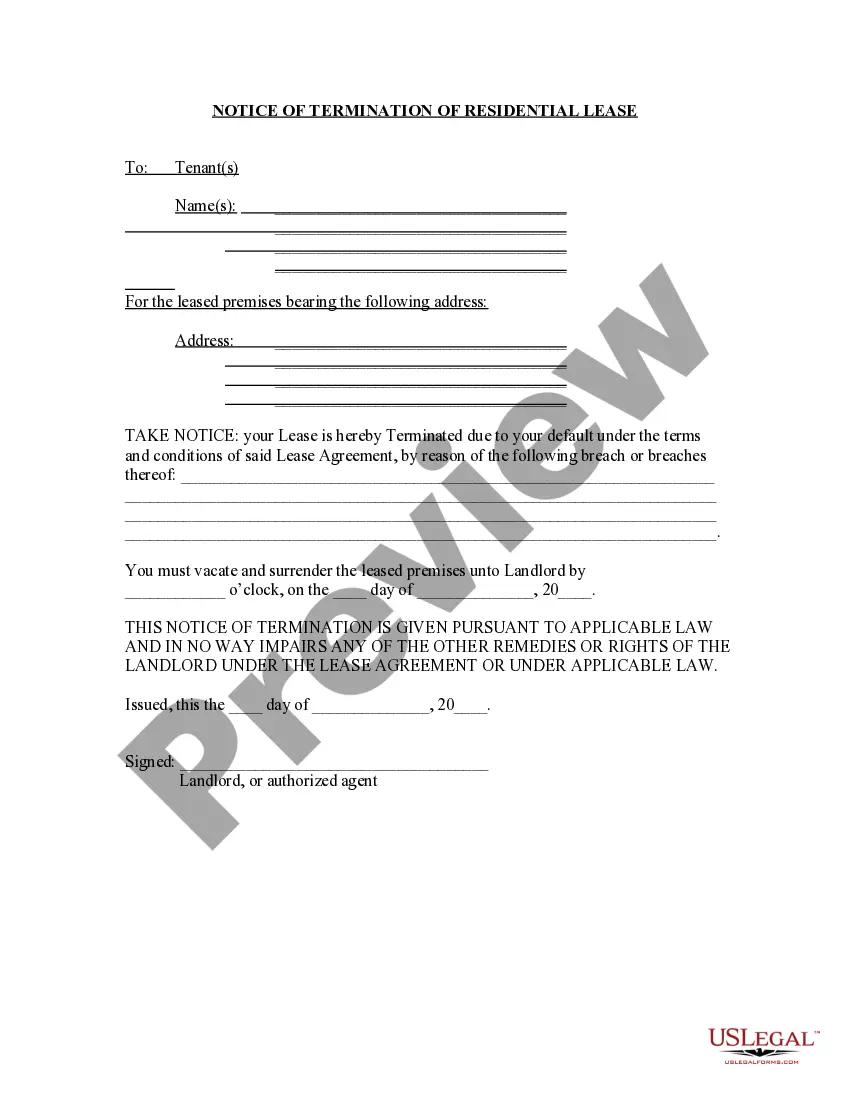




How to fill out Lease Termination Letter For Non Payment?
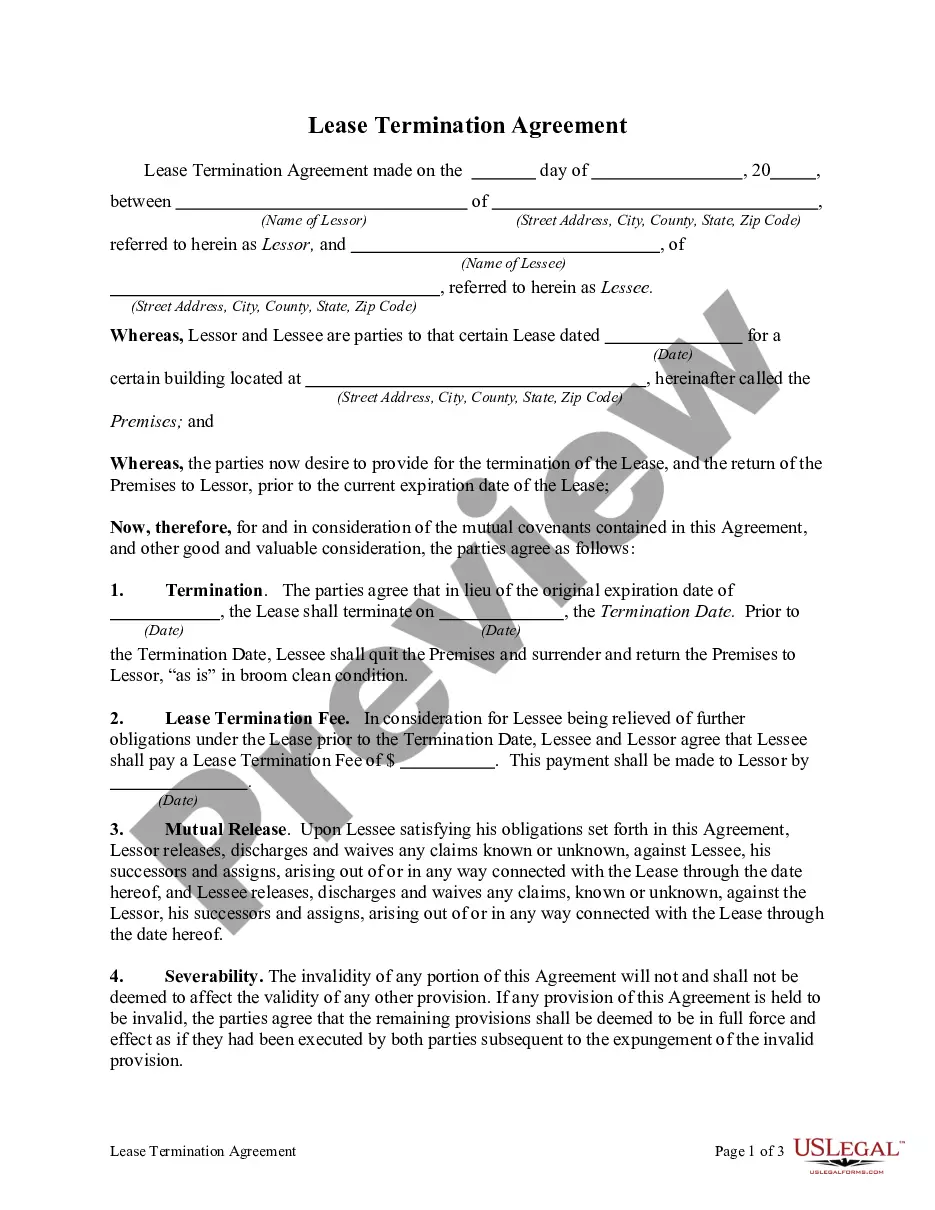
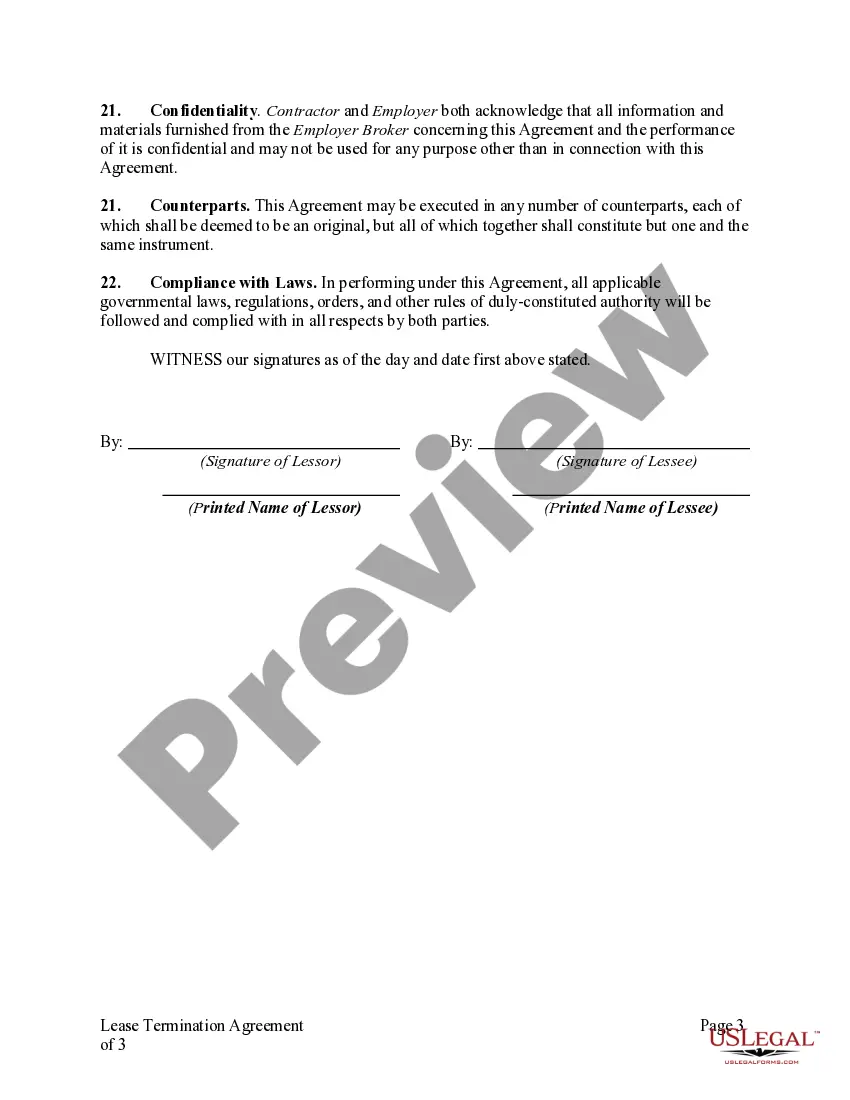
Drafting legal documents is essential in today's society. However, you don't always need to obtain expert assistance to construct some of them from scratch, including the Mecklenburg Lease Termination Letter for Non Payment, utilizing a service such as US Legal Forms.
US Legal Forms offers over 85,000 templates to choose from across various categories ranging from living wills to property documents to divorce papers. All forms are categorized according to their specific state, simplifying the search process.
You can also discover comprehensive resources and guides on the site to facilitate any tasks associated with document preparation.
If you're already subscribed to US Legal Forms, you can find the necessary Mecklenburg Lease Termination Letter for Non Payment, Log In to your account, and download it. Naturally, our platform cannot completely substitute an attorney. If you face an especially complicated situation, we suggest consulting an attorney to review your document prior to execution and submission.
With more than 25 years in the industry, US Legal Forms has established itself as a preferred choice for a wide range of legal documents for millions of clients. Join them today and effortlessly acquire your state-compliant documents!
- View the document's preview and outline (if available) to gather a general idea of what you’ll receive post-download.
- Ensure that the document you select is tailored to your state/county/area as state laws can influence the legality of certain documents.
- Review the related forms or restart the search to locate the correct file.
- Click Buy now and create your account. If you have an existing one, choose to Log In.
- Select the pricing {plan, then a preferable payment method, and purchase Mecklenburg Lease Termination Letter for Non Payment.
- Opt to save the form template in any available file format.
- Navigate to the My documents tab to re-download the document.
Form popularity
FAQ
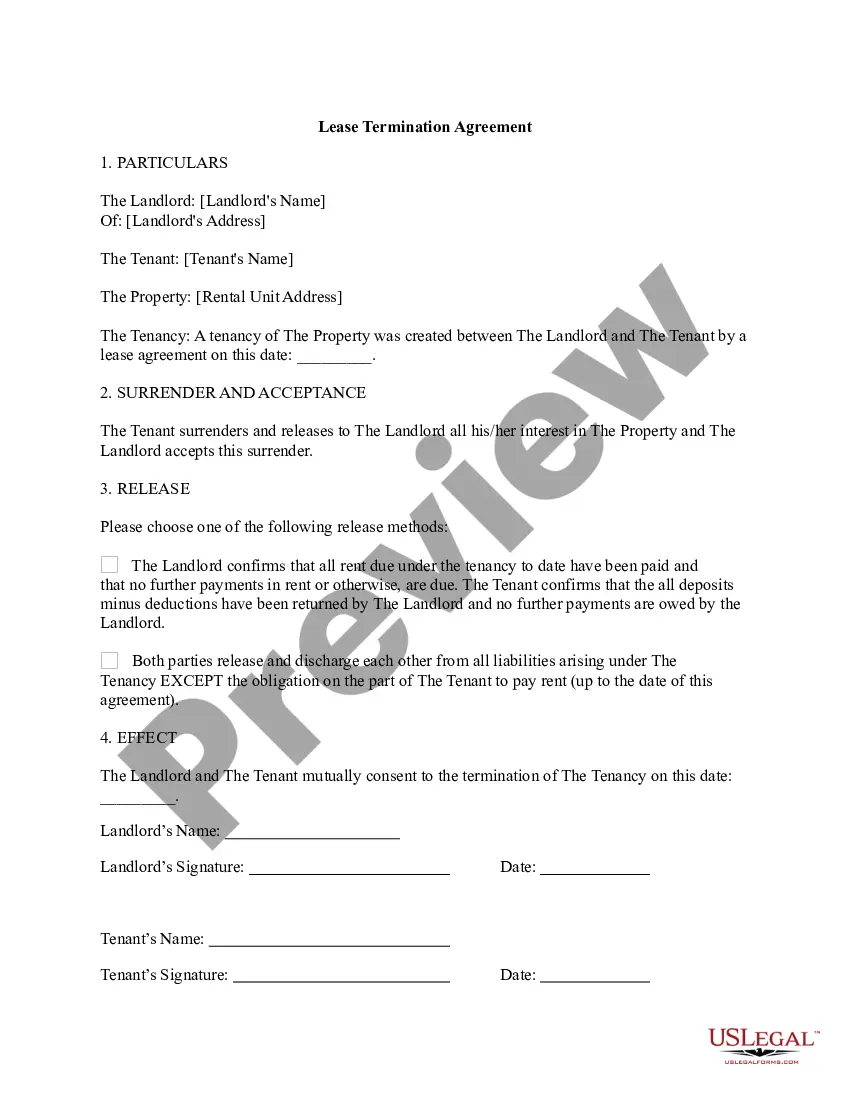
In a letter to a tenant for non-payment, first address the tenant by name and specify the property involved. Clearly mention the amount due and any deadlines for payment. It’s important to remind them that continued non-payment may lead to a Mecklenburg North Carolina Lease Termination Letter for Non Payment. Keep the tone professional while stressing the urgency of the matter.
To write a non-payment letter, start by clearly stating the issue at hand. Include the tenant's name, property address, and the clear statement that rent remains unpaid. Specify the amount due and any relevant dates for payment. Finally, mention that this letter serves as a Mecklenburg North Carolina Lease Termination Letter for Non Payment, giving notice of the potential lease termination.
In North Carolina, the rental laws specify that if breaking the lease is justified, you only need to provide your landlord with a notice of your intent. Although when not justified, you may be liable for paying all the rent due for the remaining lease term.
Consider all your options. Money from federal rental assistance could cover up to 18 months of rent including unpaid rent incurred during the COVID-19 pandemic and future rent in certain cases when the money is available. Evicting tenants can be time-consuming and expensive.
The landlord is only permitted to keep that portion of the security deposit necessary to cover the actual allowable costs. While there still exist some modern leases that include forfeiture clauses (where the landlord can keep more than their actual cost), these clauses are unenforceable under the current rules.
Tenant is a victim of domestic violence, or received threats from a neighbor. Landlord refuses to complete essential repairs. Landlord interferes with quiet enjoyment, such as violating tenant's privacy. Tenant experiences a profound life change, such as divorce or job relocation.
Under these exceptions, you may be able to move out without facing any repercussions. The rental unit is unsafe or violates North Carolina Health or Safety Codes.You are a victim of domestic violence, sexual assault, or stalking.Your landlord harasses you.Your landlord violates your privacy rights.
There is no longer a CDC nor any state eviction moratorium in effect. After August 26, 2021, your landlord can file a Complaint for Summary Ejectment (often called an eviction) for your failure to pay rent and for any other violation of your lease.
Valid Reasons for Terminating a Lease and Evicting a Tenant In general, most states allow a landlord to terminate a lease or rental agreement if the tenant: Fails to pay rent; Violates a clause in the lease or rental agreement; Violates a responsibility imposed by law.
In general, most states allow a landlord to terminate a lease or rental agreement if the tenant: Fails to pay rent; Violates a clause in the lease or rental agreement; Violates a responsibility imposed by law.