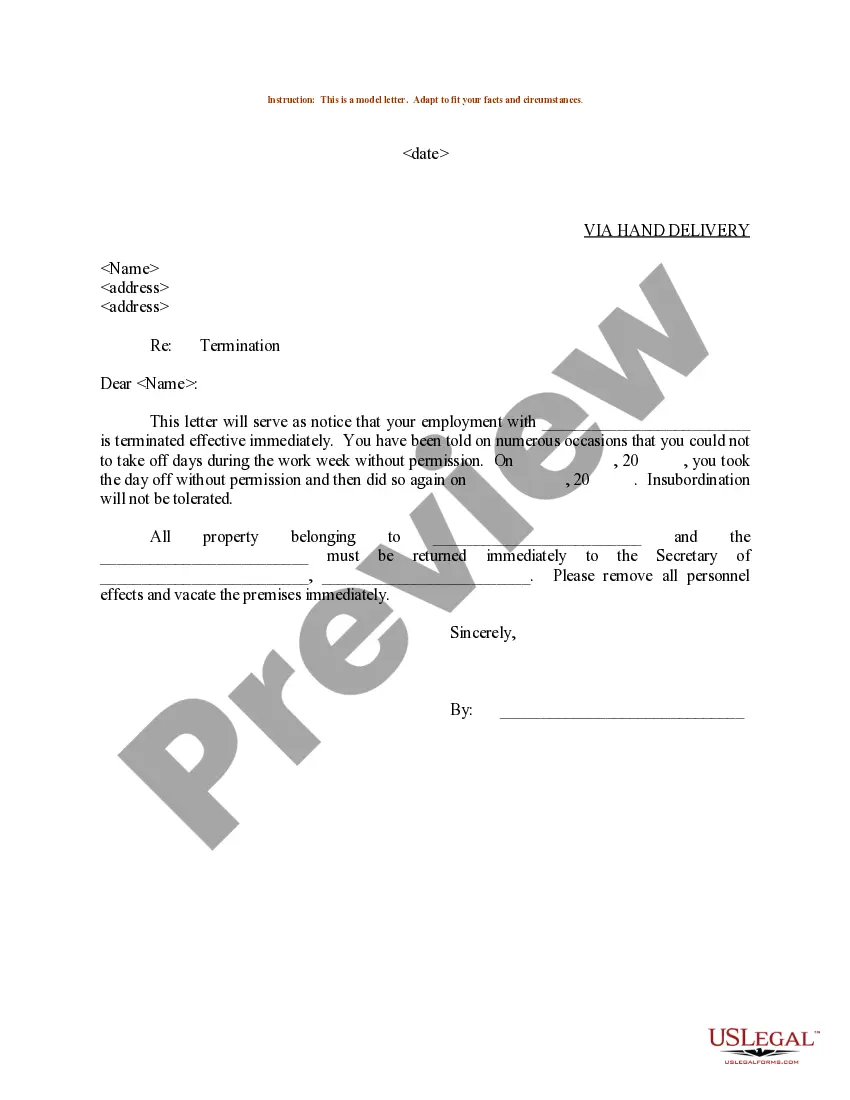
San Diego California Termination Letter for Insubordination
Description
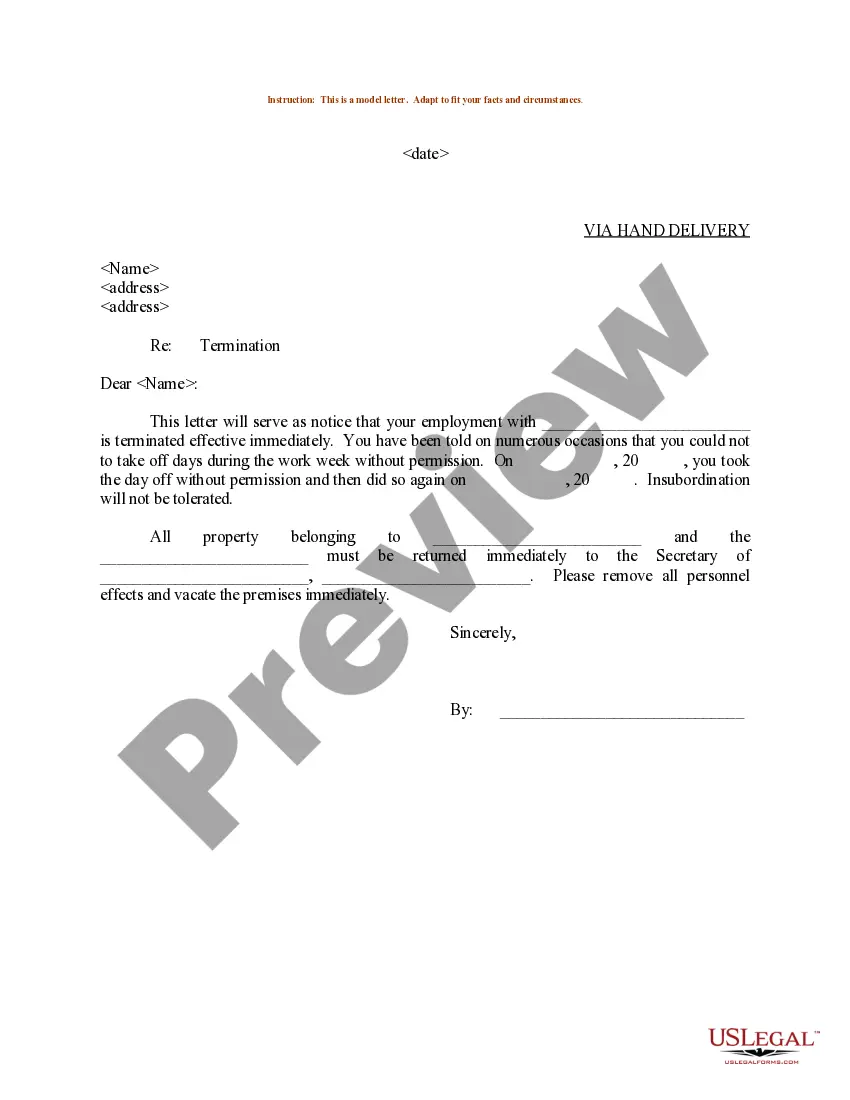
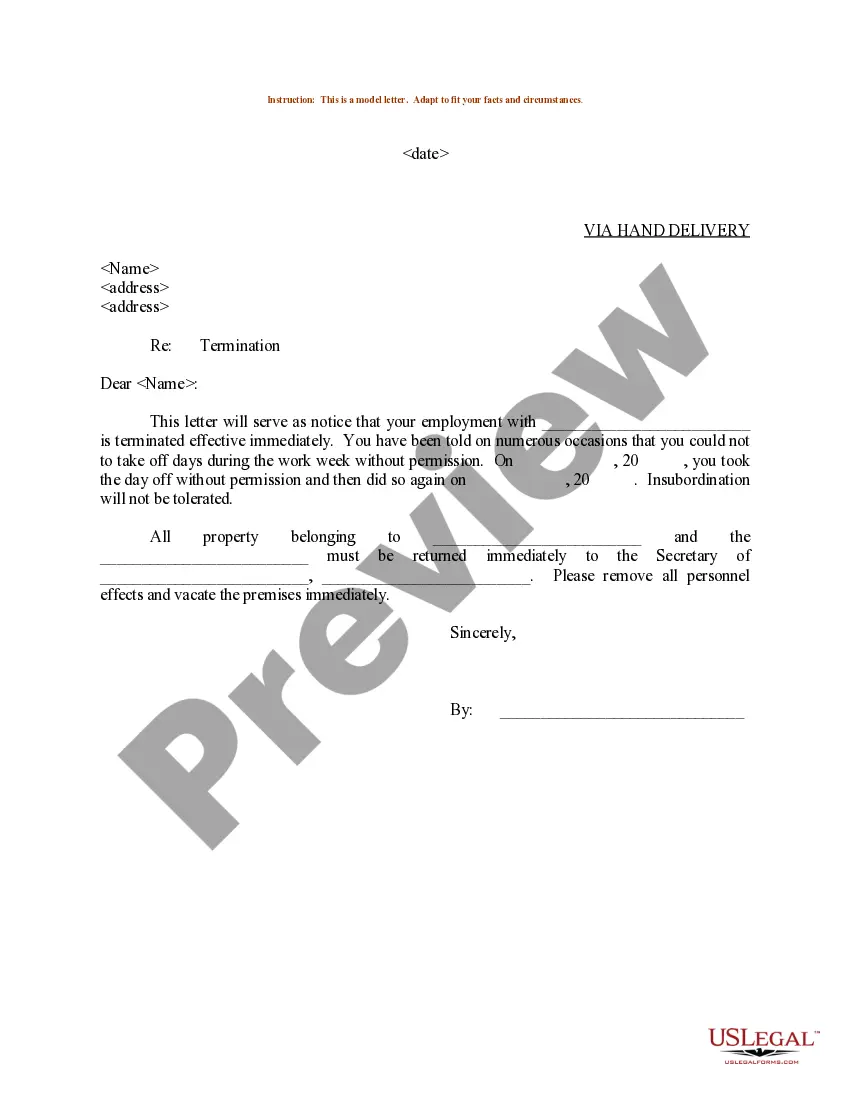
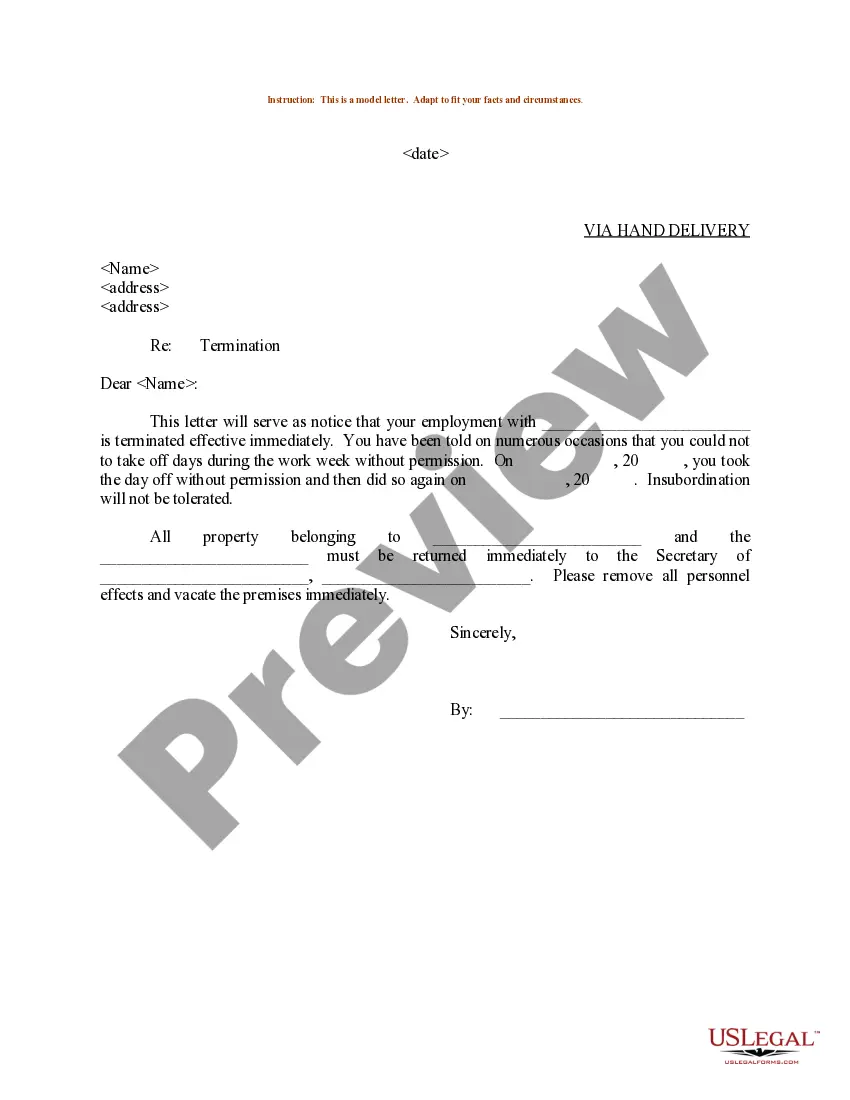
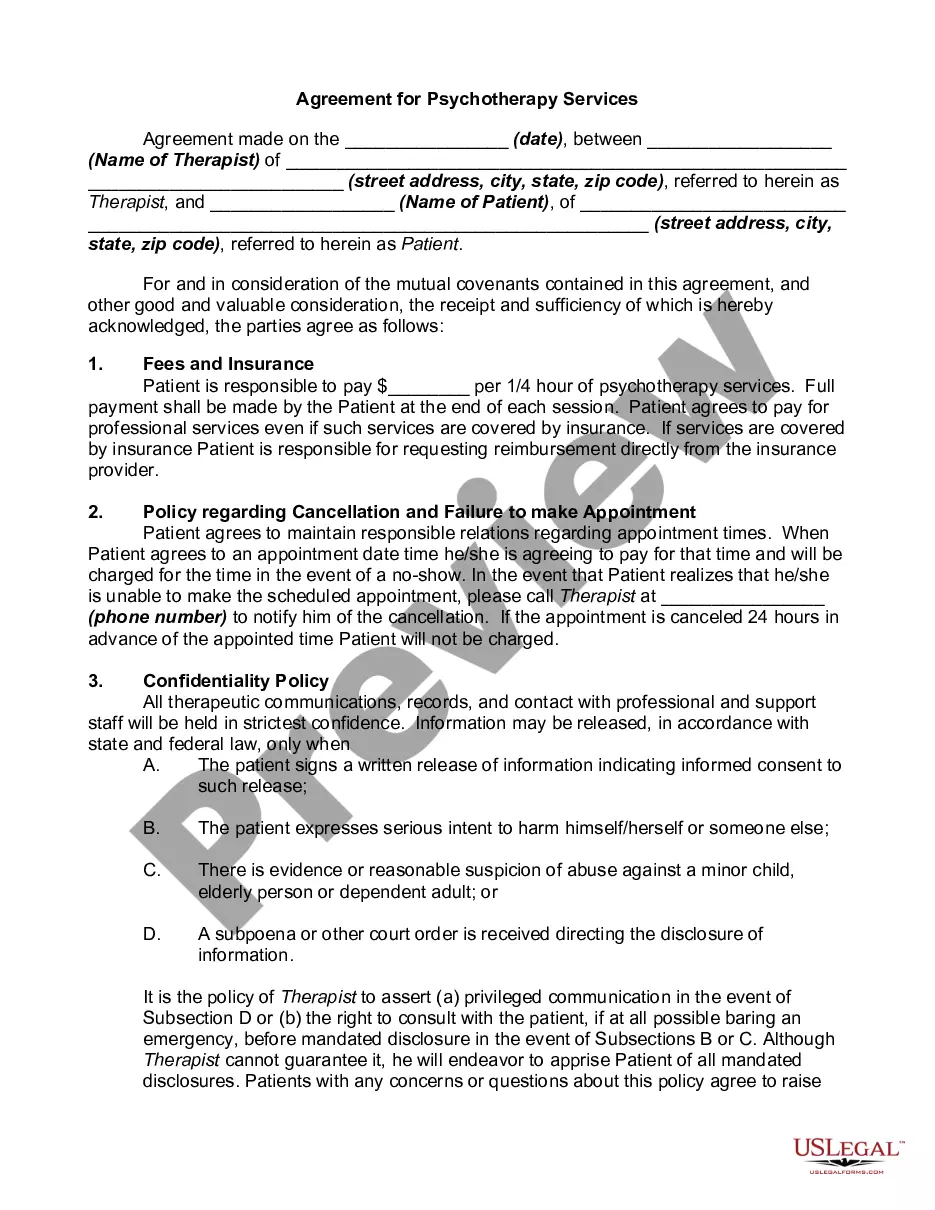
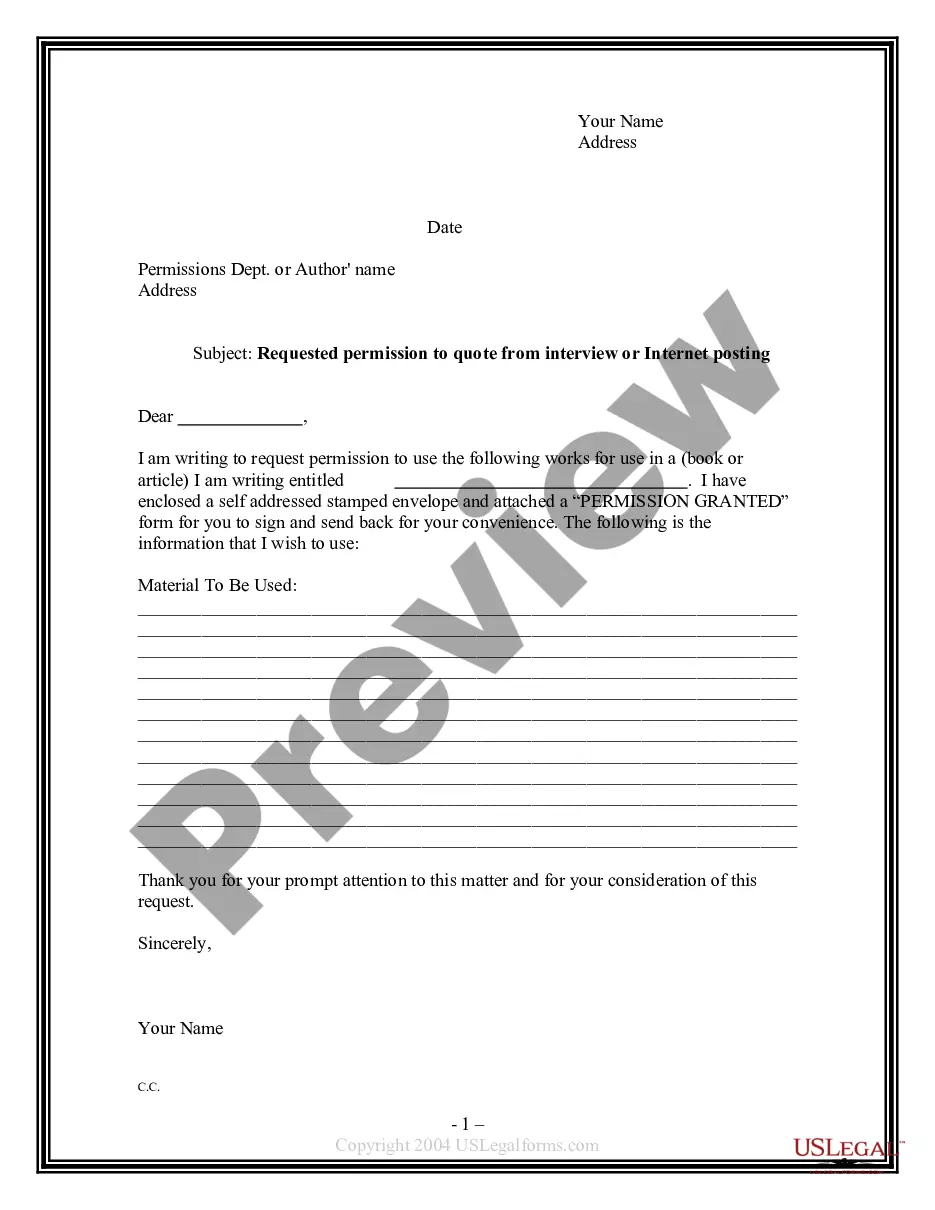
How to fill out Termination Letter For Insubordination?
If you are looking for a reliable legal document provider to obtain the San Diego Termination Letter for Insubordination, your search ends here with US Legal Forms. Whether you wish to initiate your LLC enterprise or manage the distribution of your assets, we have you covered. You don’t need to possess legal expertise to find and download the necessary document.
You can easily search for the San Diego Termination Letter for Insubordination, using either a keyword or the relevant state/county for which the document is intended. Once you find the desired form, you can Log In to download it or save it in the My documents section.
Don't have an account? It's simple to get started! Just locate the San Diego Termination Letter for Insubordination template and review the form's preview and brief introductory information (if available). If you are confident about the terminology in the template, proceed to hit Buy now. Register an account and select a subscription plan. The template will be instantly available for download once the payment is processed. You can now proceed with the form.
Managing your legal affairs doesn’t need to be expensive or time-consuming. US Legal Forms is here to prove that. Our extensive selection of legal documents makes this process more affordable and less burdensome. Start your first business, organize your advanced healthcare directives, create a property agreement, or complete the San Diego Termination Letter for Insubordination - all from the comfort of your home.
Enroll in US Legal Forms today!
- Browse through over 85,000 documents organized by state/county and case type.
- The user-friendly interface, extensive resources, and dedicated assistance make it simple to locate and complete a variety of documents.
- US Legal Forms has been a trusted provider of legal forms to millions since 1997.
Form popularity
FAQ
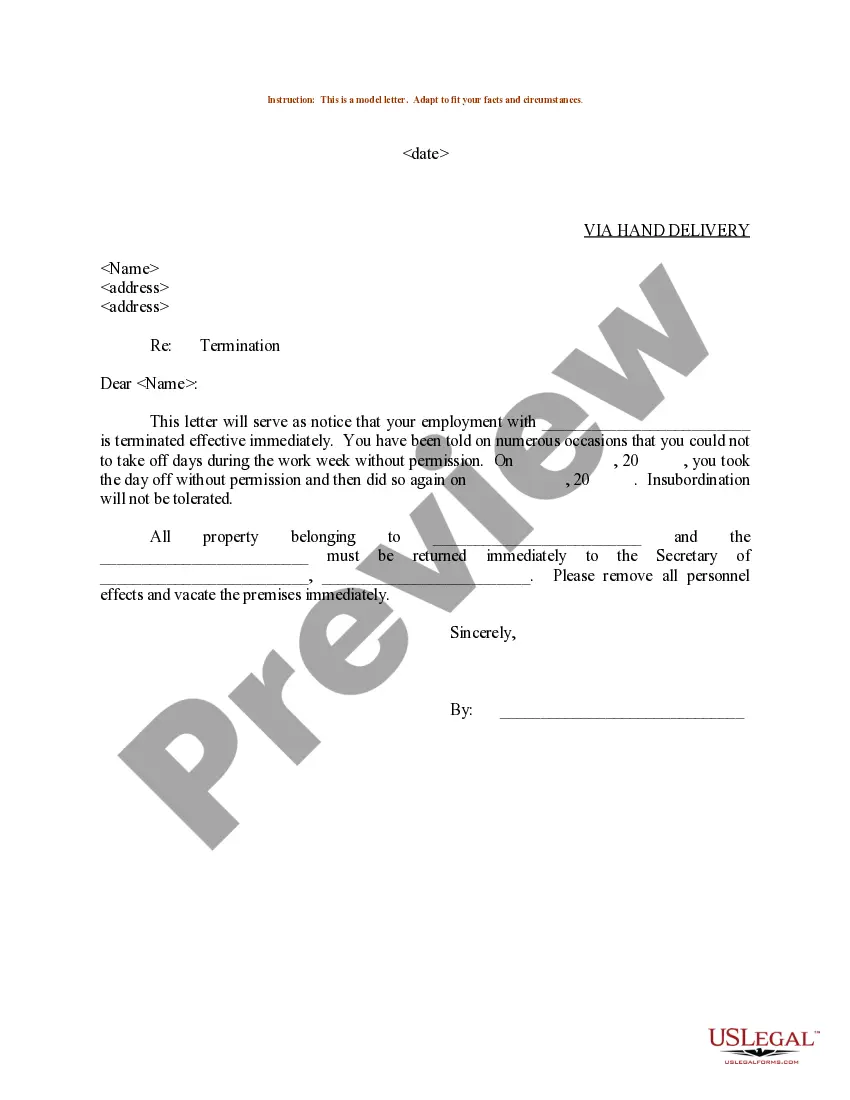
The termination letter for insubordination format should include the date the letter is written, the date of the alleged violation(s), proof of the violation(s), the effective date of the termination, and information regarding the employee's last paycheck.
Generally, insubordination requires cumulative acts with prior reprimands or warnings.... Refusal to Transfer. When an employee refuses to transfer (whether in plant or to another location), he or she is withholding services from the employer.Refusal to Work a Different Shift.Refusal to Work Overtime.
Insubordination refers to an employee who is outright disobedient or disrespectful to a manager or owner of a business. Examples of insubordination include: Refusal to obey commands of a supervisor. Disrespect shown to higher-ups in the form of vulgar or mocking language.
Insubordination can result in increased stress and anxiety for you and for your other employees. Workers may feel they are overburdened and unappreciated. You too can experience distress by being able to rein in poorly performing employees, which can negatively impact your ability to be an effective manager.
Insubordination in the workplace refers to an employee's intentional refusal to obey an employer's lawful and reasonable orders. Such a refusal would undermine a supervisor's level of respect and ability to manage and, therefore, is often a reason for disciplinary action, up to and including termination.
Employers must show three things to prove insubordination when a worker refuses to follow an order, Glasser said: A supervisor made a direct request or order. The employee received and understood the request. The employee refused to comply with the request through action or noncompliance.
Insubordination in the workplace refers to an employee's intentional refusal to obey an employer's lawful and reasonable orders. Such a refusal would undermine a supervisor's level of respect and ability to manage and, therefore, is often a reason for disciplinary action, up to and including termination.
Some examples of insubordination include: An employee who refuses to perform a necessary job task when ordered to do so; An employee who refuses to come into work; An employee's failure to seek permission to take a leave; An employee who refuses to remain on shift; or.
Write a Rebuttal Letter. If you feel the charge was in error, write a rebuttal letter to explain why you feel that way. In your letter, clearly outline the incident as it happened, correcting any misconceptions or misrepresentations made in the original letter.