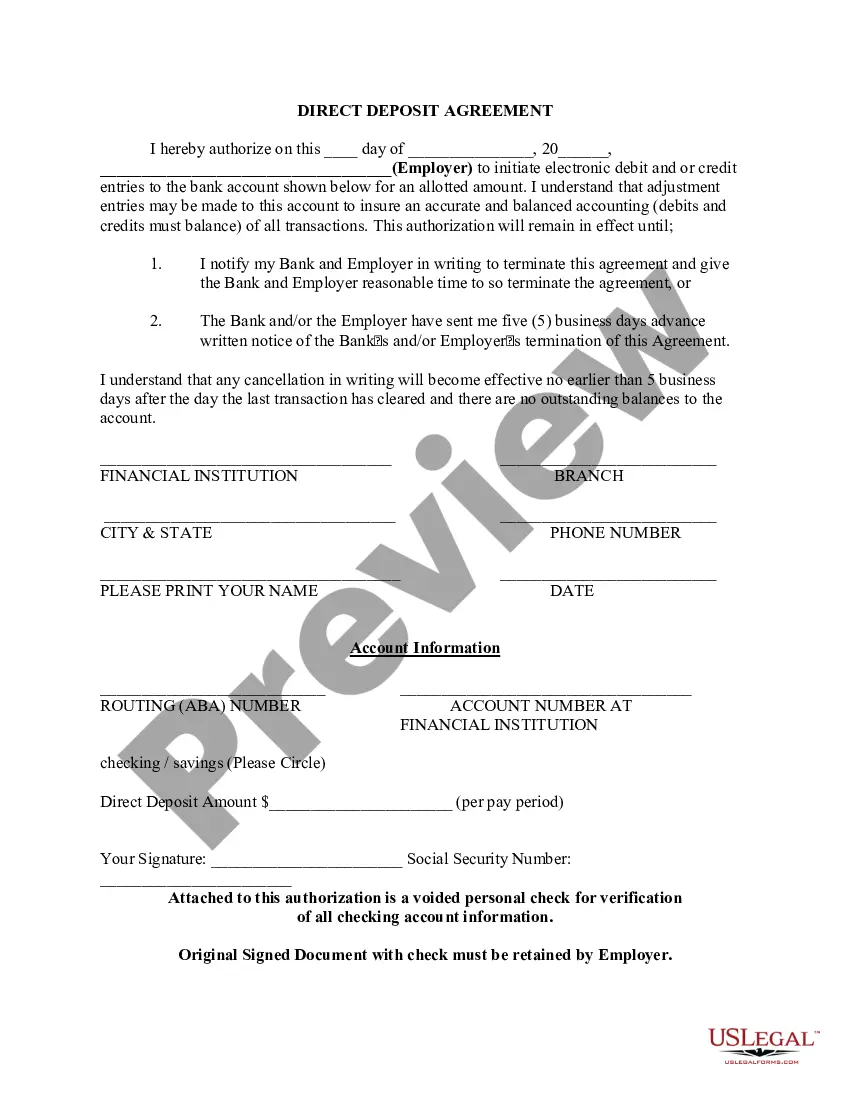
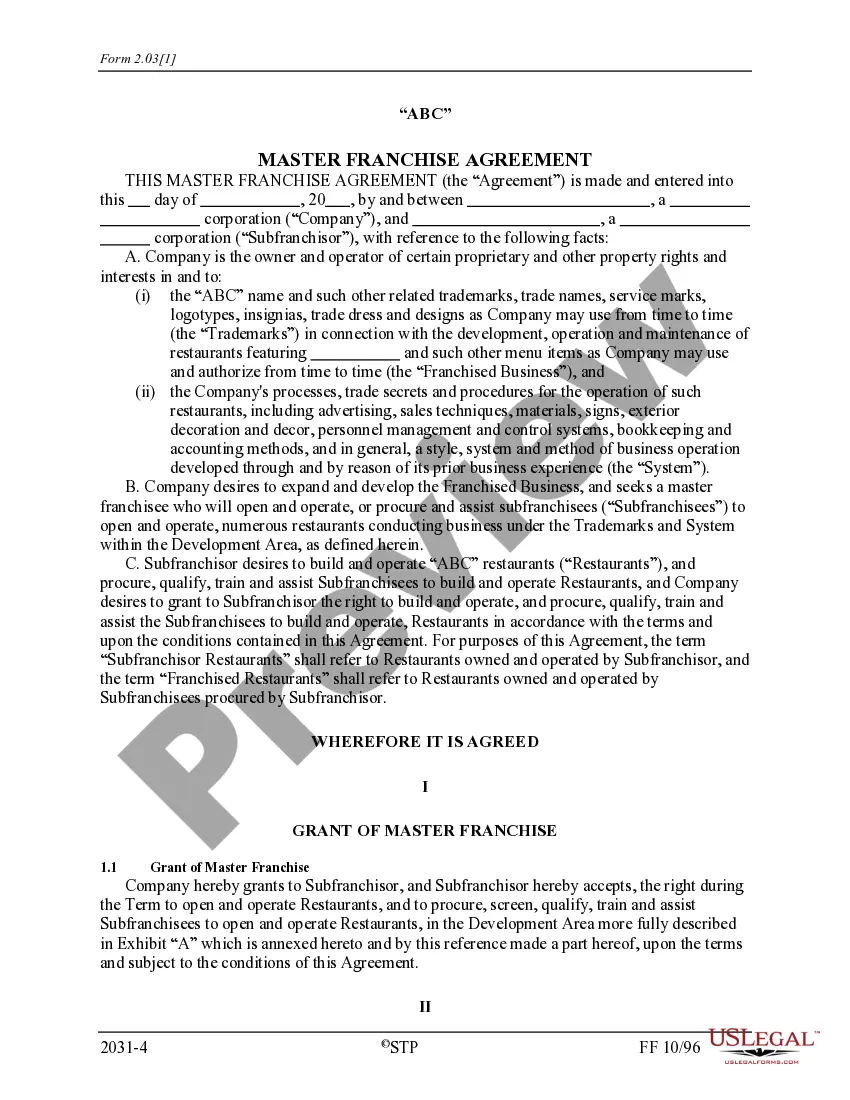
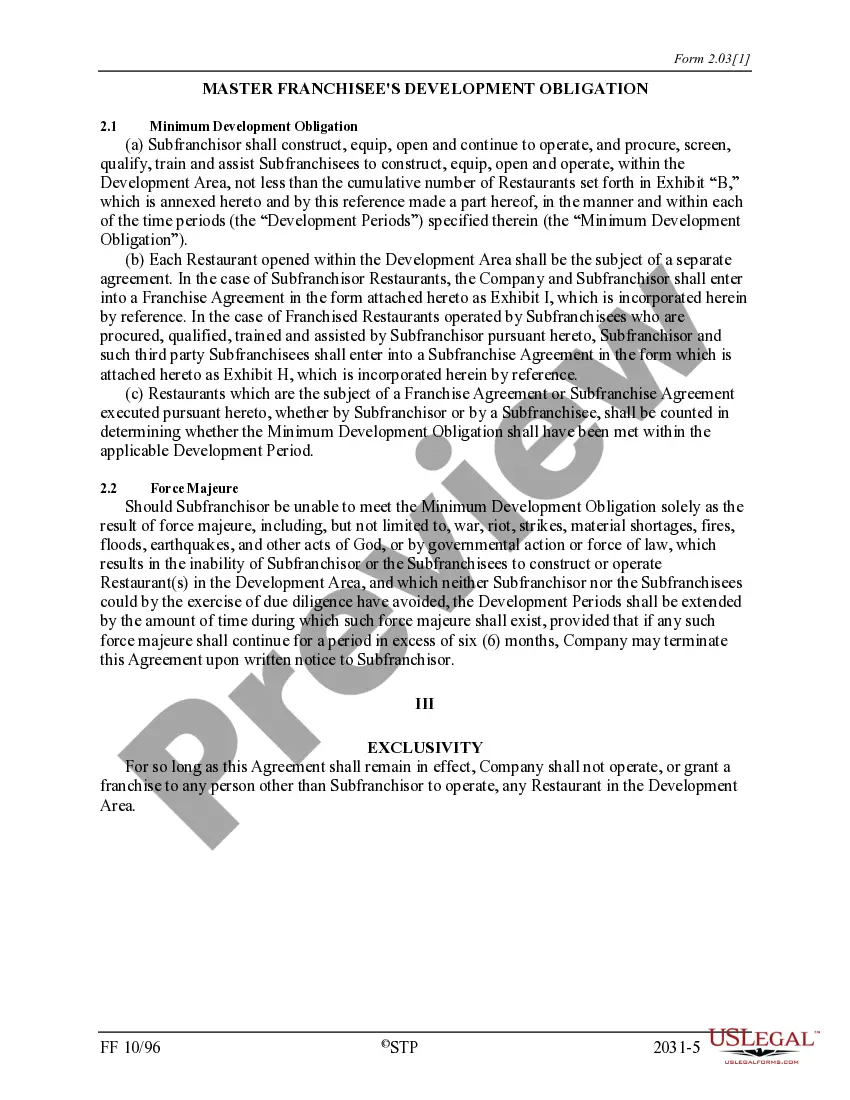
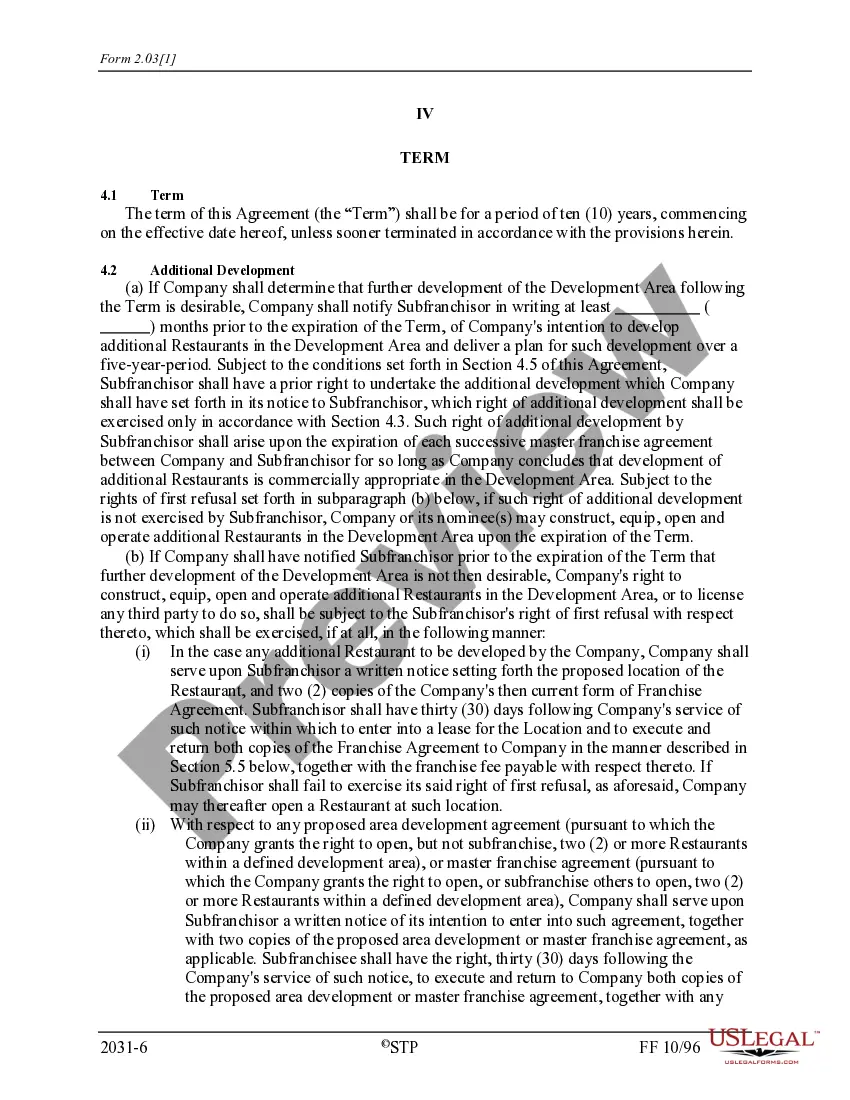
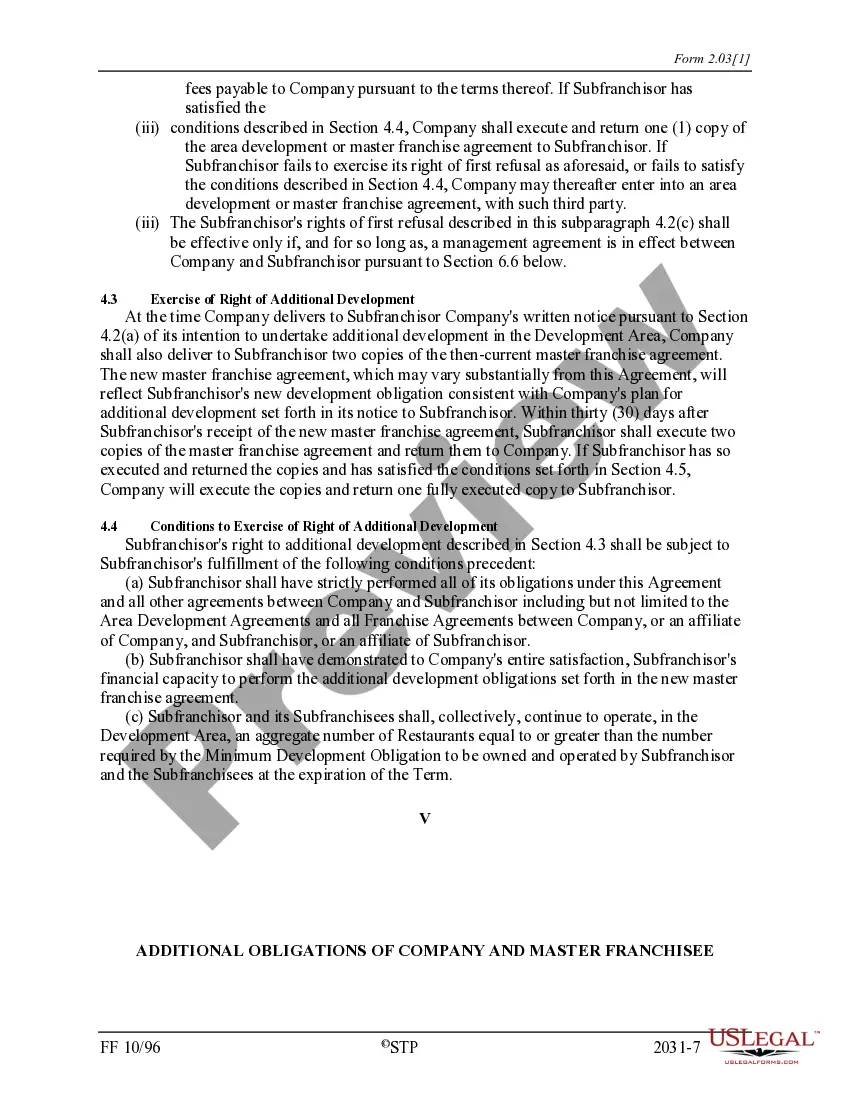
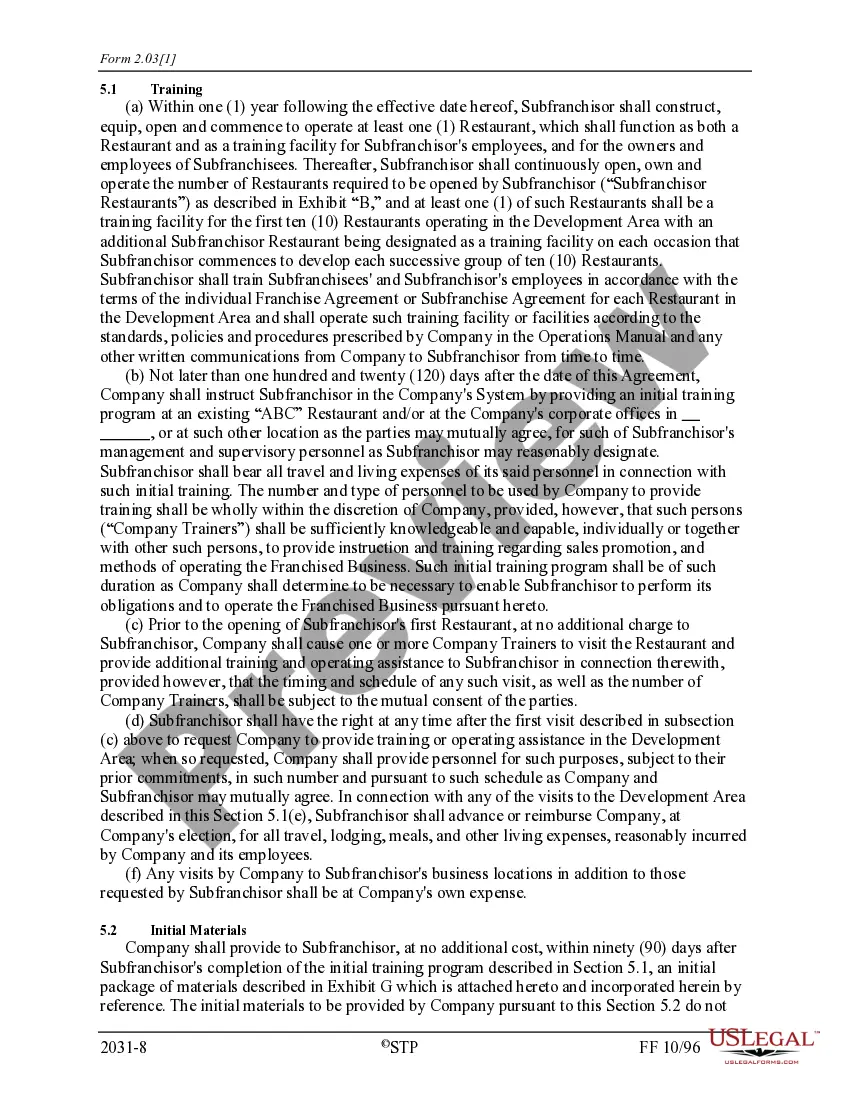
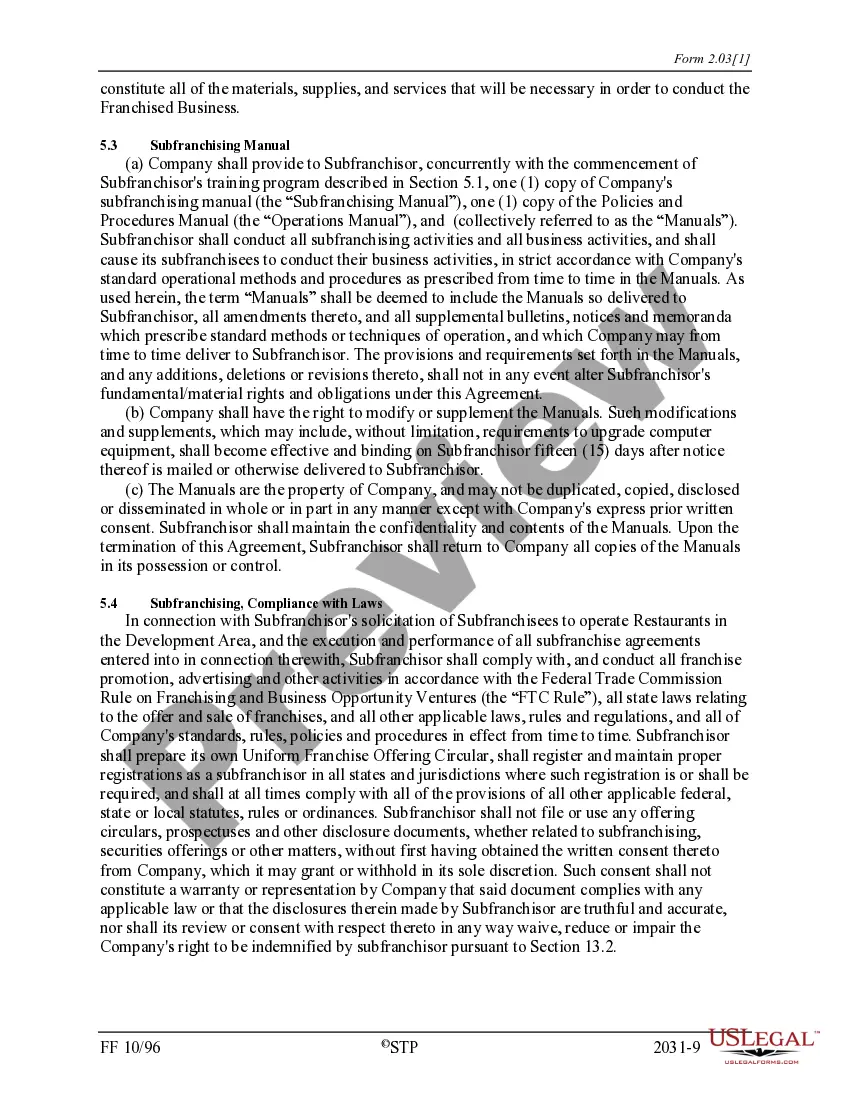
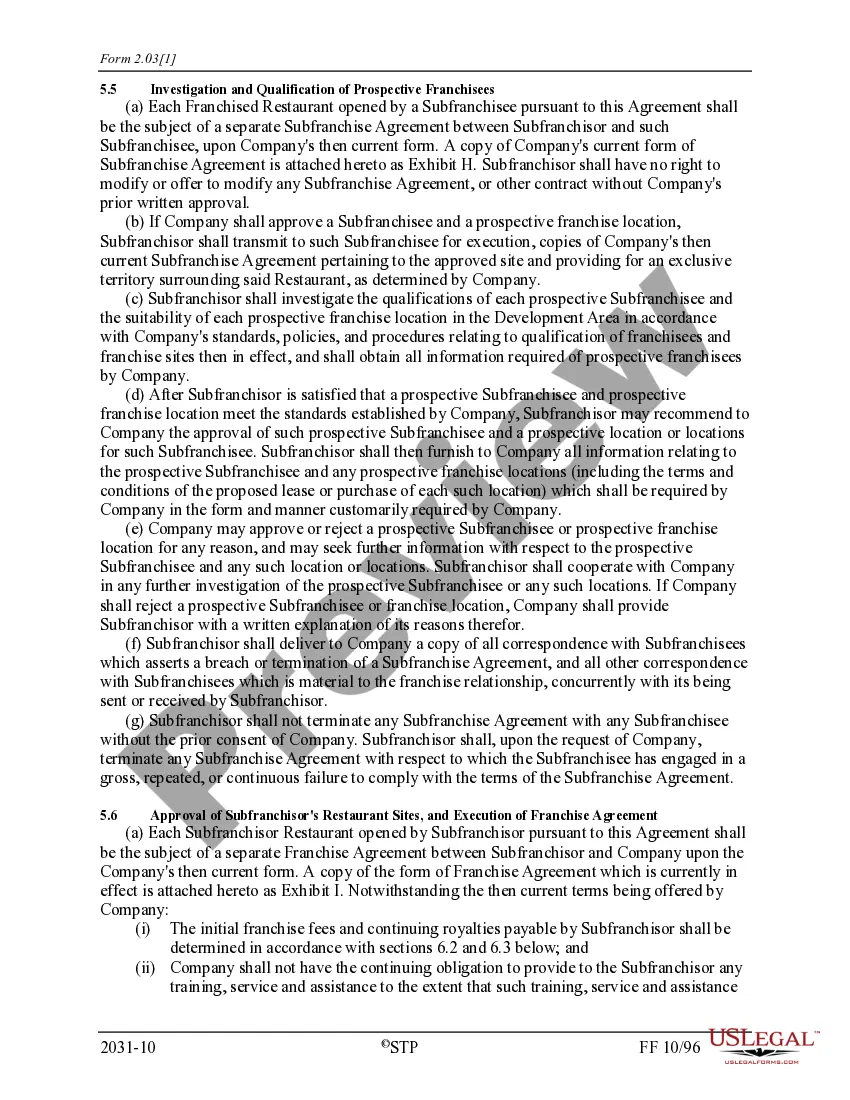
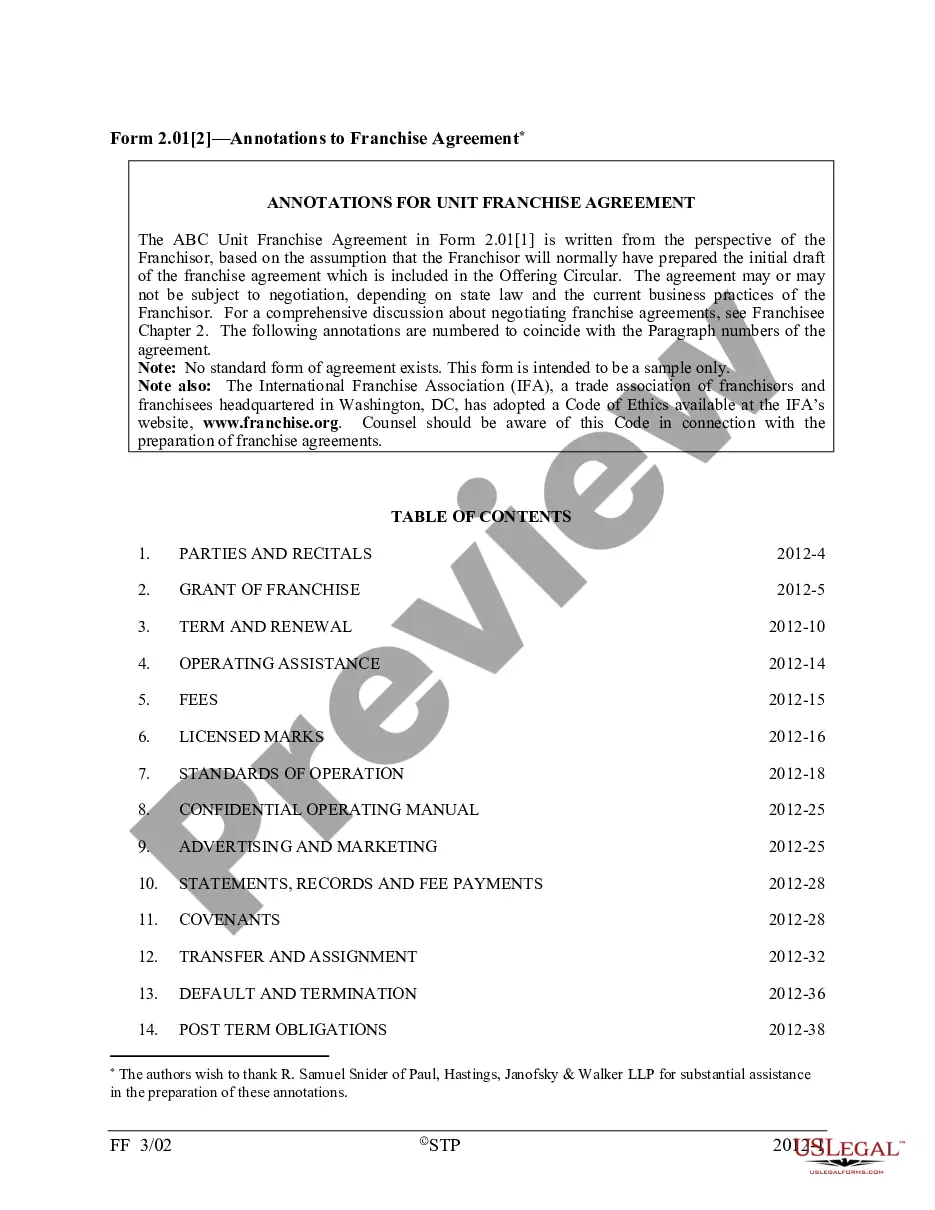
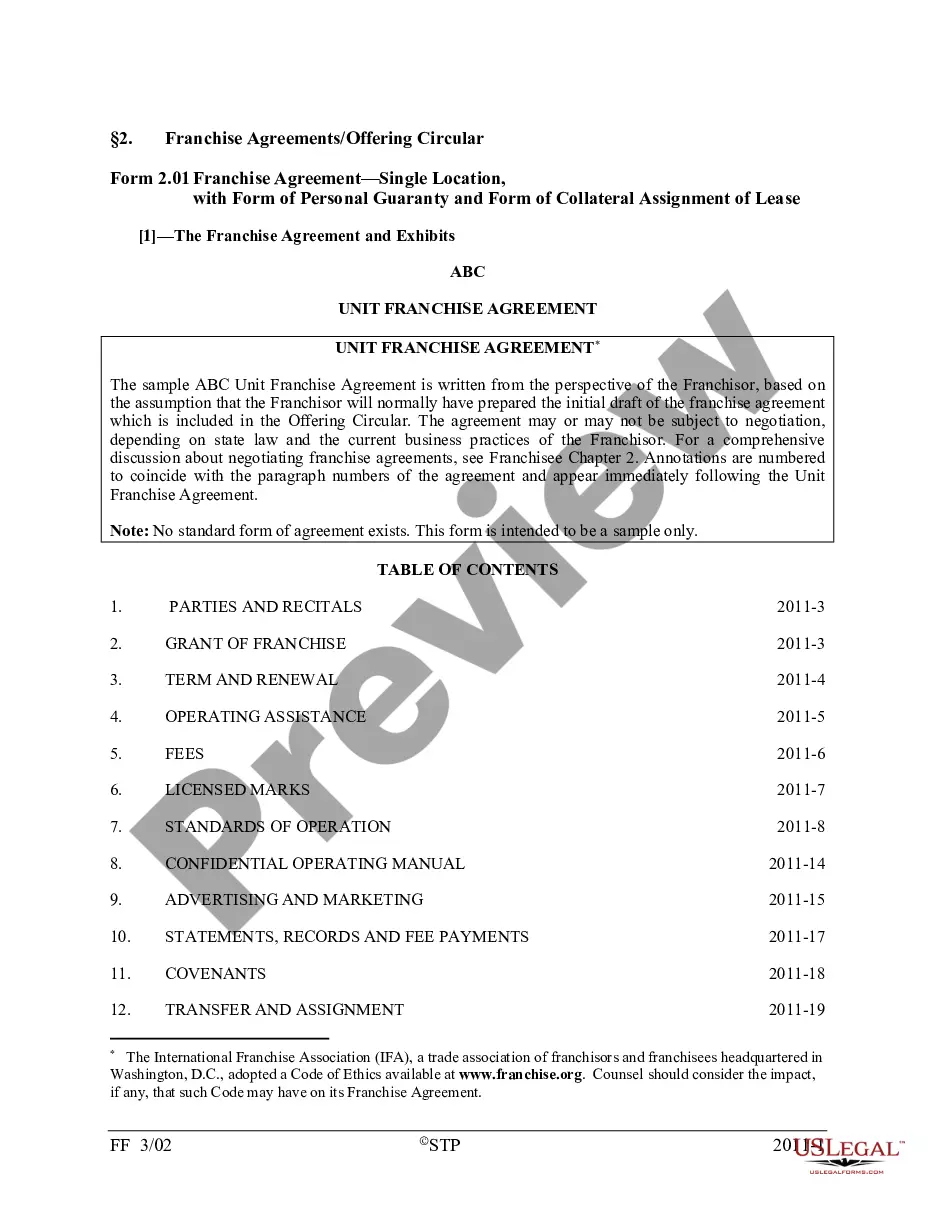
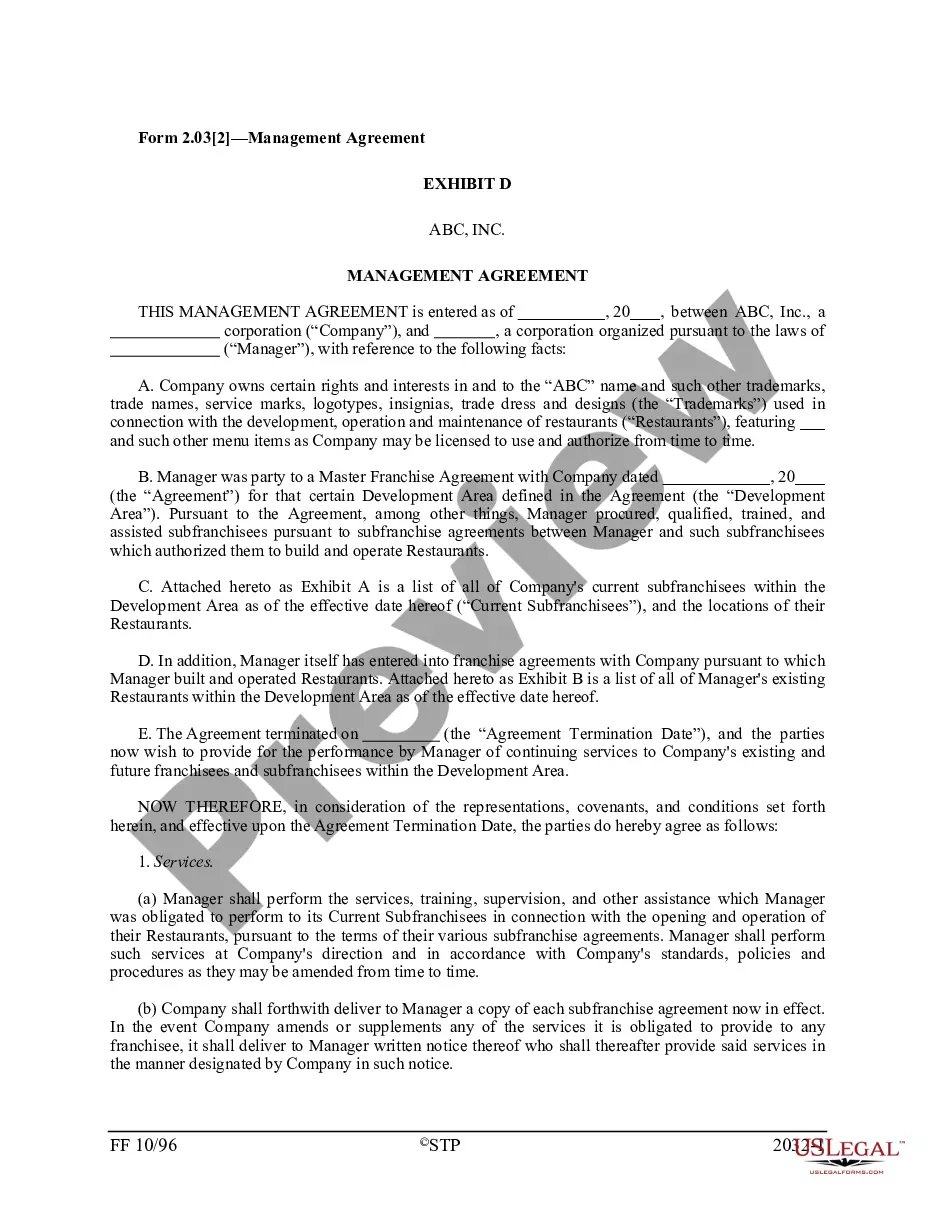
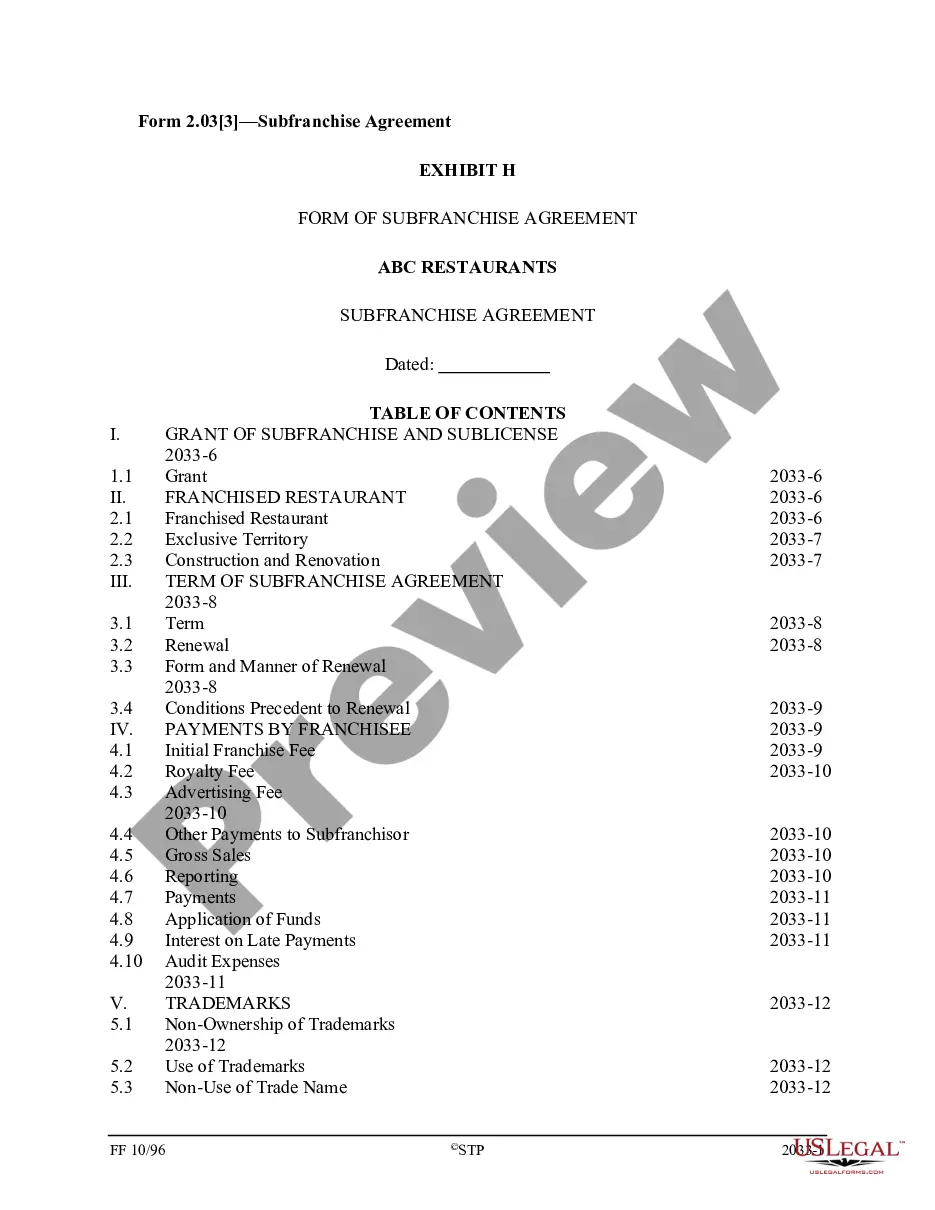
This is a master franchise agreement. The form grants franchise rights to a subfranchisor to operate restaurants and to procure, screen, qualify, train, and assist subfranchisees of the restaurant.
Suffolk New York Master Franchise Agreement
Category:
State:
Multi-State
County:
Suffolk
Control #:
US-2-03-STP
Format:
Word;
Rich Text
Instant download
Description
Free preview
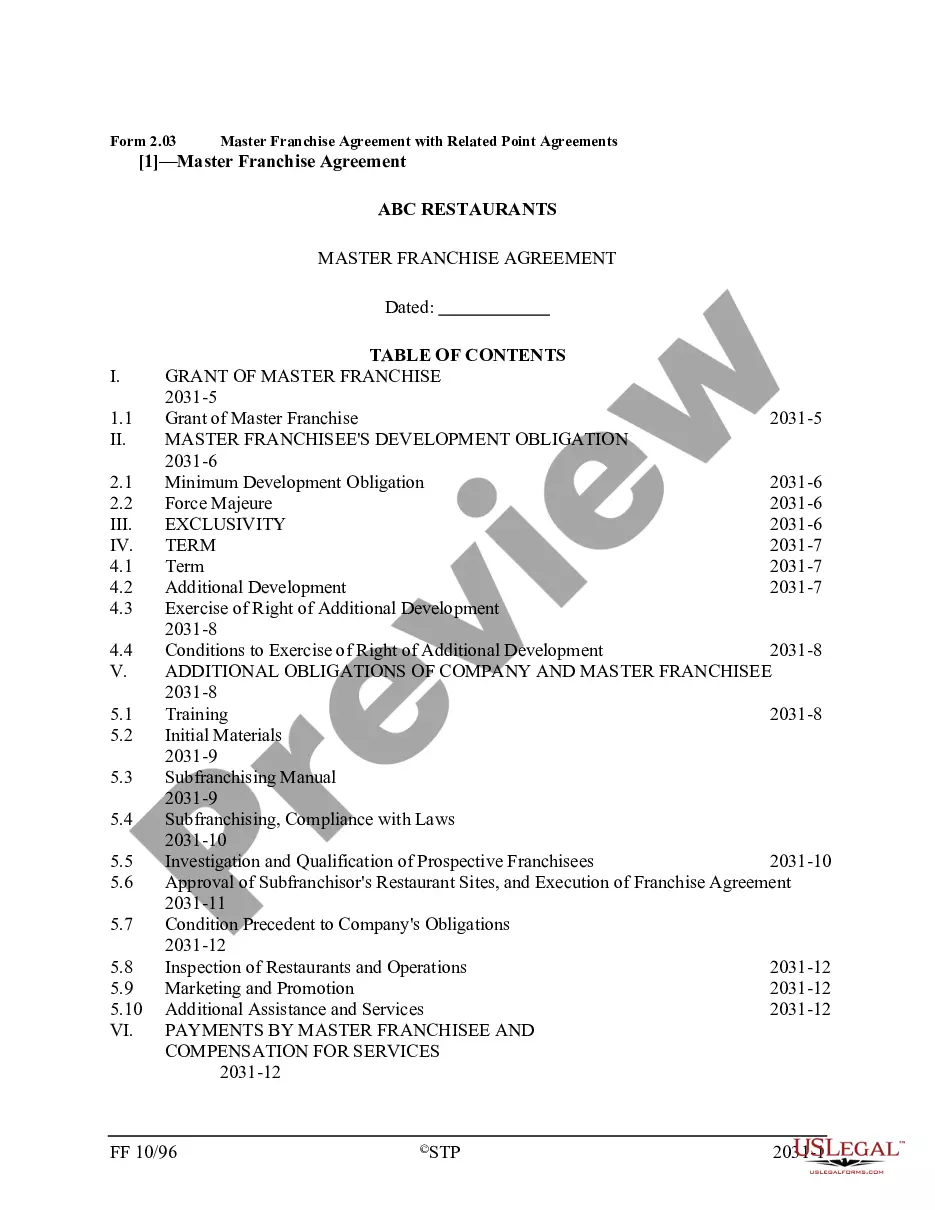
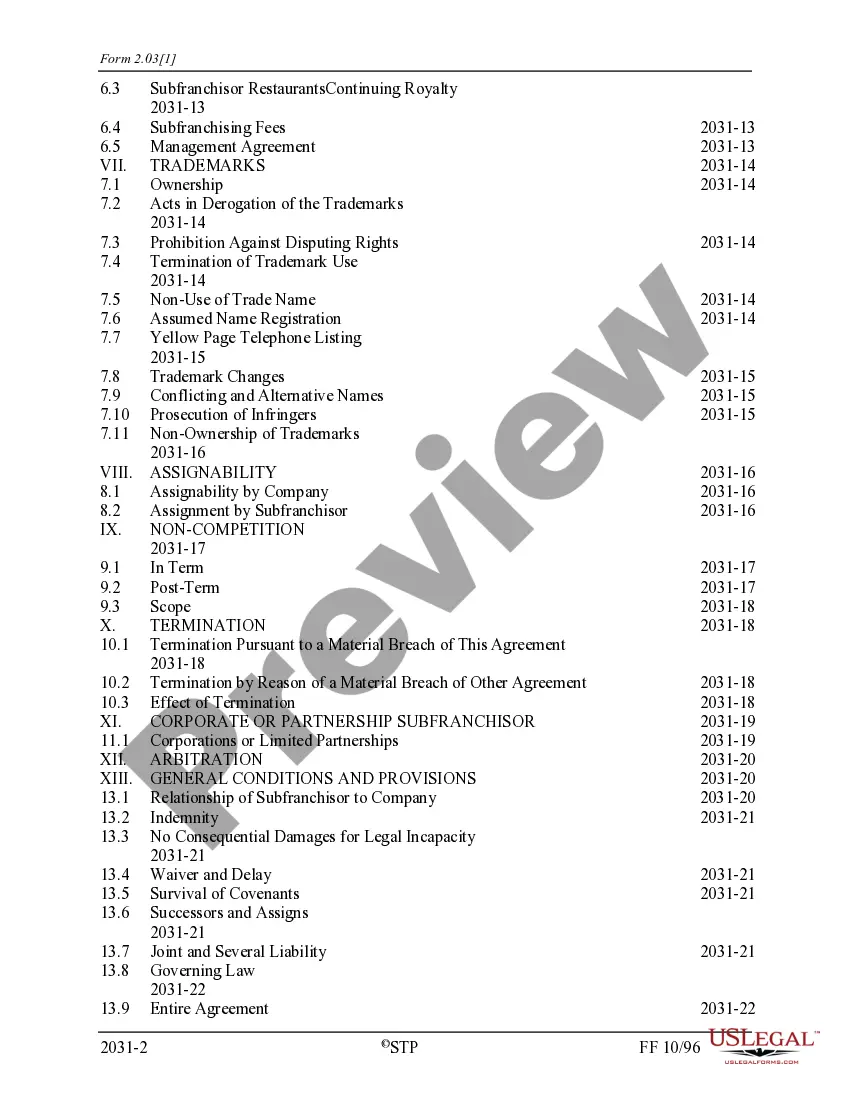
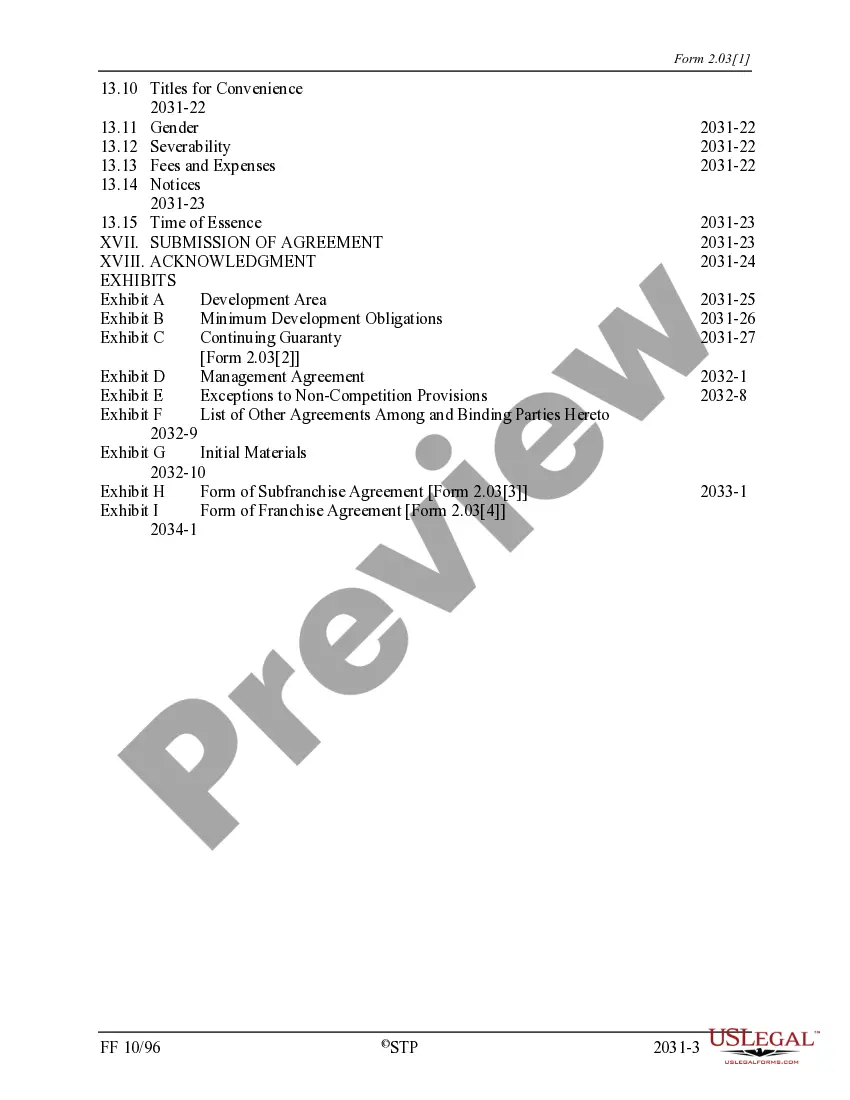





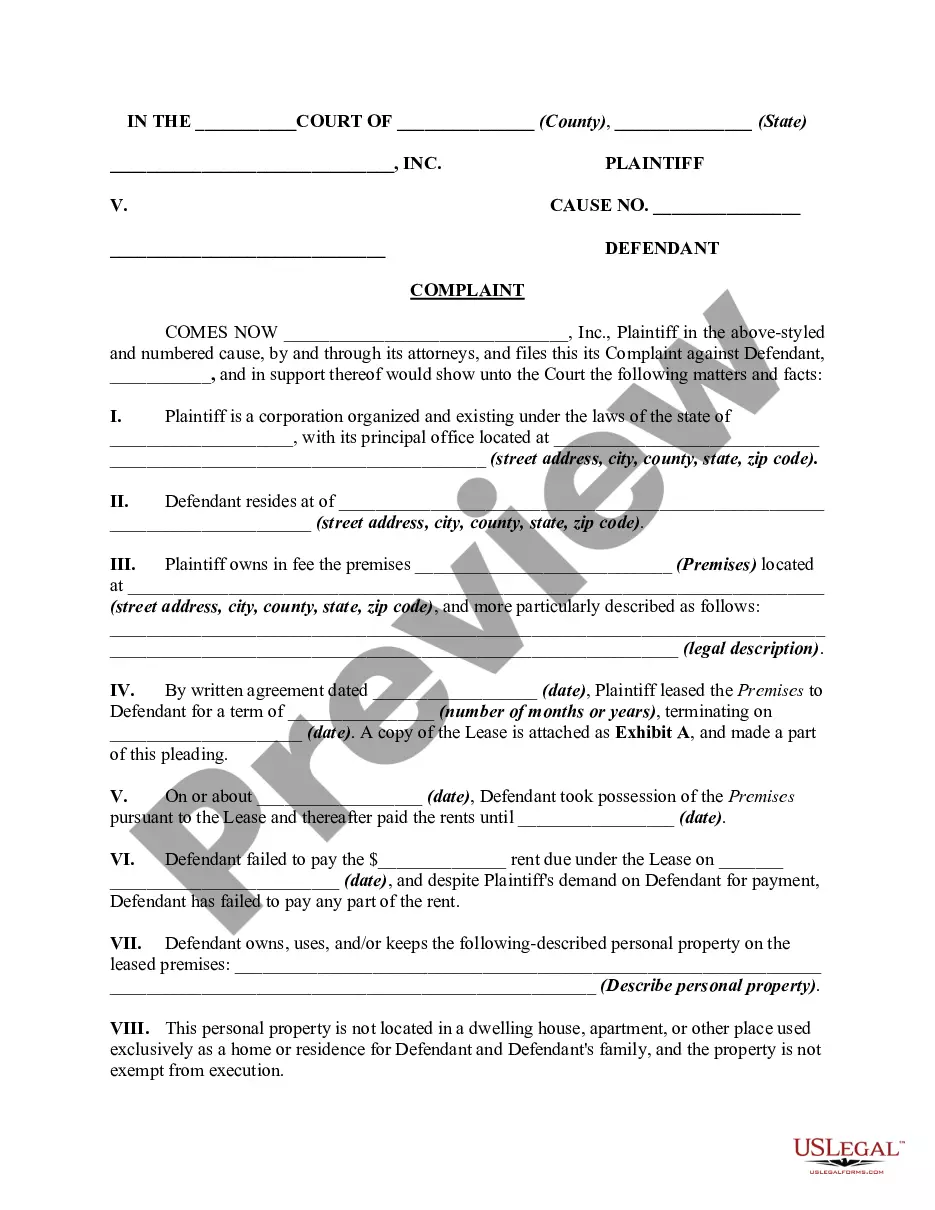
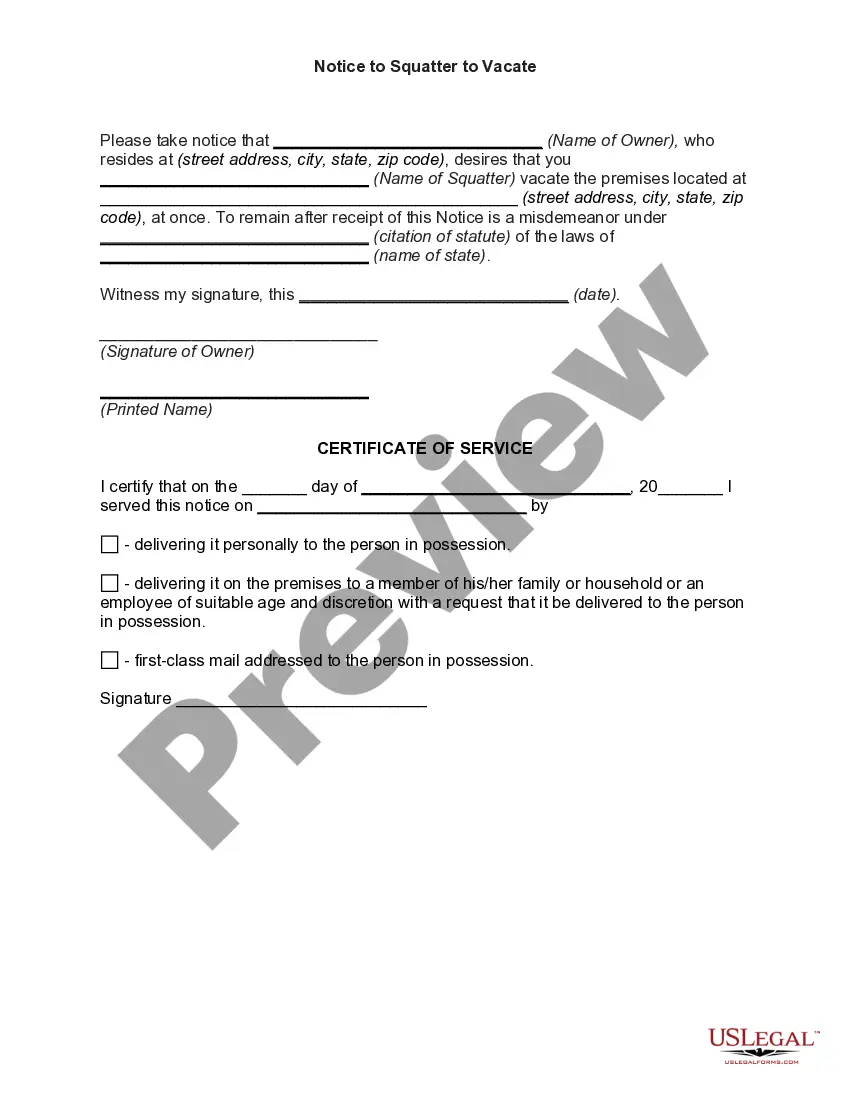
How to fill out Master Franchise Agreement?
Creating documents, such as the Suffolk Master Franchise Agreement, to oversee your legal matters is a challenging and time-intensive endeavor.
Many situations necessitate a lawyer’s involvement, which also renders this job costly.
However, you can take charge of your legal concerns and handle them on your own.
The onboarding process for new users is just as easy! Here’s what you should do before acquiring the Suffolk Master Franchise Agreement: Ensure that your document complies with your state or county since the rules for creating legal documents may vary from one region to another. Learn more about the form by previewing it or reviewing a brief introduction. If the Suffolk Master Franchise Agreement isn’t what you need, feel free to use the search bar at the top to find another option.
- US Legal Forms is here to help.
- Our site offers over 85,000 legal templates designed for various situations and life events.
- We ensure each document complies with state regulations, so you won’t have to worry about potential legal risks related to compliance.
- If you're already acquainted with our site and hold a subscription with US, you understand how simple it is to obtain the Suffolk Master Franchise Agreement form.
- Simply Log In to your account, download the template, and adapt it to your needs.
- Lost your document? No problem. You can access it in the My documents section of your account - on either desktop or mobile.
Form popularity
FAQ
The Franchise Agreement Location/territory.Operations.Training and ongoing support.Duration.Franchise fee/investment.Royalties/ongoing fees.Trademark/patent/signage.Advertising/marketing.
A contract may require heirs to meet qualification standards set by the company. The new owners may need to meet certain personal and financial criteria required by the company. In most cases, franchise agreements require heirs to sell the franchise back to the corporation.
A master franchise is a franchise relationship in which the owner of the franchise brand (the master franchisor) grants to another party the right to recruit new franchisees in a specific area.
The three types of franchise agreements include: Master Franchise Agreement. Area Representative. Area Development Agreement.
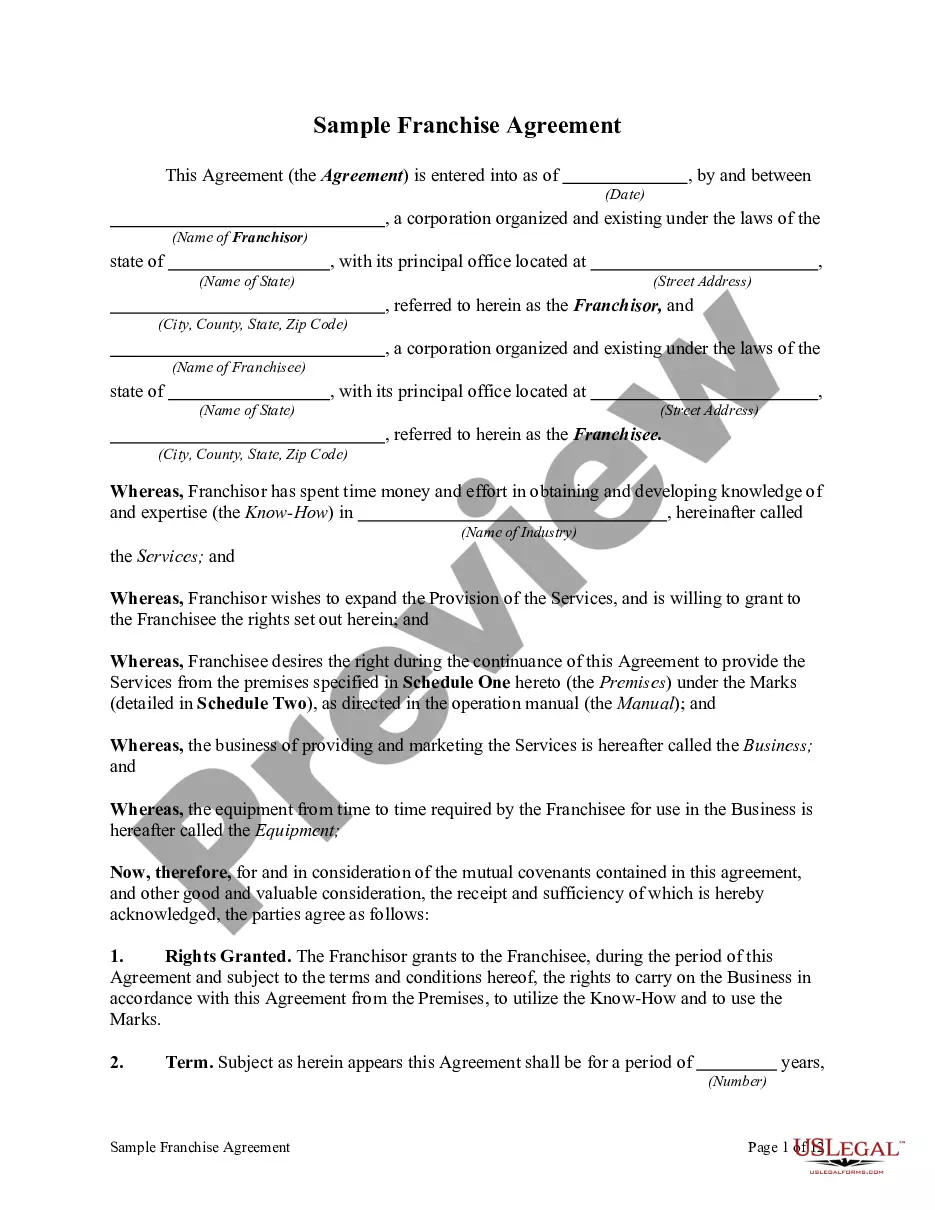
A franchise agreement is a contract under which the franchisor grants the franchisee the right to operate a business, or offer, sell, or distribute goods or services identified or associated with the franchisor's trademark.
A franchise agreement will usually contain the franchisee's obligations relating to performance criteria, payment of fees (royalties, marketing fees, training fees, transfer fees, termination fees, utility levies etc.), marketing, reporting, training, supply of products and services, territory etc.
In effect, a master franchisee becomes the franchisor for his territory and is responsible for recruiting and training his own franchisees, whereas in what you call a normal franchise the franchisee simply runs the outlet delivering the product or service.
A master franchisee is responsible for developing the franchise network in a region. Master franchisees will have more autonomy than standard franchisees. However, this will be less than typical franchisors. They have obligations to both the franchisor and to their franchisees.
There are 4 basic types of franchise agreements: Single-unit, multi-unit, area development and master franchising. A single-unit franchise is the most common and is simply where a franchisor grants a franchisee rights to open and operate one single franchise unit.
A master franchise agreement, sometimes called a regional franchise agreement or abbreviated to MFA, is a legal agreement between a franchisor and a master franchisee that allows a franchise owner to become a mini-franchisor and own and operate several businesses within a specified territory.