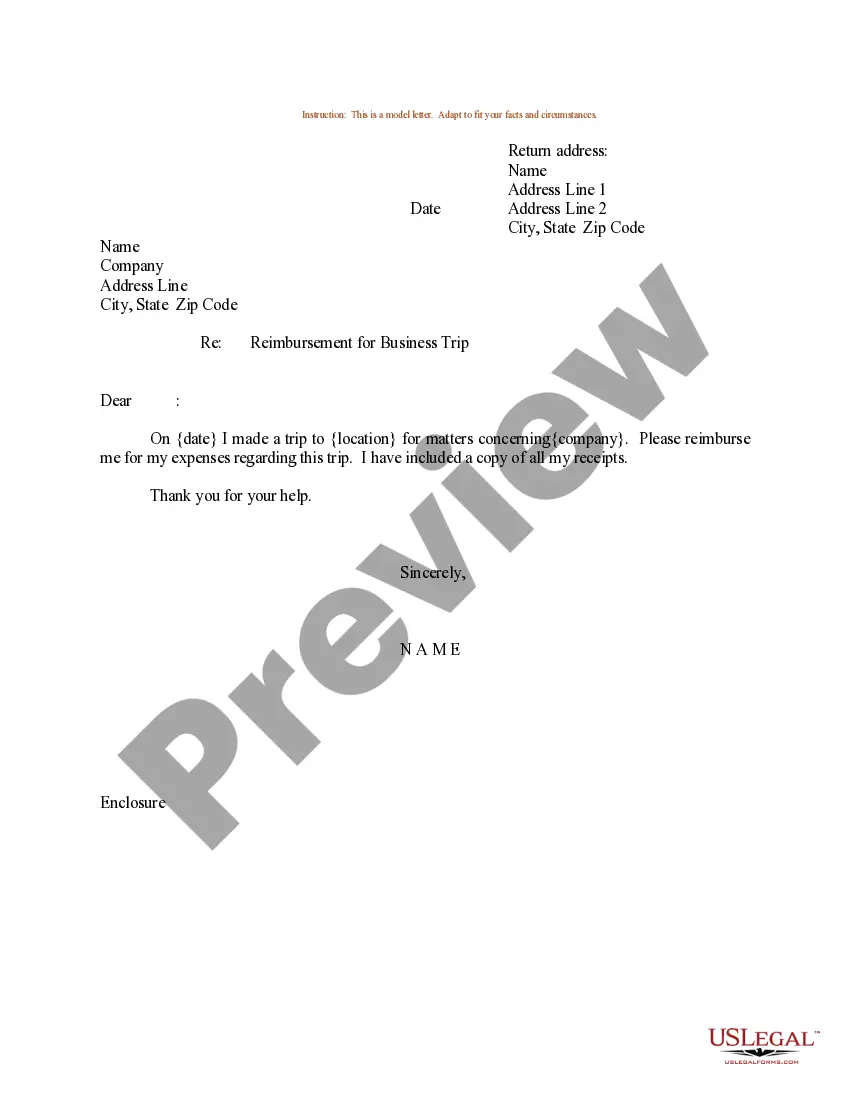
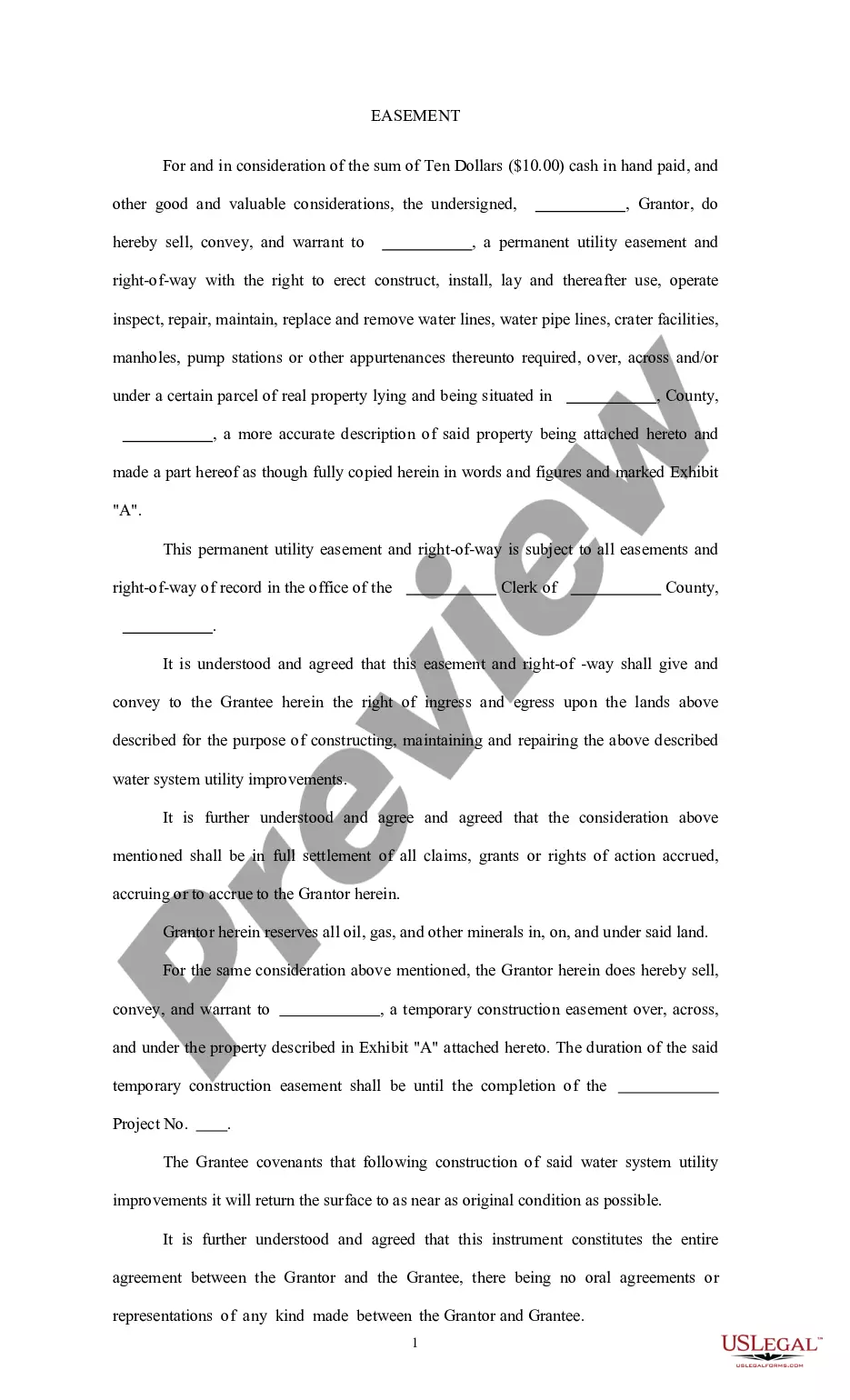
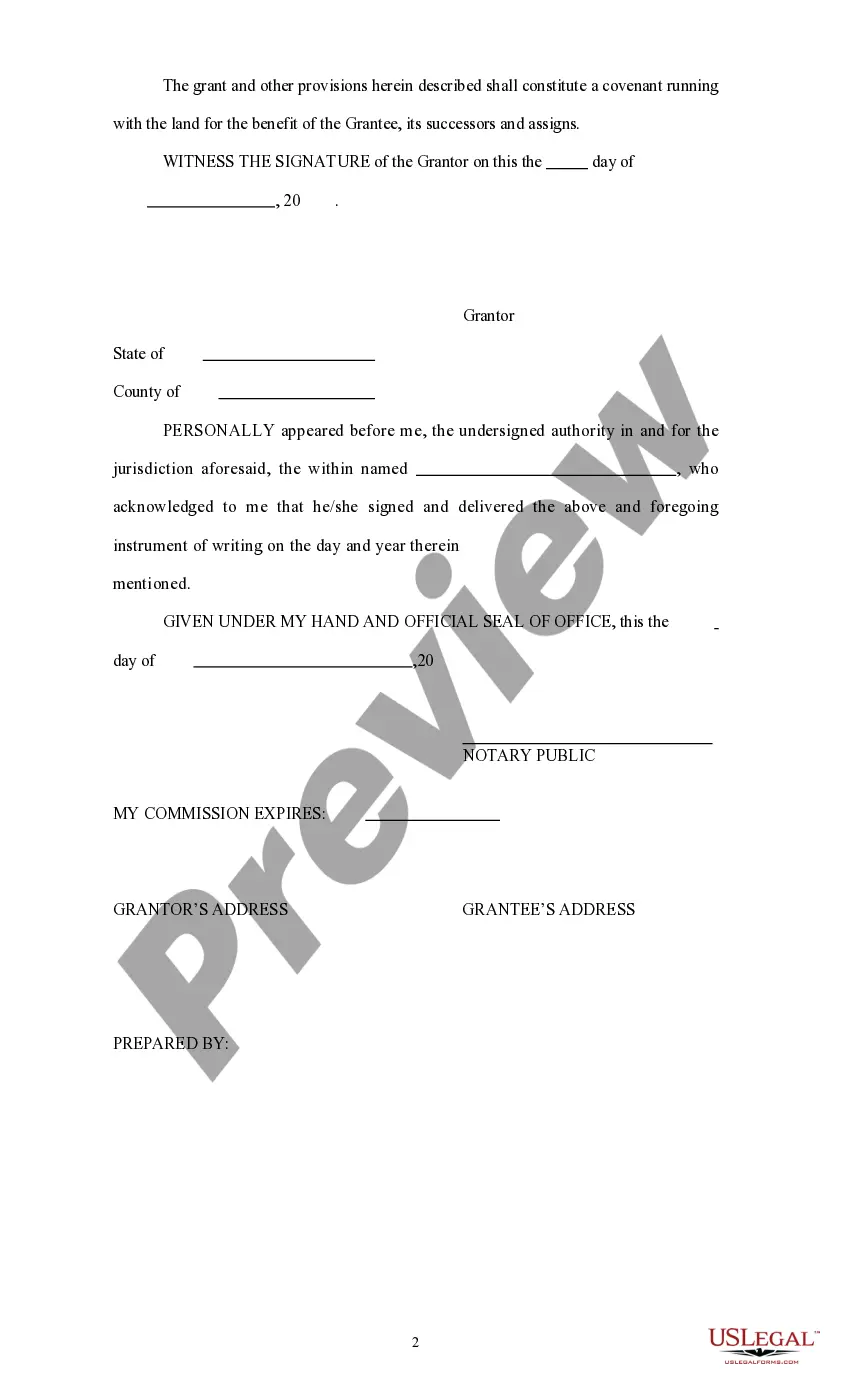
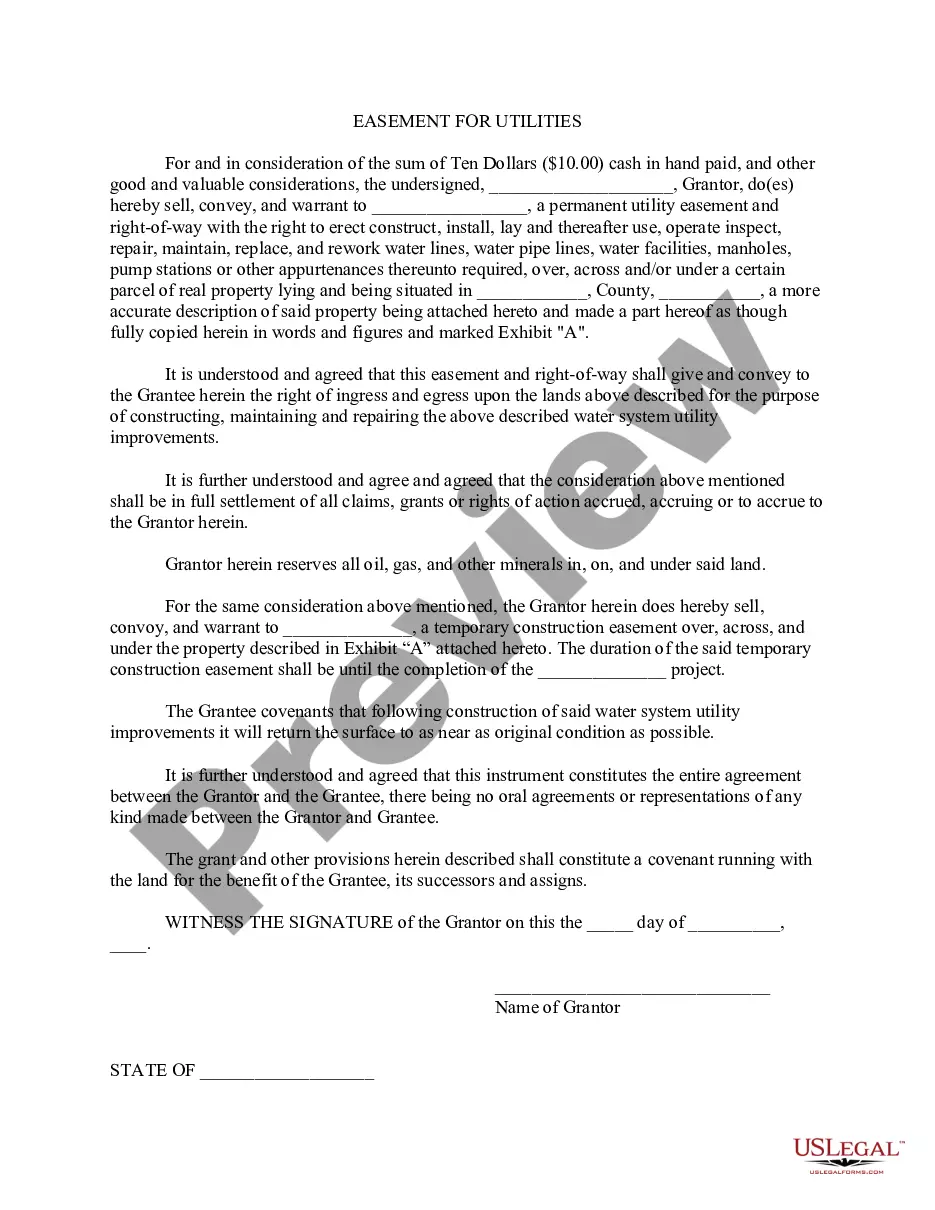
This is a sample form for use in transactions involving easements, a Utility Easement. Allows a permanent utility easement and right of way for water facilities.
An easement gives one party the right to go onto another party's property. That property may be owned by a private person, a business entity, or a group of owners. Utilities often get easements that allow them to run pipes or phone lines beneath private property. Easements may be obtained for access to another property, called "access and egress", use of spring water, entry to make repairs on a fence or slide area, drive cattle across and other uses. The easement is a real property interest, but separate from the legal title of the owner of the underlying land.
Philadelphia Pennsylvania Utility Easement
State:
Multi-State
County:
Philadelphia
Control #:
US-EAS-28
Format:
Word;
Rich Text
Instant download
Description
Free preview
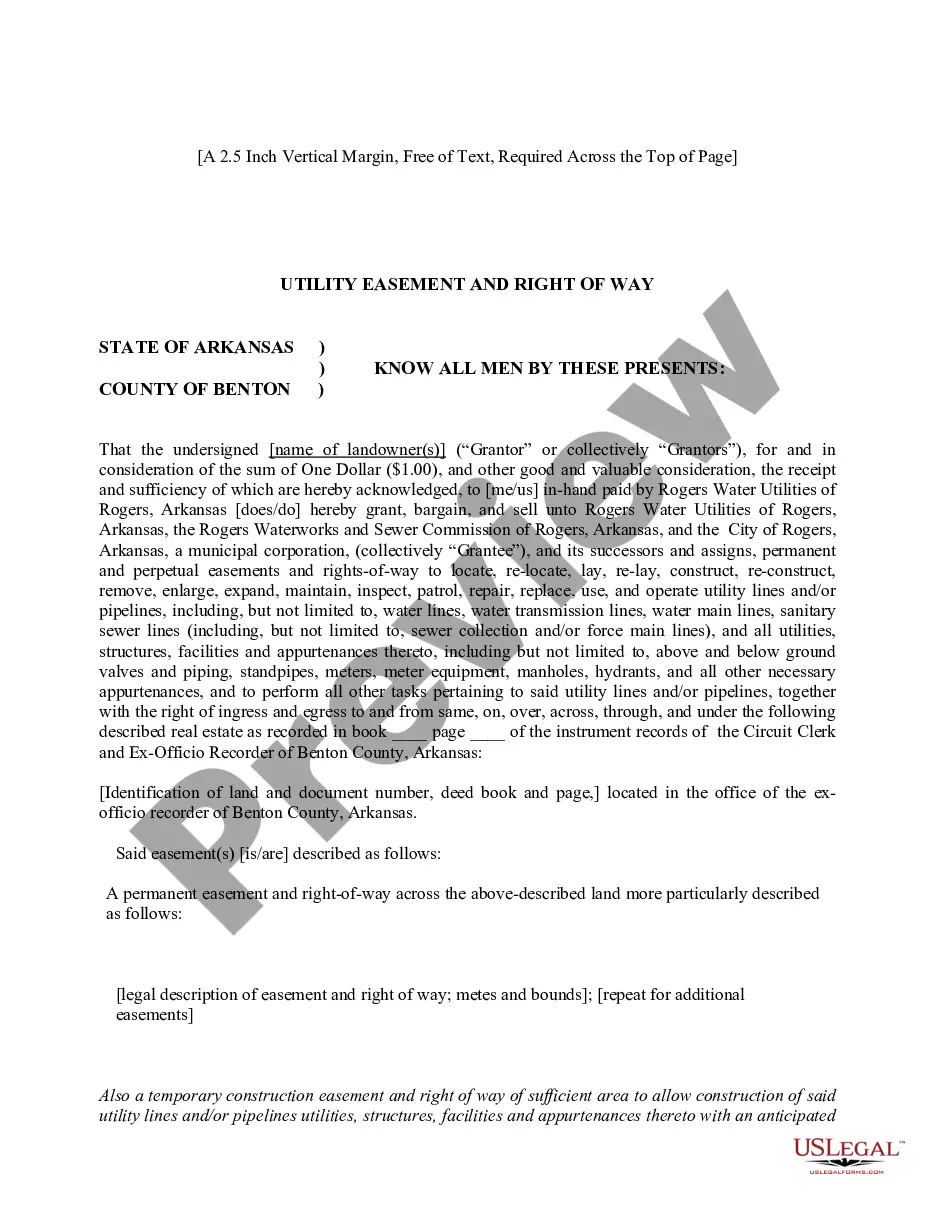
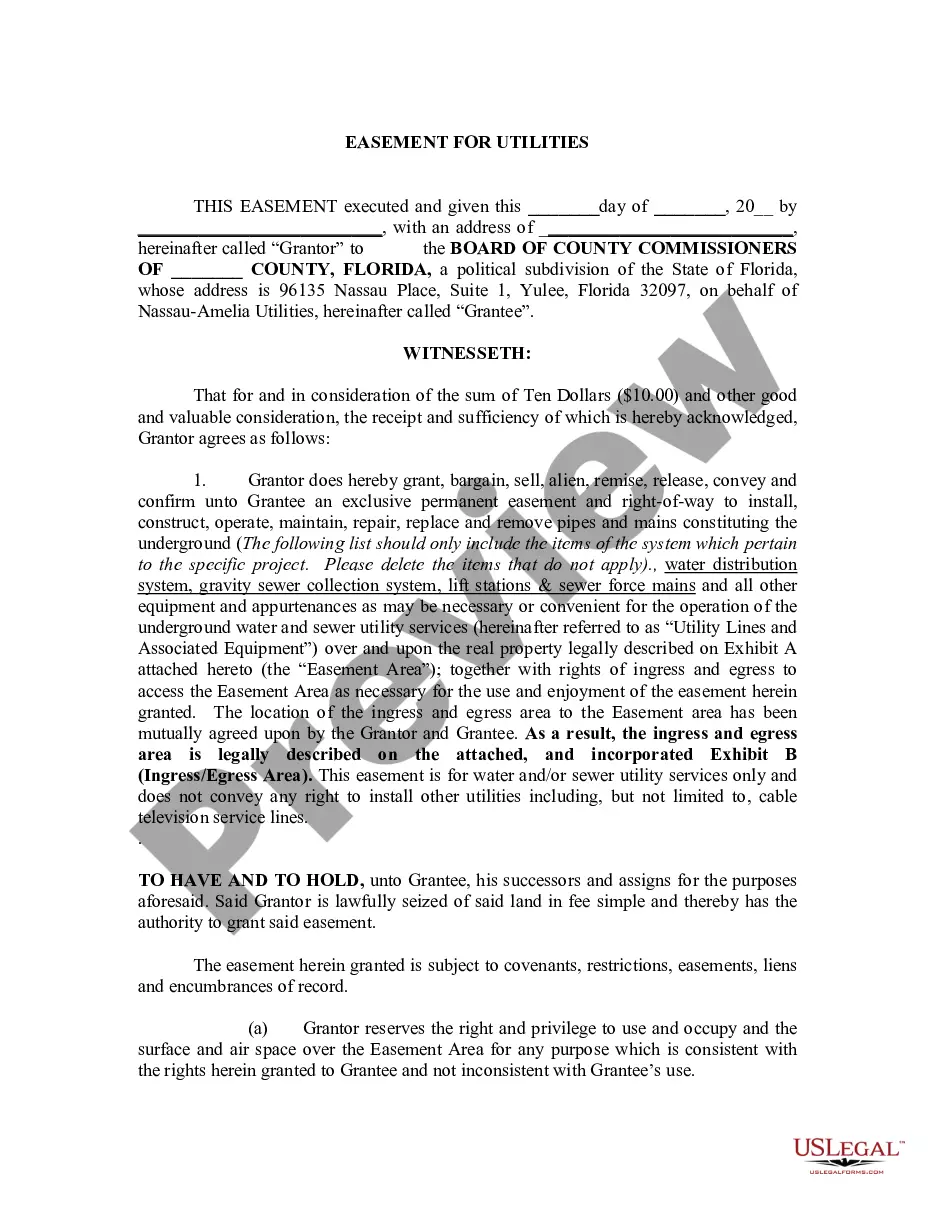
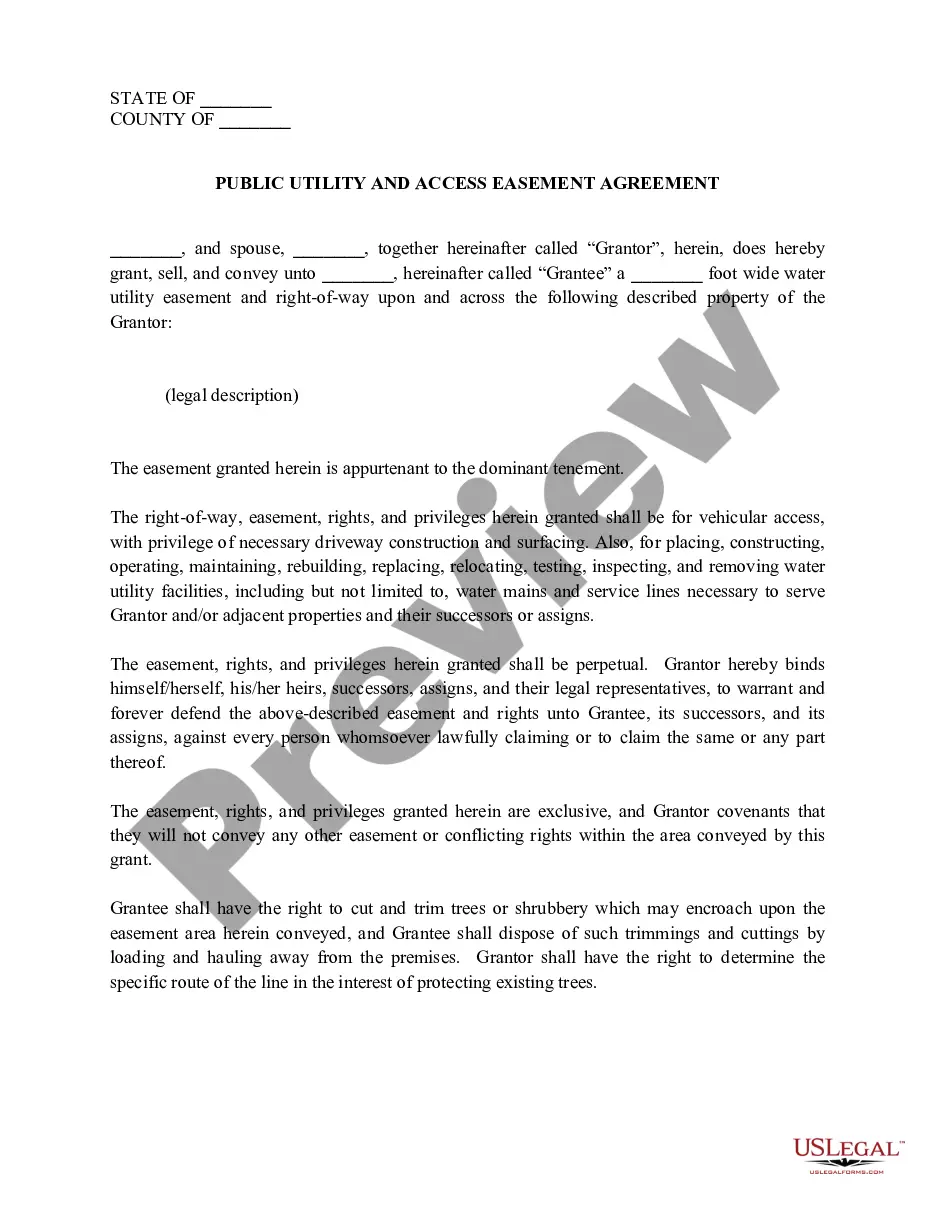
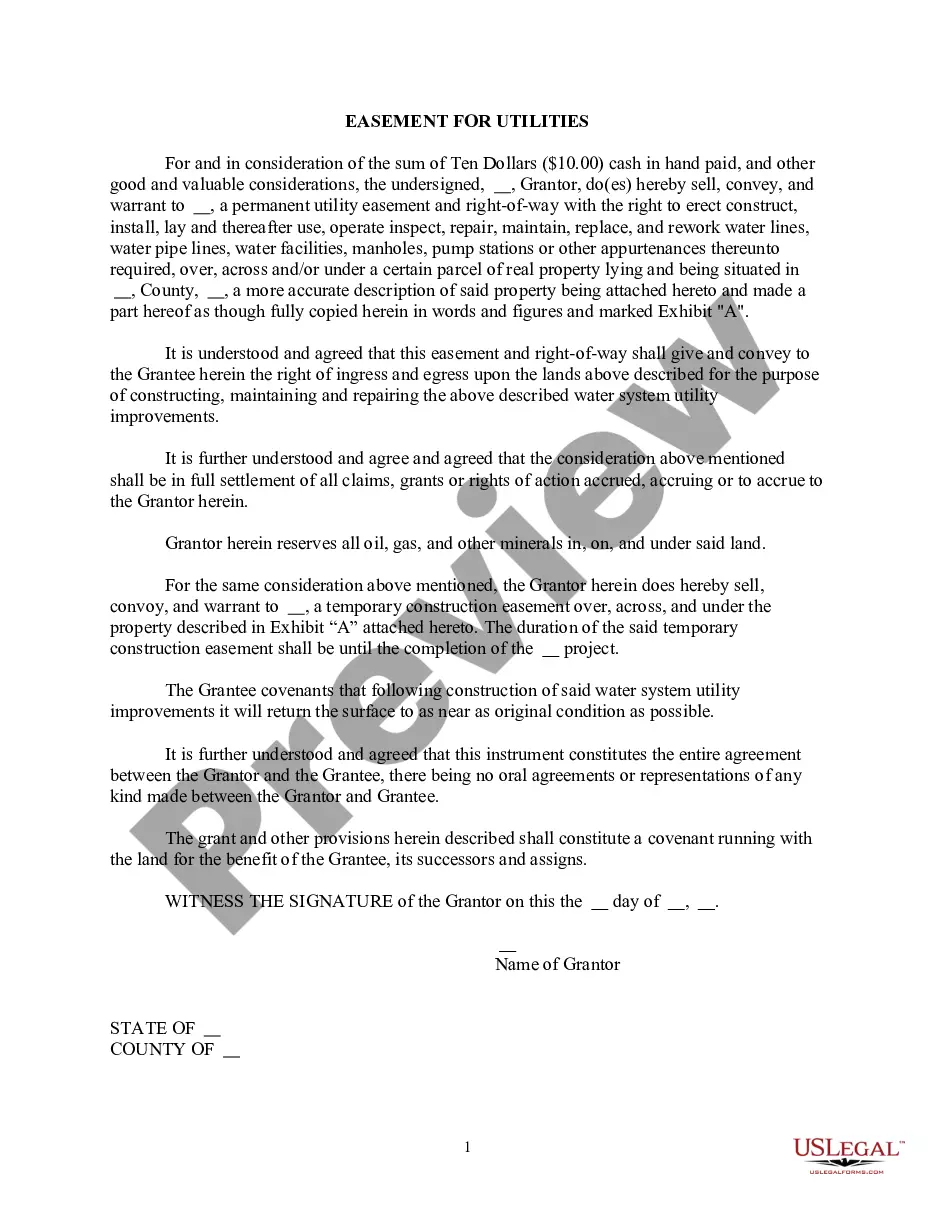
How to fill out Utility Easement?
Drafting legal documents is essential in the contemporary era. Nonetheless, you do not always need to obtain expert help to create some of them from the ground up, including Philadelphia Utility Easement, using a platform like US Legal Forms.
US Legal Forms features over 85,000 documents to choose from across different categories, ranging from living wills to real estate contracts to divorce papers. All documents are categorized according to their applicable state, simplifying the search process.
You can also find comprehensive resources and guides on the site to make any tasks related to document completion straightforward.
If you are already a subscriber to US Legal Forms, you can find the required Philadelphia Utility Easement, Log In to your account, and download it. Certainly, our website cannot fully replace a lawyer. If you are facing a particularly complex situation, we recommend consulting an attorney to review your form before signing and submitting it.
With more than 25 years in the industry, US Legal Forms has established itself as a trusted provider for a variety of legal forms for millions of clients. Join them today and easily acquire your state-specific documents!
- Review the document's preview and outline (if available) to understand what you’ll receive upon downloading it.
- Make sure that the form you select is tailored to your state/county/region, as state laws can affect the legality of various documents.
- Investigate related documents or restart the search to find the correct form.
- Click Buy now and create your account. If you already have one, opt to Log In.
- Select the option, then a suitable payment method, and buy the Philadelphia Utility Easement.
- Choose to save the form template in any available format.
- Go to the My documents section to re-download the document.
Form popularity
FAQ
Maintenance. The duty to care for an easement belongs to the owner of the dominant estate. Thus, any costs of repair or maintenance related to the easement fall to the user of the easement, not to the owner of the servient estate.
Generally, the owner of any easement has a duty to maintain the easement. If the easement is owned by more than one person, or is attached parcels of land under different ownership, each owner must share in the cost of maintaining the easement pursuant to their agreement.
There are several types of easements, including: utility easements. private easements. easements by necessity, and. prescriptive easements (acquired by someone's use of property).
October 1, 2013 0. An easement is a limited right to use the property of another. Common easements include driveways, private roads, and utility rights-of-way for electric, water, or communication lines.
An easement is a right which the owner of a property has to compel the owner of another property to allow something to be done, or to refrain from doing something on the survient element for the benefit of the dominant tenement. For example - right of way, right to light , right to air etc.
There are eight ways to terminate an easement: abandonment, merger, end of necessity, demolition, recording act, condemnation, adverse possession, and release.
An easement is a limited right to use the property of another. Common easements include driveways, private roads, and utility rights-of-way for electric, water, or communication lines. Most easements are contained indeeds; some can arise simply due to the passage of time.
An easement is generally defined as an intangible or non-possessory right to use another's land for a precise and definite purpose not inconsistent with the other's simultaneous right to use the same property, or, in language only a lawyer could love, an incorporeal hereditament. Typically, a Pennsylvania easement is
Maintenance. The duty to care for an easement belongs to the owner of the dominant estate. Thus, any costs of repair or maintenance related to the easement fall to the user of the easement, not to the owner of the servient estate.