Nassau New York Option Agreement to Acquire Oil and Gas Lease
Description
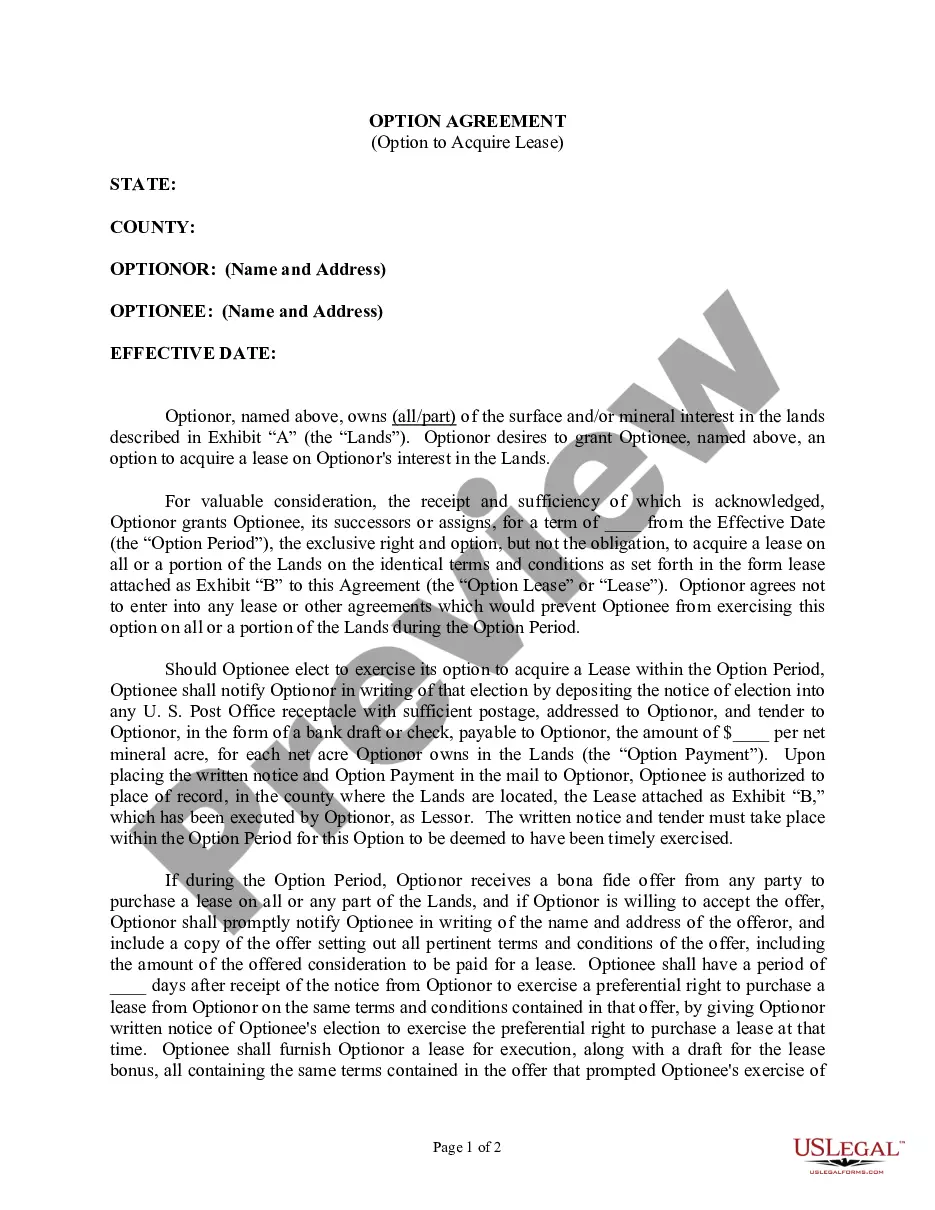
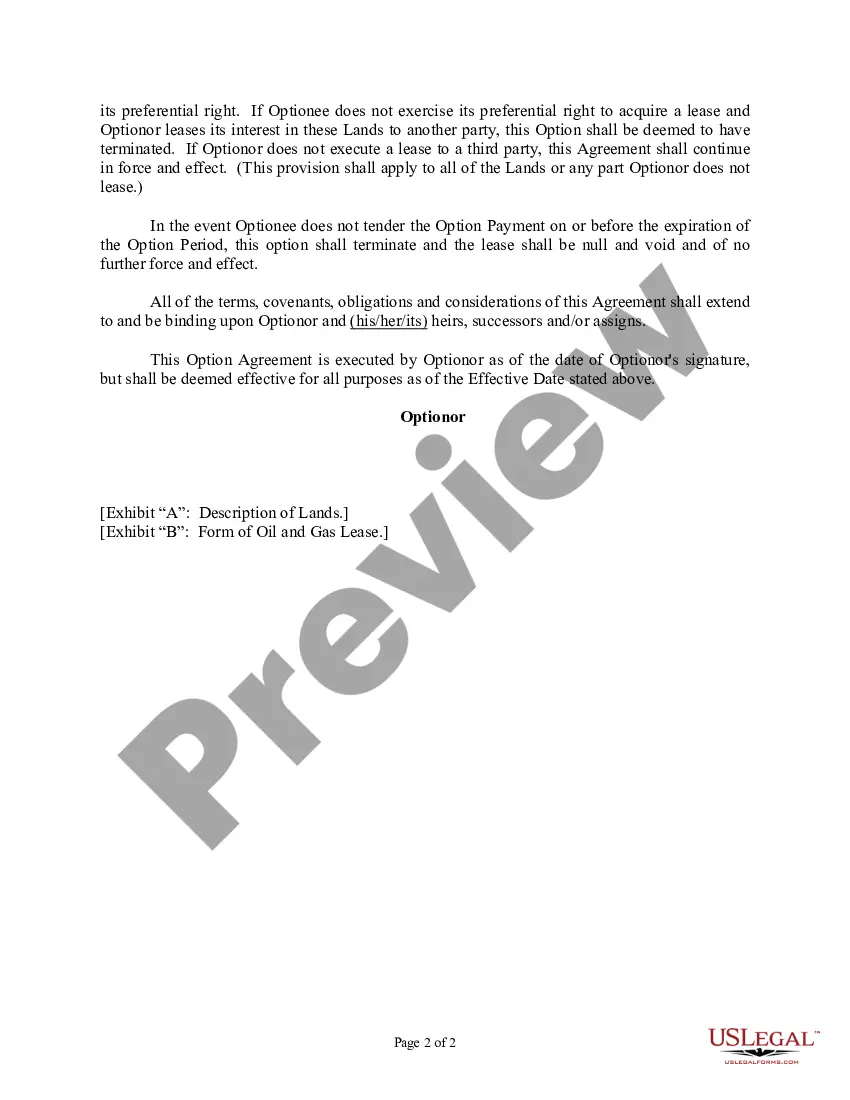
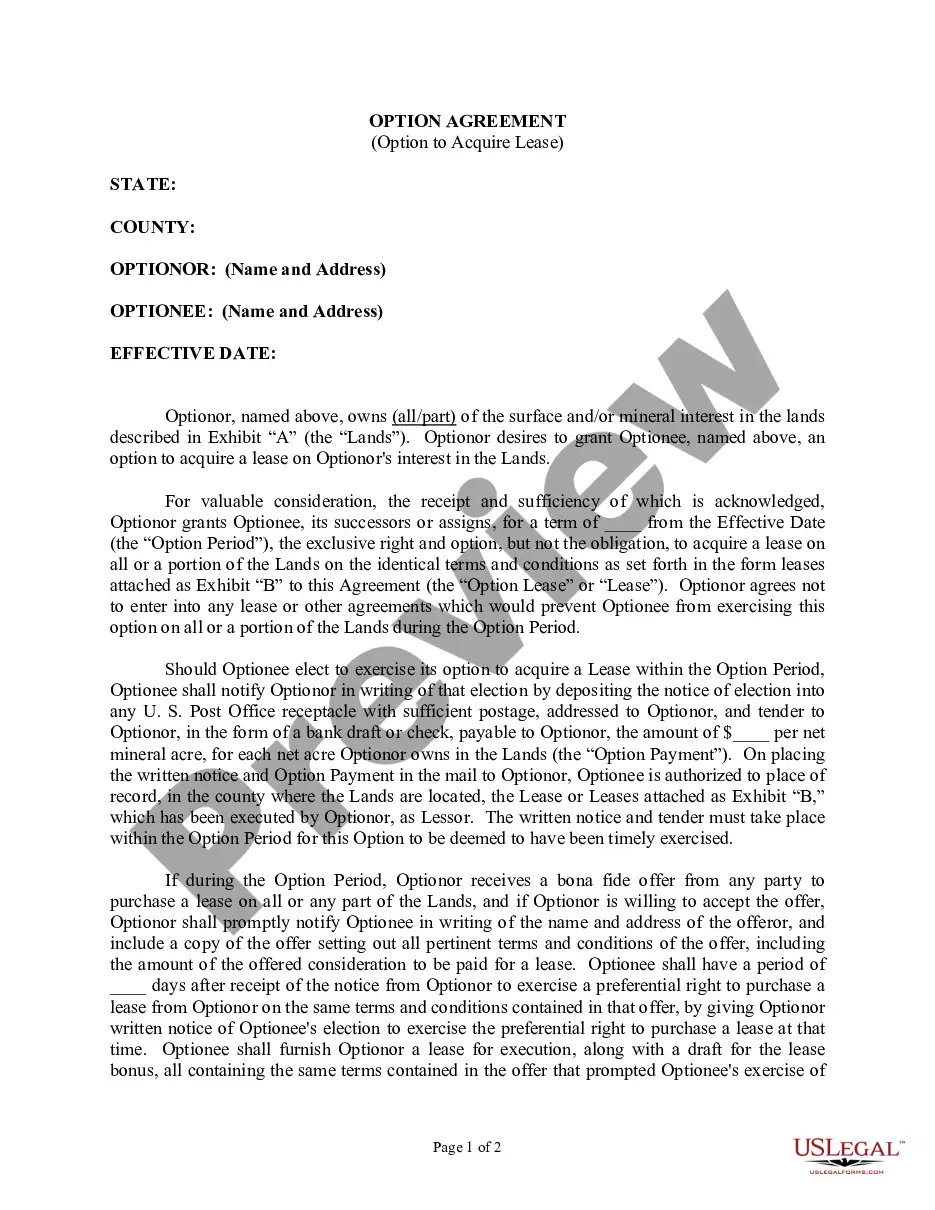
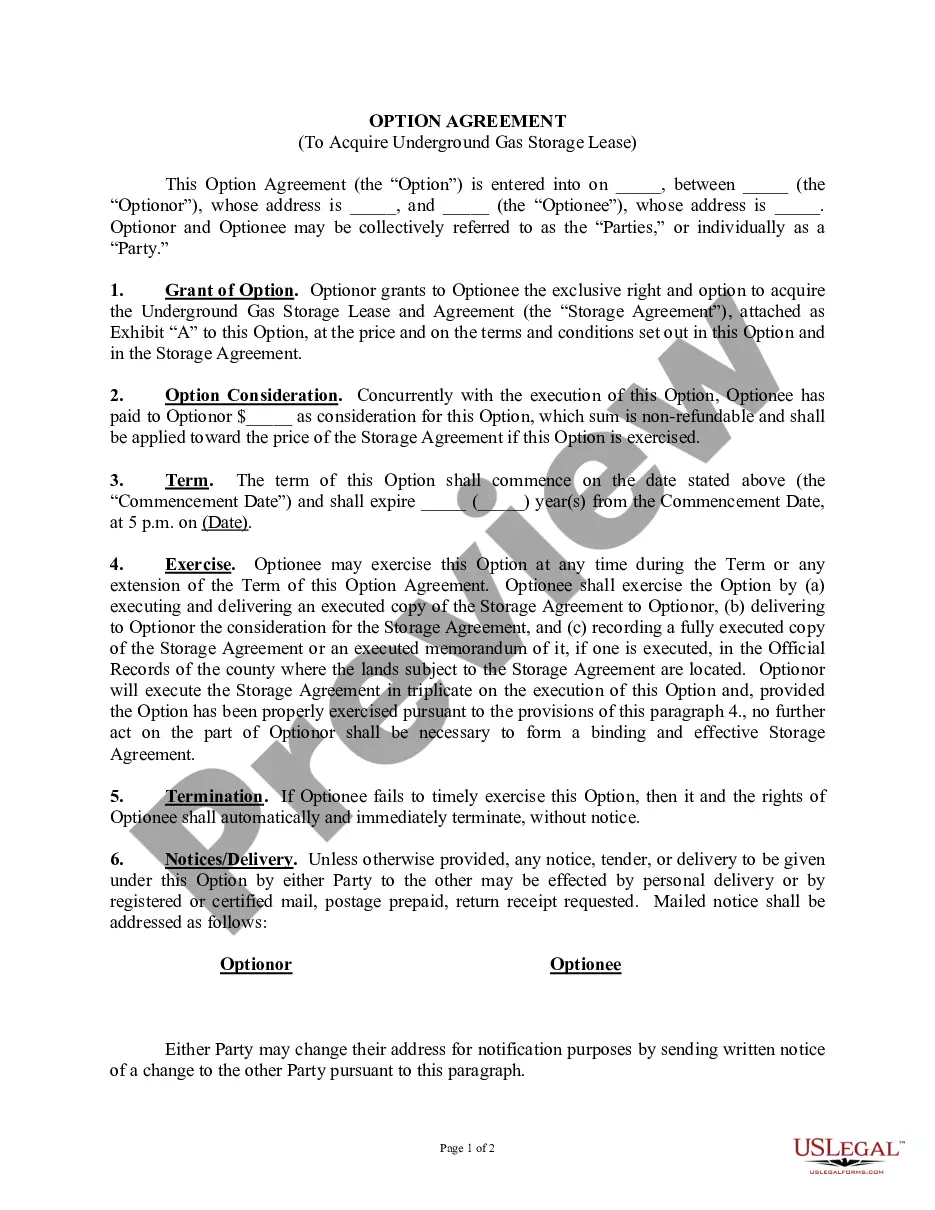
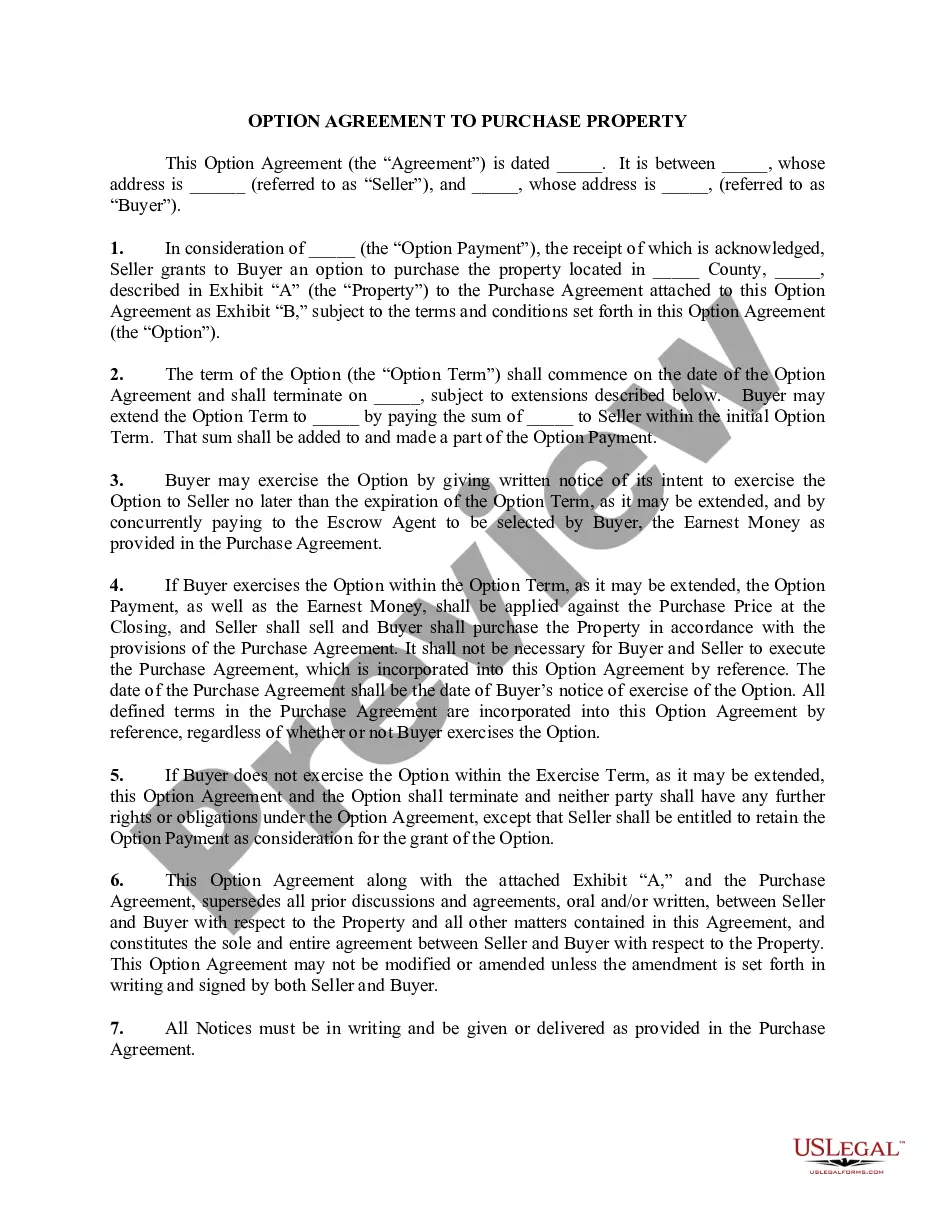
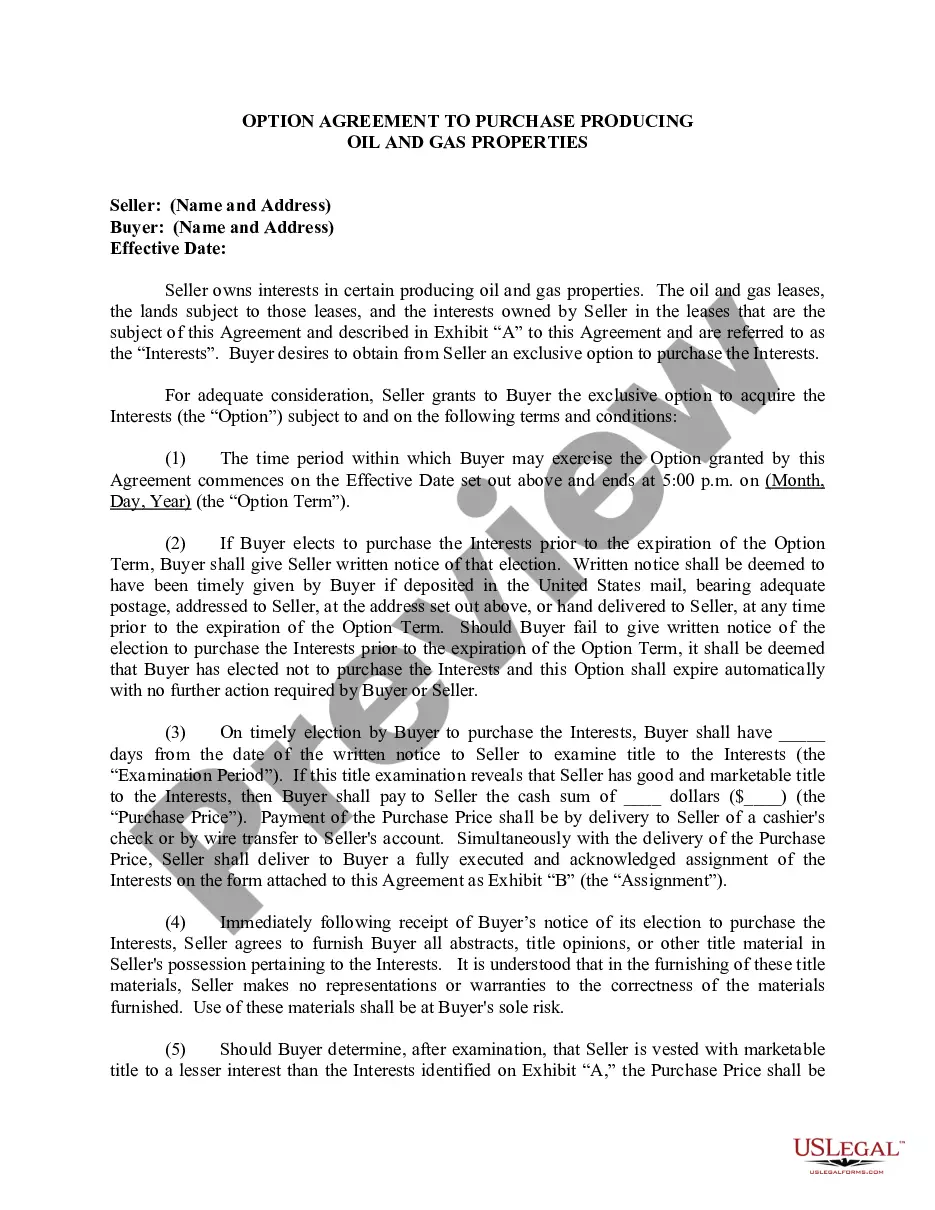

How to fill out Option Agreement To Acquire Oil And Gas Lease?
Drafting legal documents can be challenging.
Moreover, if you opt to hire an attorney to create a business contract, documents for ownership transfer, prenuptial agreement, divorce documents, or the Nassau Option Agreement to Acquire Oil and Gas Lease, it might cost you a considerable amount.
Browse the page and ensure there is a sample available for your region.
- So what is the most effective way to conserve time and finances and produce legitimate forms in complete accordance with your state and local regulations.
- US Legal Forms is an excellent solution, whether you're seeking templates for personal or business purposes.
- US Legal Forms is the largest online repository of state-specific legal documents, offering users the most current and professionally validated forms for any situation compiled all in one place.
- Therefore, if you're in need of the latest version of the Nassau Option Agreement to Acquire Oil and Gas Lease, you can easily locate it on our platform.
- Acquiring the documents requires minimal time.
- Users who already possess an account should confirm that their subscription is active, Log In, and choose the sample using the Download button.
- If you haven't signed up yet, here's how you can obtain the Nassau Option Agreement to Acquire Oil and Gas Lease.
Form popularity
FAQ
If there are separate tracts within a DSU with different owners, they must arrange to share the costs and revenues associated with drilling and producing a well from that spacing unit. This is known as a pooling agreement. In most cases, mineral holders negotiate voluntary pooling arrangements.
In general terms, the Pugh Clause provides that production from a unitized or pooled area located on or including a portion of the leased lands will not be sufficient to extend the primary term for the entire leasehold.
The annual rentals required under all oil and gas leases issued since December 22, 1987 is $1.50 per acre (or partial acre) for the first five lease years and $2.00 per acre (or partial acre) thereafter.
The horizontal Pugh clause operates to release all lands not included in a pooled unit, typically at the end of the primary term or after cessation of continuous drilling operations, if the lease provides for same. The horizontal Pugh clause releases land at the surface as to all depths.
Most landowners choose to receive the royalty in cash at the posted price of the oil. A Lessor deciding to receive the oil as the royalty payment can market the oil royalty back to the Lessee for marketing and receive cash through that arrangement.
A Pugh Clause is meant to prevent a lessee from declaring all lands under an oil and gas lease as being held by production, even if production only occurs on a fraction of the property.
The federal government charges oil and gas companies a royalty on hydrocarbon resources extracted from public lands. The standard Federal royalty payment was 12.5%, or a 1/8th royalty.
Most states and many private landowners require companies to pay royalty rates higher than 12.5%, with some states charging 20% or more, according to federal officials. The royalty rate for oil produced from federal reserves in deep waters in the Gulf of Mexico is 18.75%.
The royalty. It is typically expressed as a fraction or a percentage. For many years, almost all oil and gas leases reserved a 1/8th royalty. Today, the royalty fraction is negotiable, and is usually between 1/8th and 1/4th.
(a) (1) Any lease of oil or natural gas rights or any other conveyance of any kind separating such rights from the freehold estate of land shall expire at the end of ten (10) years from the date executed, unless, at the end of such ten (10) years, natural gas or oil is being produced from such land for commercial