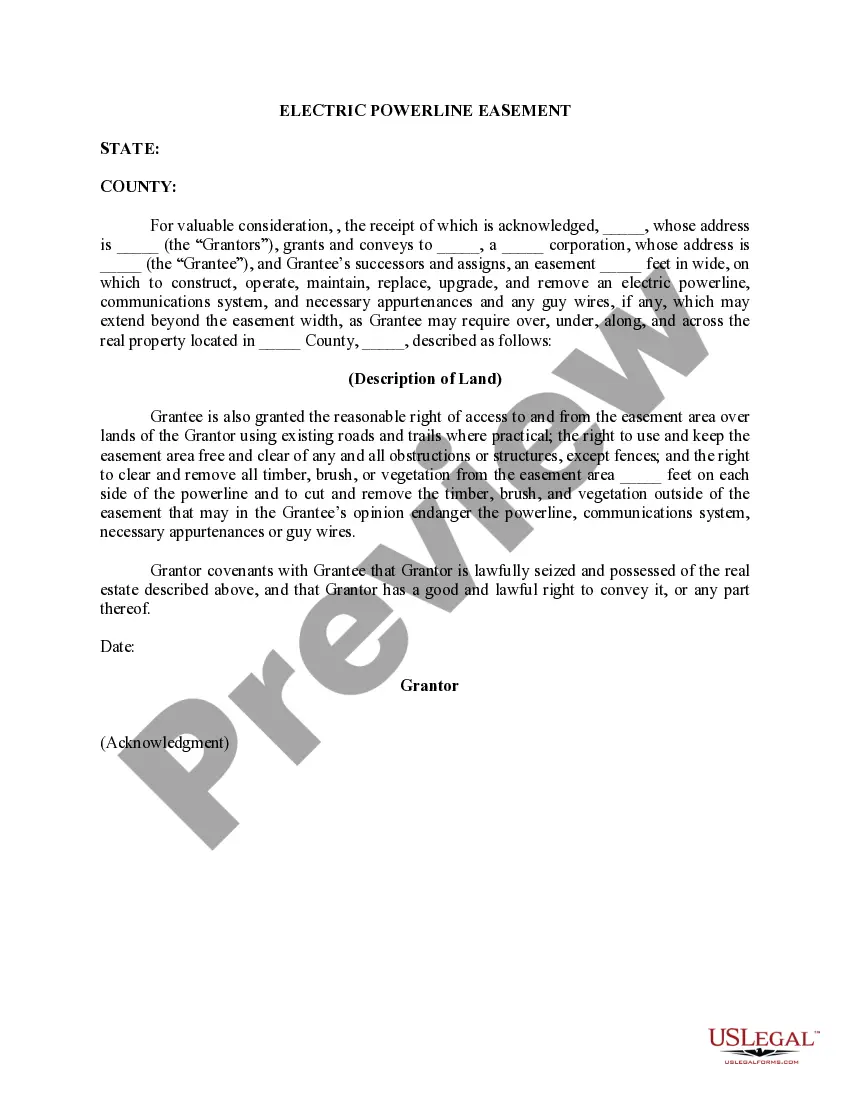
Pima Arizona Electric Powerline Easement
Description
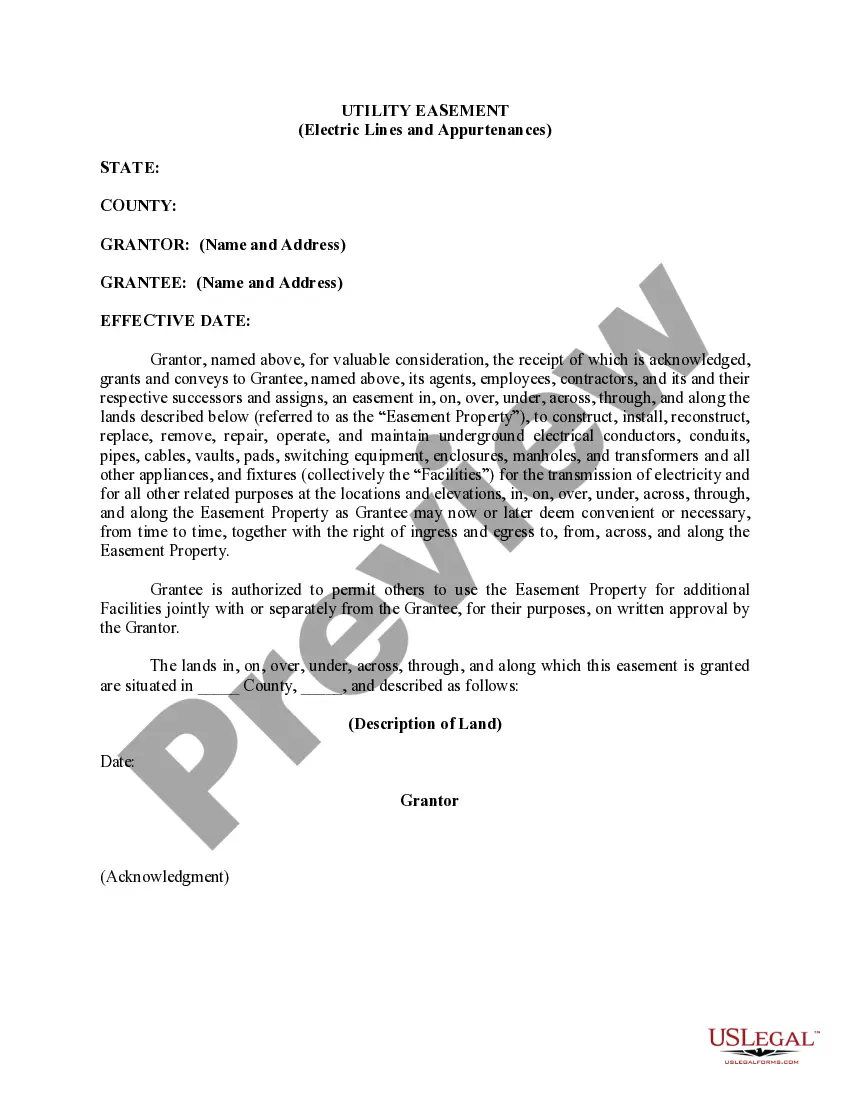
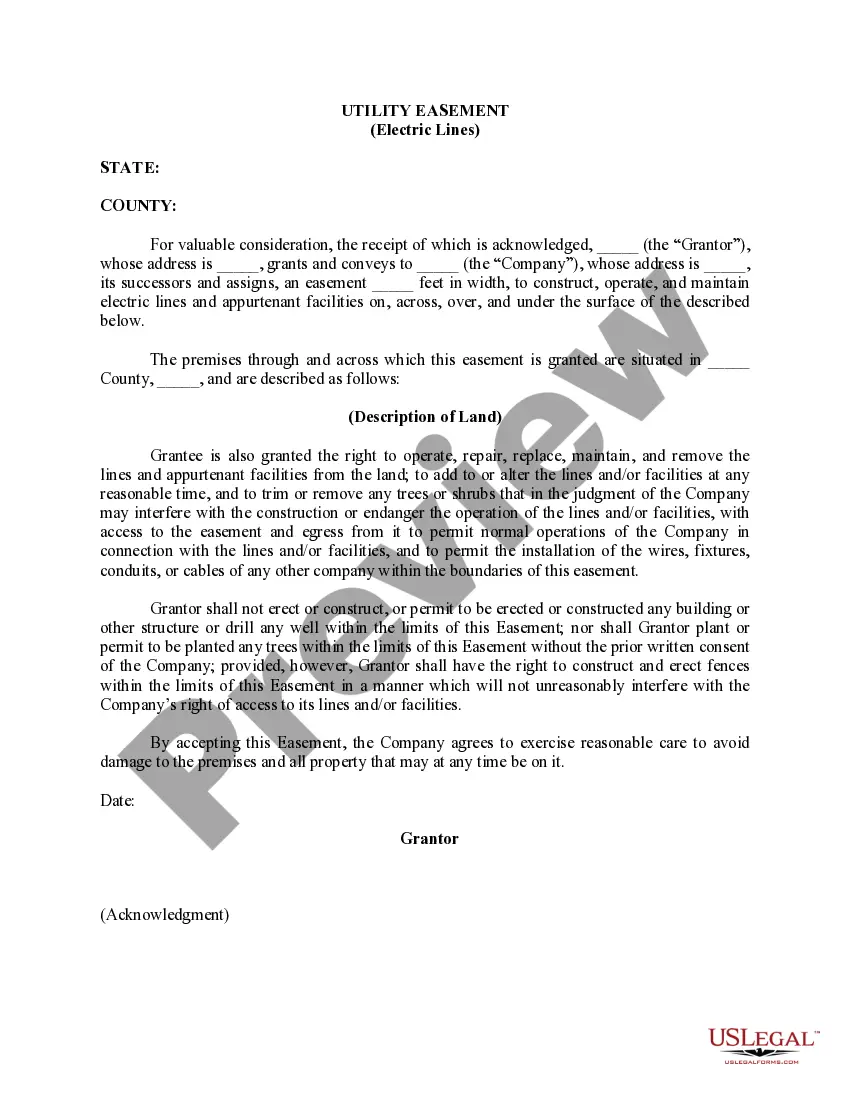
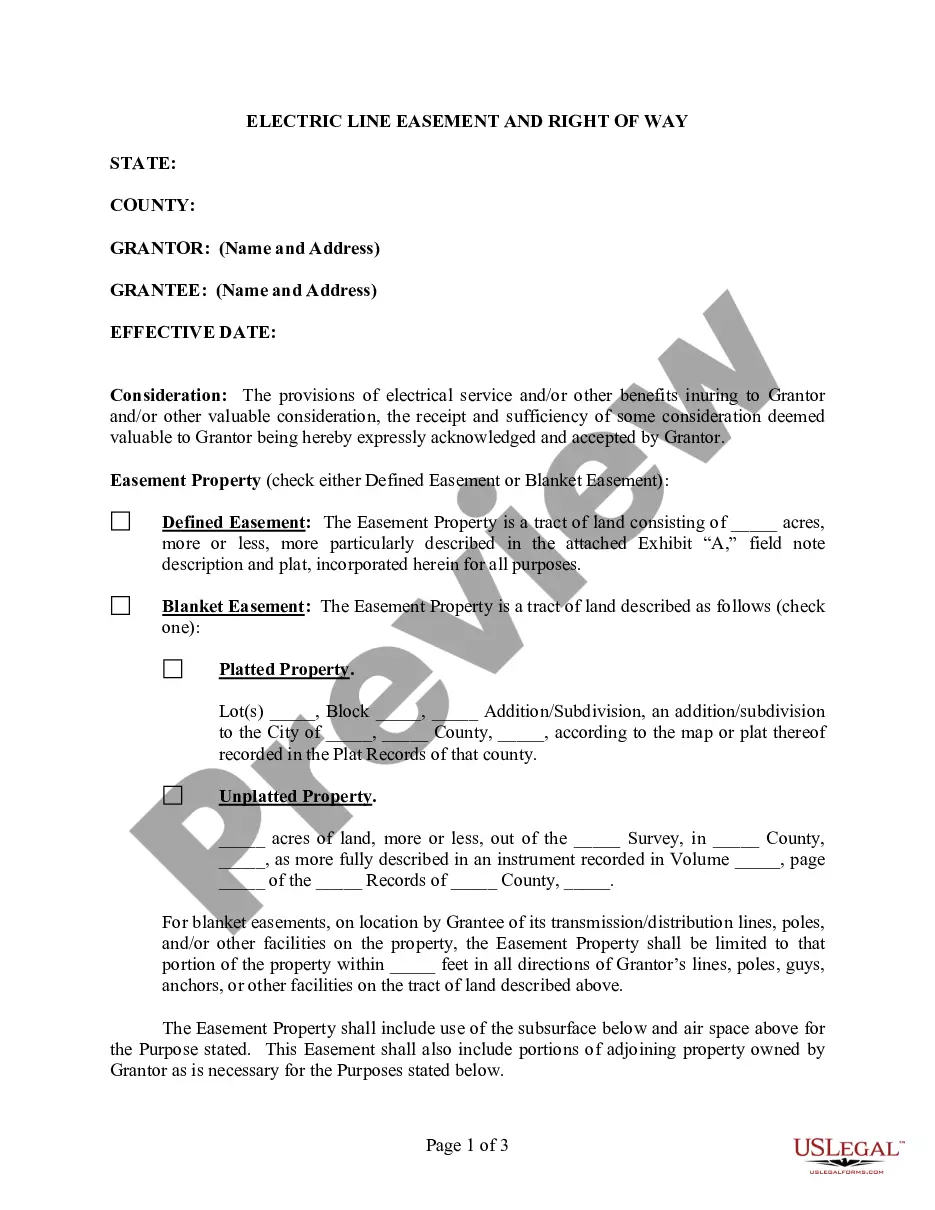






How to fill out Electric Powerline Easement?
Laws and guidelines across various domains vary throughout the nation.
If you are not an attorney, it's simple to become confused with the different regulations when it comes to creating legal documentation.
To sidestep costly legal help when drafting the Pima Electric Powerline Easement, you require a validated template suitable for your area.
This is the easiest and most cost-effective method to obtain current templates for any legal needs. Discover them all with just a few clicks and maintain your documentation in order with the US Legal Forms!
- Assess the page content to ensure you have located the correct document.
- Utilize the Preview option or review the form description if one is provided.
- Look for another document if there are discrepancies with any of your specifications.
- Employ the Buy Now button to acquire the template once you locate the right one.
- Select one of the subscription plans and Log In or register for an account.
- Decide on your preferred payment method for the subscription (using a credit card or PayPal).
- Pick the format in which you wish to save the document and click Download.
- Complete and sign the template on paper after printing it or do everything electronically.
Form popularity
FAQ
In Arizona, a property owner generally cannot block an easement, especially if it has been legally established. If you are dealing with a Pima Arizona Electric Powerline Easement, it's important to understand that these easements serve a public utility purpose. However, property owners can negotiate terms or seek legal counsel if they believe their rights are being violated.
Yes, you can build on a property easement, even a utility easement. Yet if you value peace of mind over everything else, not building on that easement is the best way to go. The dominant estate owning the easement may need to access the easement.
Power lines are not insulated and you should always avoid contact with them. It is quite possible for people to get electrocuted if you touch power lines.
The width of a right of way varies by the type of line?higher voltage lines typically have wider rights of way. Most rights of way on the TVA system are 75- to 200-feet wide, accommodating lines that can carry less than 26,000 volts up to 500,000 volts.
When termed as a utility easement, it means a utility company's right to access and control the portion of another person's land that is located near utility facilities and structures (i.e. utility poles, transformers, overhead or underground electrical lines).
Although right of way widths can vary, generally: Most TVA transmission line rights of way are 75 to 200 feet wide.
A public utility is an entity that provides goods or services to the general public. Public utilities may include common carriers as well as corporations that provide electric, gas, water, heat, and television cable systems.
While it's possible to build a fence on an easement, keep in mind that the utility company may take the fence down in order to use the easement. However, they will typically repair the fence as best as they can once their work is finished. You can also build pools and hot tubs on easements.
Minimum clearance distance (feet) According to 1926.1409, for power lines over 350 to 1,000 kV, the minimum distance is presumed to be 50 feet.
In simple terms, the right of way is the strip of land immediately below and adjacent to a transmission line. The width of a right of way varies by the type of line?higher voltage lines typically have wider rights of way.