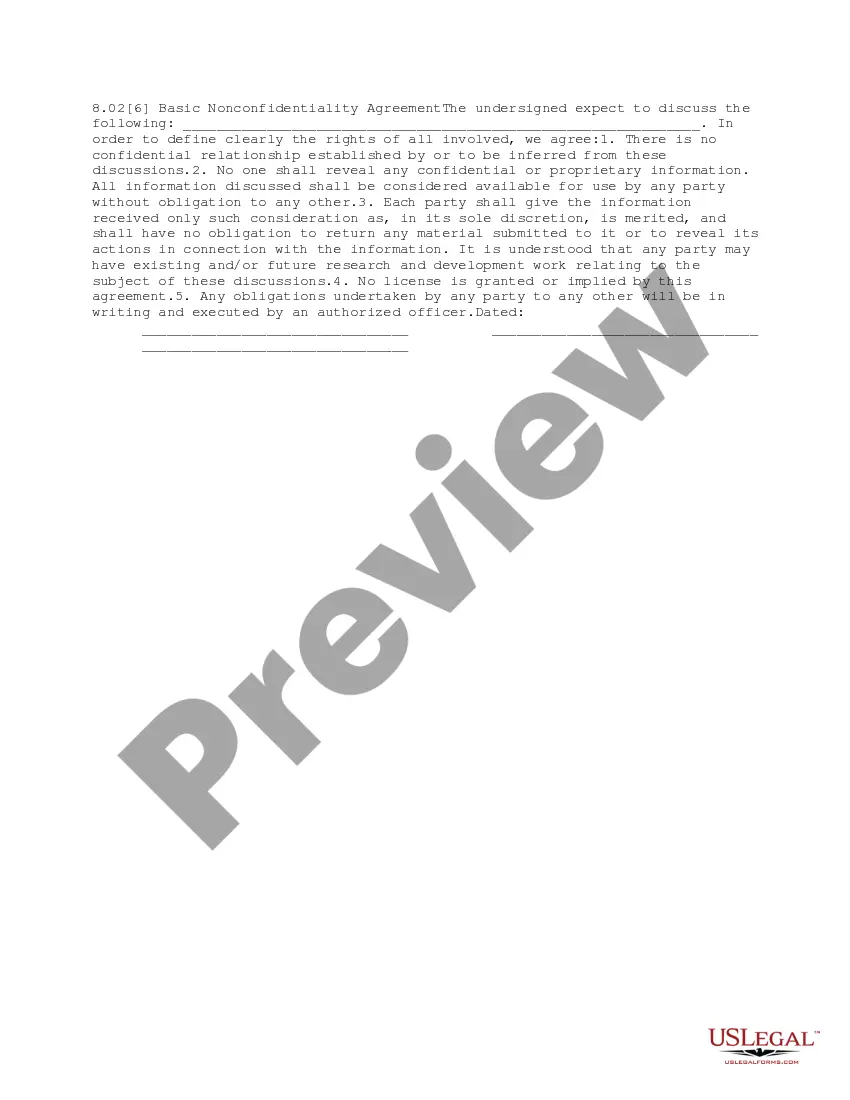
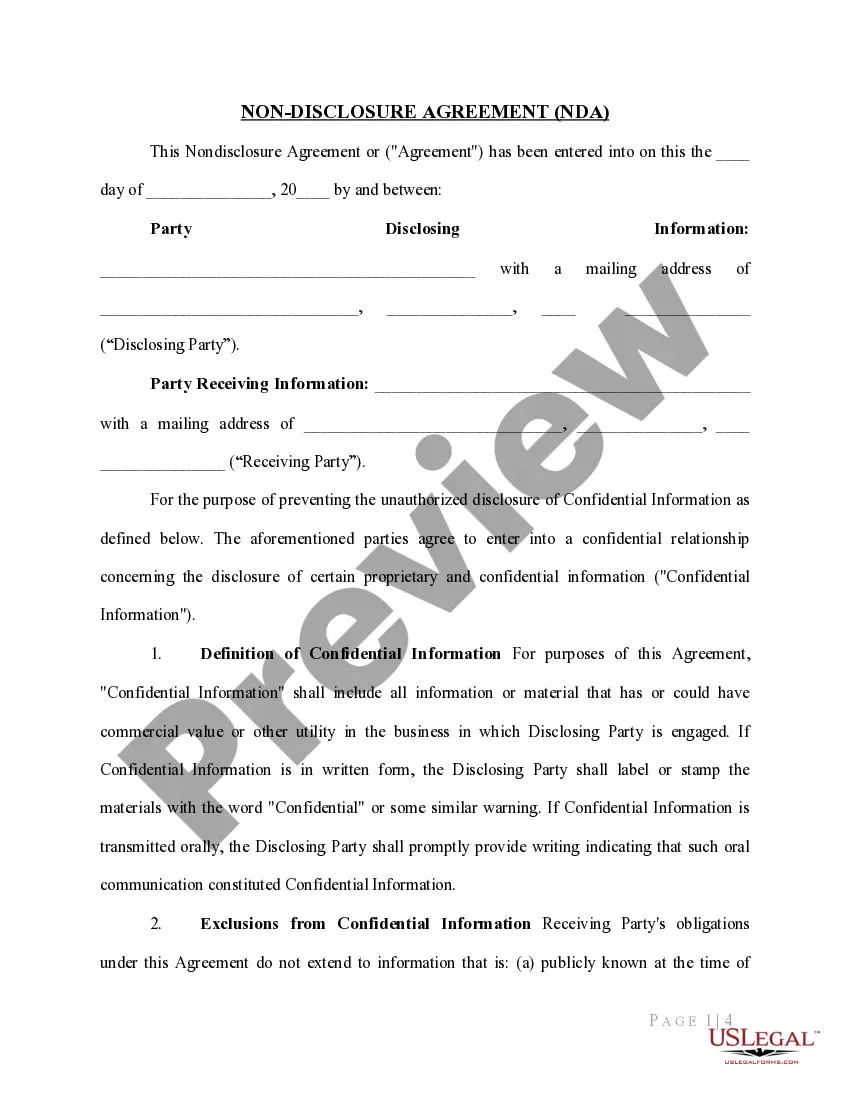
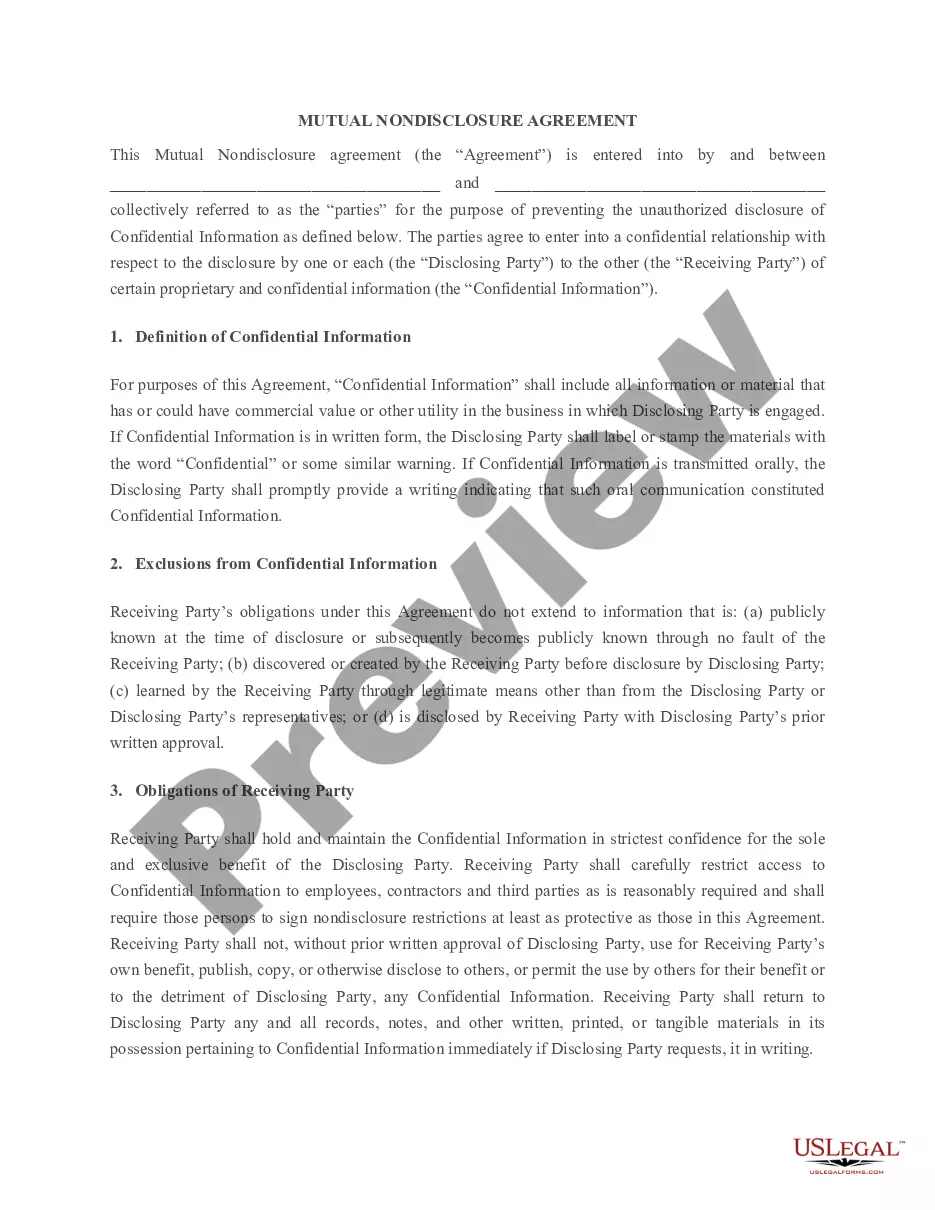
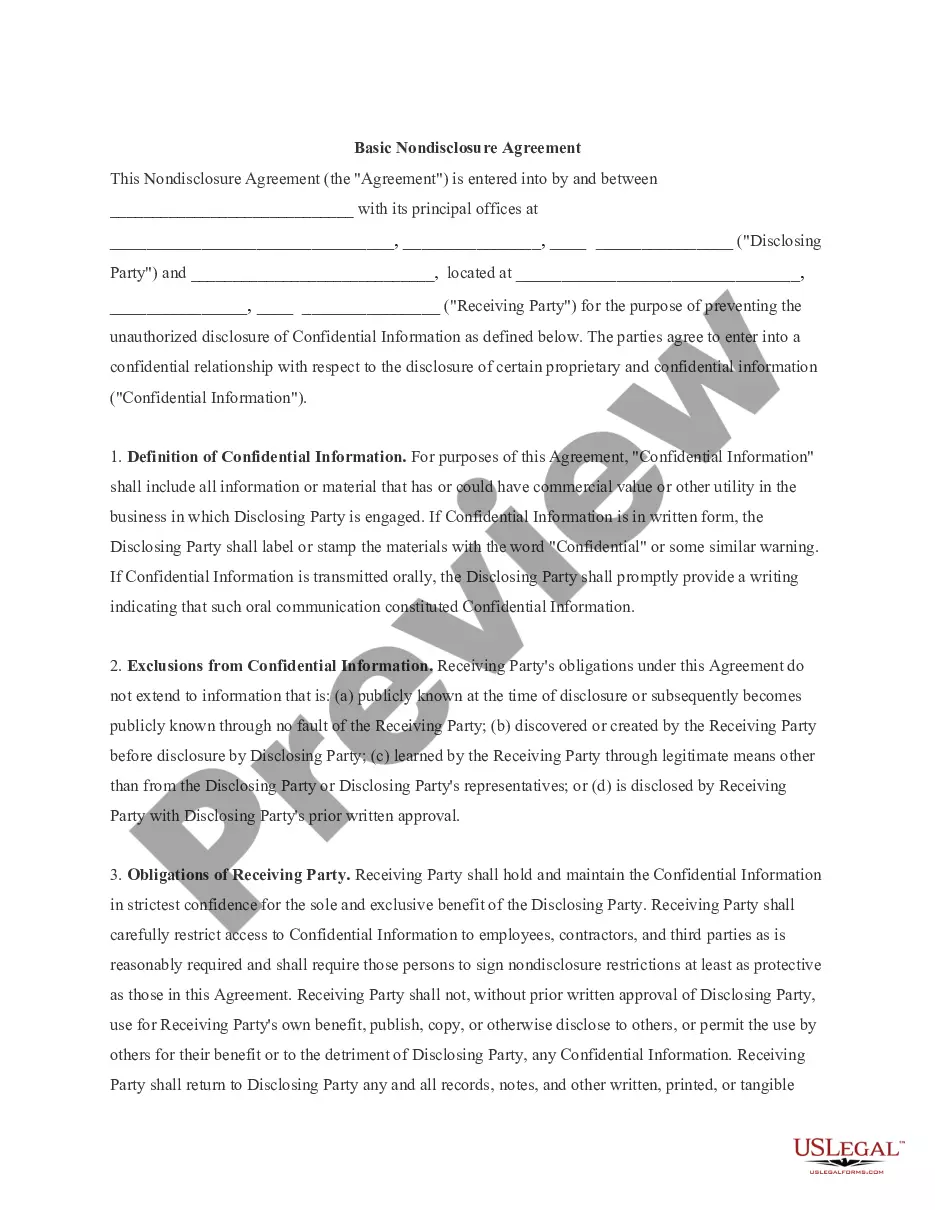
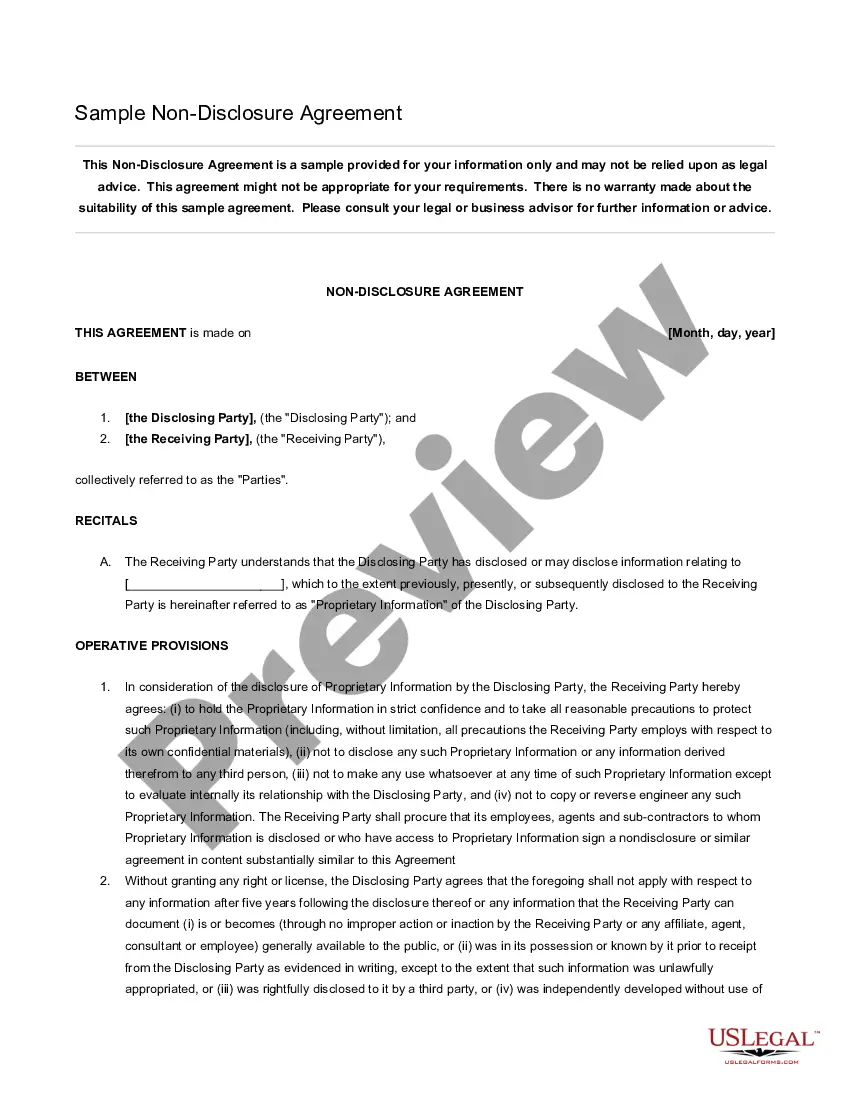
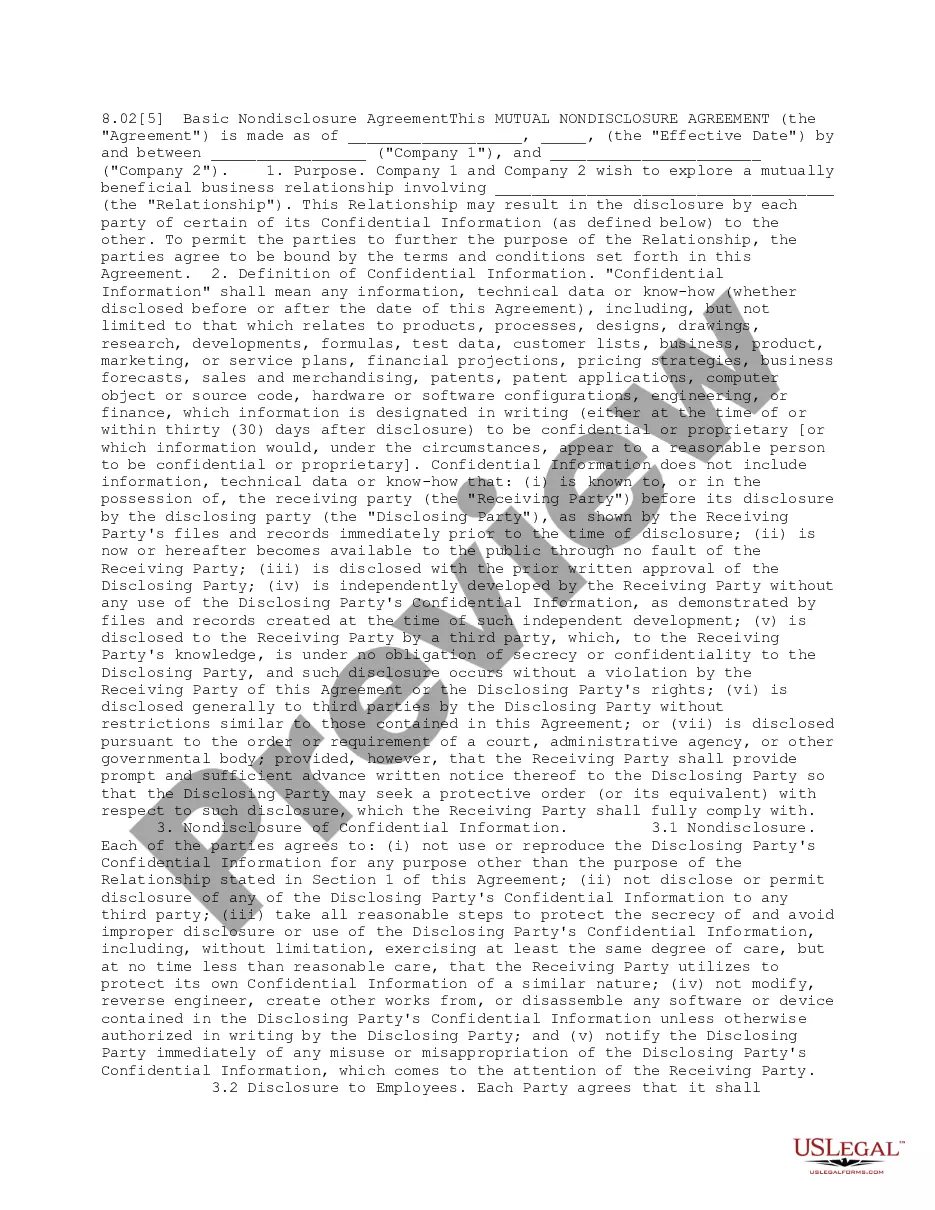
This form is a Basic Nonconfidentiality Agreement for use in negotiations or discussions where possible disclosure of licensing, patents, or commercial trade secrets is a factor.
Alameda California Basic Nonconfidentiality Agreement
State:
Multi-State
County:
Alameda
Control #:
US-TS8026
Format:
Word;
PDF;
Rich Text
Instant download
Description




How to fill out Basic Nonconfidentiality Agreement?
A documentation procedure invariably exists alongside any legal action you undertake.
Starting a business, accepting or proposing a job position, transferring assets, and various other life events demand that you prepare formal paperwork that differs across the nation.
Therefore, having everything organized in a single location is extremely beneficial.
US Legal Forms is the largest online repository of current federal and state-specific legal documents.
Read the description (if present) to confirm the form satisfies your requirements.
- Here, you can effortlessly discover and retrieve a document for any personal or business purpose relevant to your area, including the Alameda Basic Nonconfidentiality Agreement.
- Finding forms on the site is remarkably easy.
- If you already possess a subscription to our library, Log In to your account, use the search bar to locate the sample, and click Download to save it to your device.
- Subsequently, the Alameda Basic Nonconfidentiality Agreement will be accessible for further use in the My documents section of your profile.
- If this is your initial experience with US Legal Forms, follow this straightforward guideline to acquire the Alameda Basic Nonconfidentiality Agreement.
- Ensure you have accessed the correct page with your regional form.
- Utilize the Preview mode (if available) and browse through the template.
Form popularity
FAQ
The validity of an NDA in California is generally defined by the agreement itself. However, many Alameda California Basic Nonconfidentiality Agreements specify a term that can last from one to five years, depending on the nature of the confidential information. It is essential to define this duration clearly in your agreement.
A typical confidentiality clause might say, "The phrases and circumstances of this Agreement are completely confidential between the parties and shall not be disclosed to anybody else. Any disclosure in violation shall be deemed a breach of this Agreement."
Confidentiality Issues: A court will not enforce a non-disclosure agreement if the information sought to be protected, including trade secrets or client lists, is not actually confidential.
Requirements for an NDA The names of the parties to the agreement. A definition of what constitutes confidential information in this case. Any exclusions from confidentiality. A statement of the appropriate uses of the information to be revealed. The time periods involved. Miscellaneous provisions.
In 2019, California legislation went into effect that prevented employers from imposing non-disclosure agreements (NDAs) as a condition of settlement of a civil or administrative action in which claims of sexual harassment or discrimination based on sex had been asserted.
Violating an NDA can have serious consequences NDAs are legally binding contracts. If an employee has violated an NDA, then the company may take legal action. The most common claims in NDA lawsuits include: Breach of the contract (such as the breach of NDA)
The new law, which takes effect on January 1, 2022, will nullify and make void provisions within any agreement entered on or after that date that prevent or restrict an employee from disclosing factual information on any type of harassment, discrimination, or retaliation.
In many cases, a confidentiality letter is written in business letter format. This means it typically includes the name and address of the person who is sending the letter as well as the name and address of the recipient. It is typically dated and usually has a section for the signature of the recipient as well.
Describe what the other party is agreeing to. Exercising reasonable precautions against disclosure of the information. Not disclosing Confidential Information without the written consent of the Disclosing Party. Using the information only for business purposes, and only on a need to know basis.
I agree to treat as confidential all information about clients or former clients and their families that I learn during the performance of my duties as (position title), and I understand that it would be a violation of policy to disclose such information to anyone without checking first with my