Letter of Intent to Purchase Commercial Real Estate
What this document covers
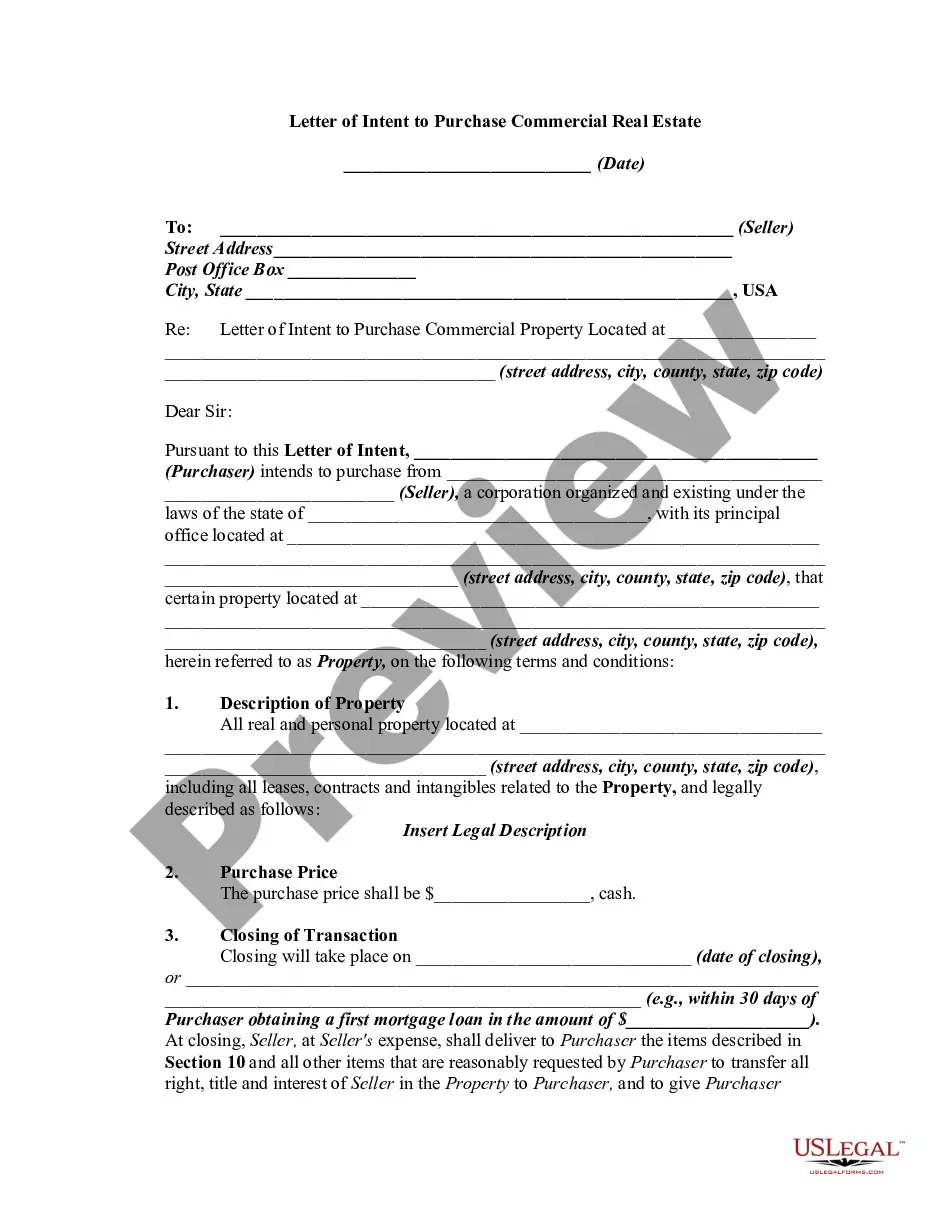
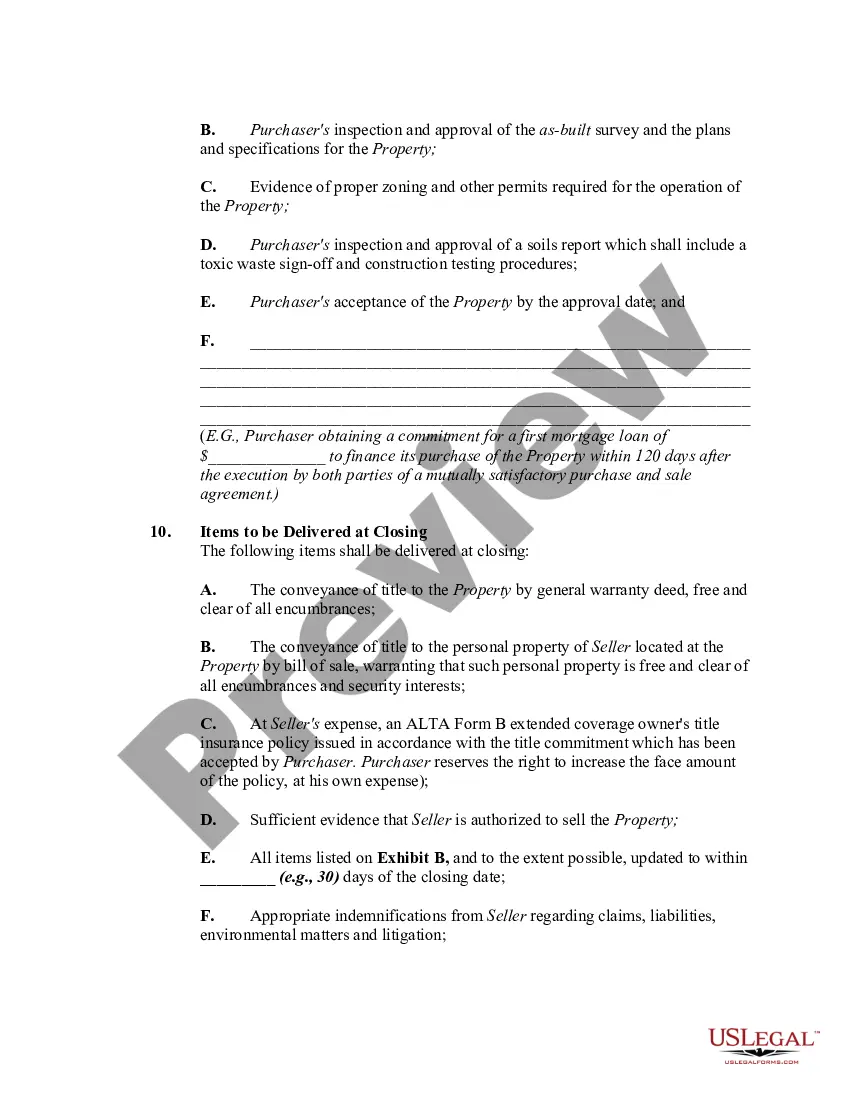
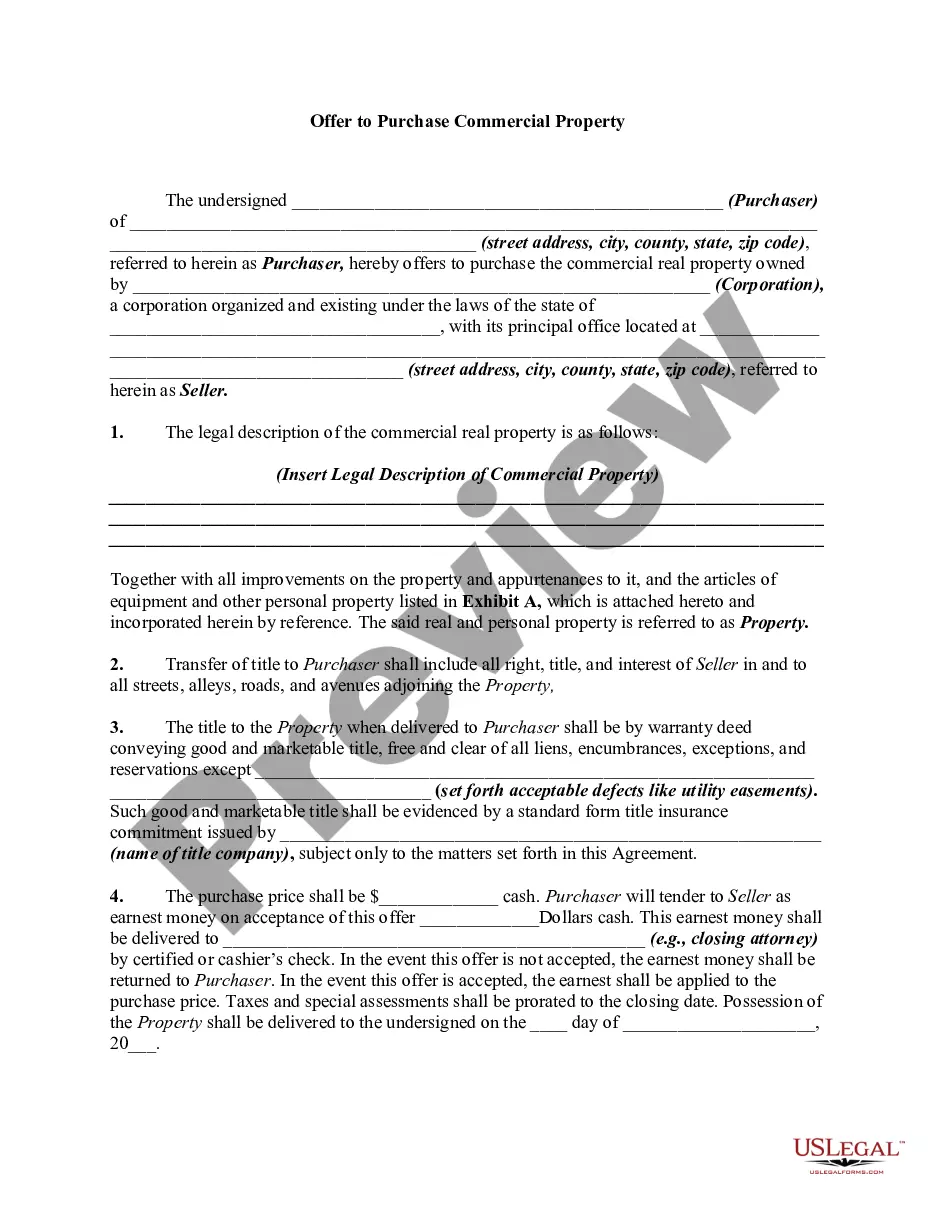
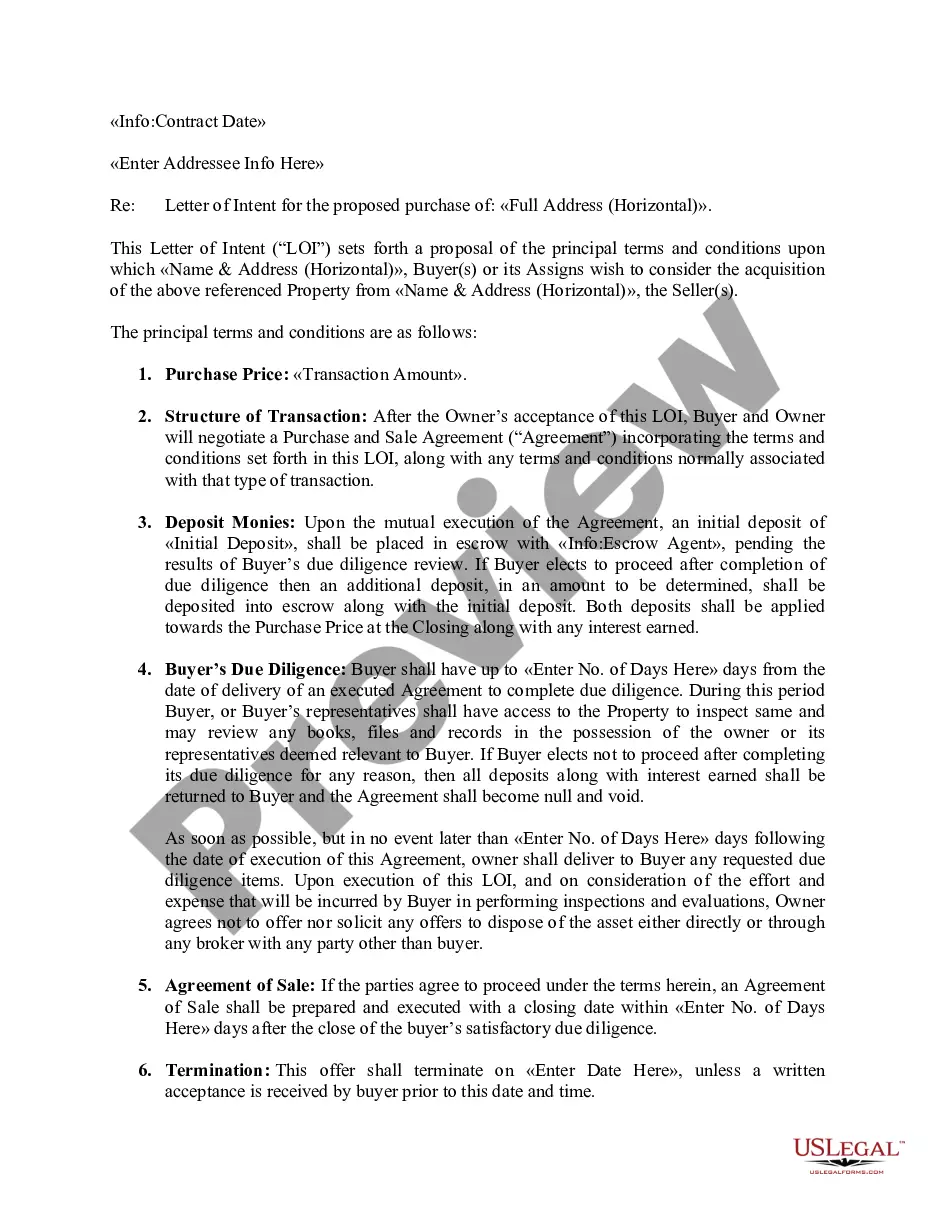
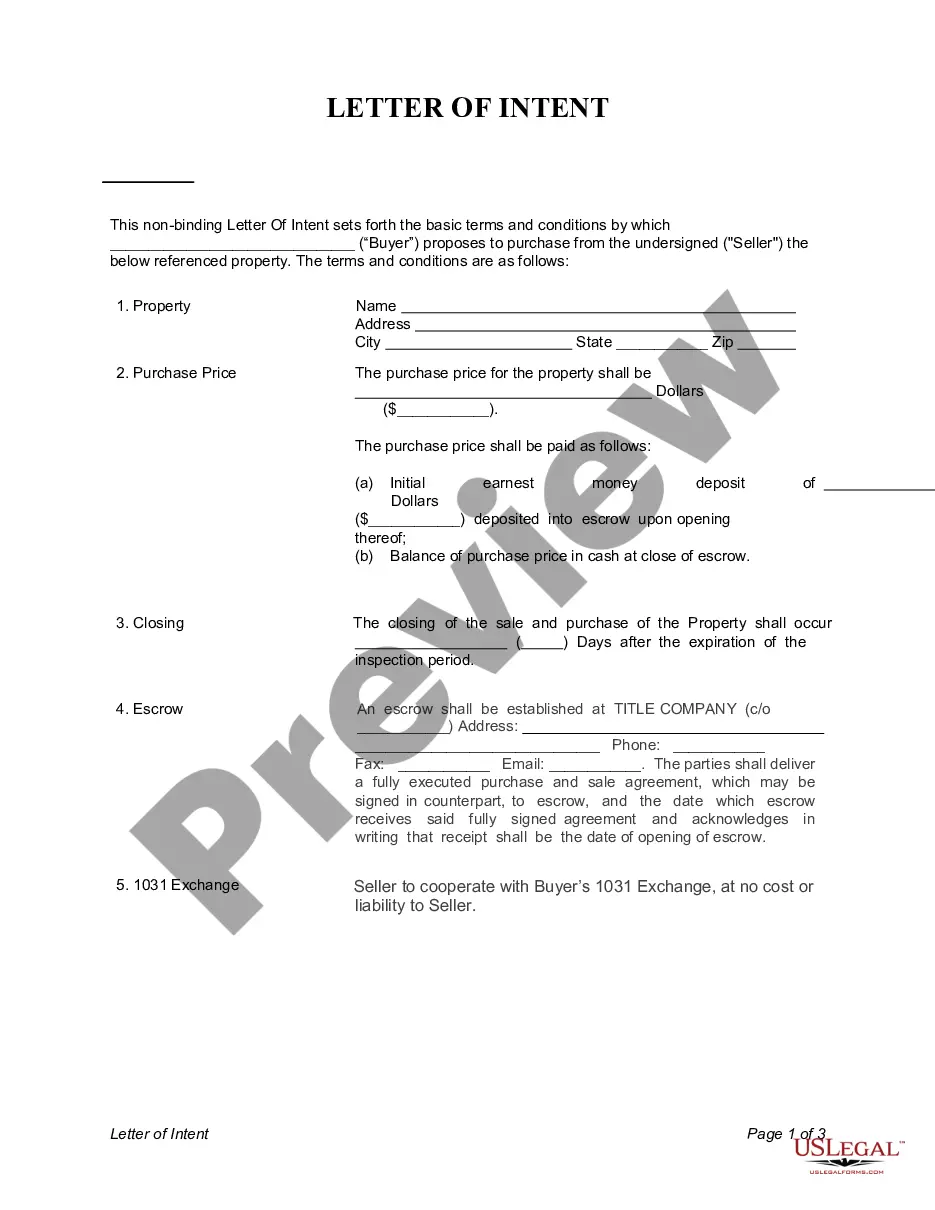
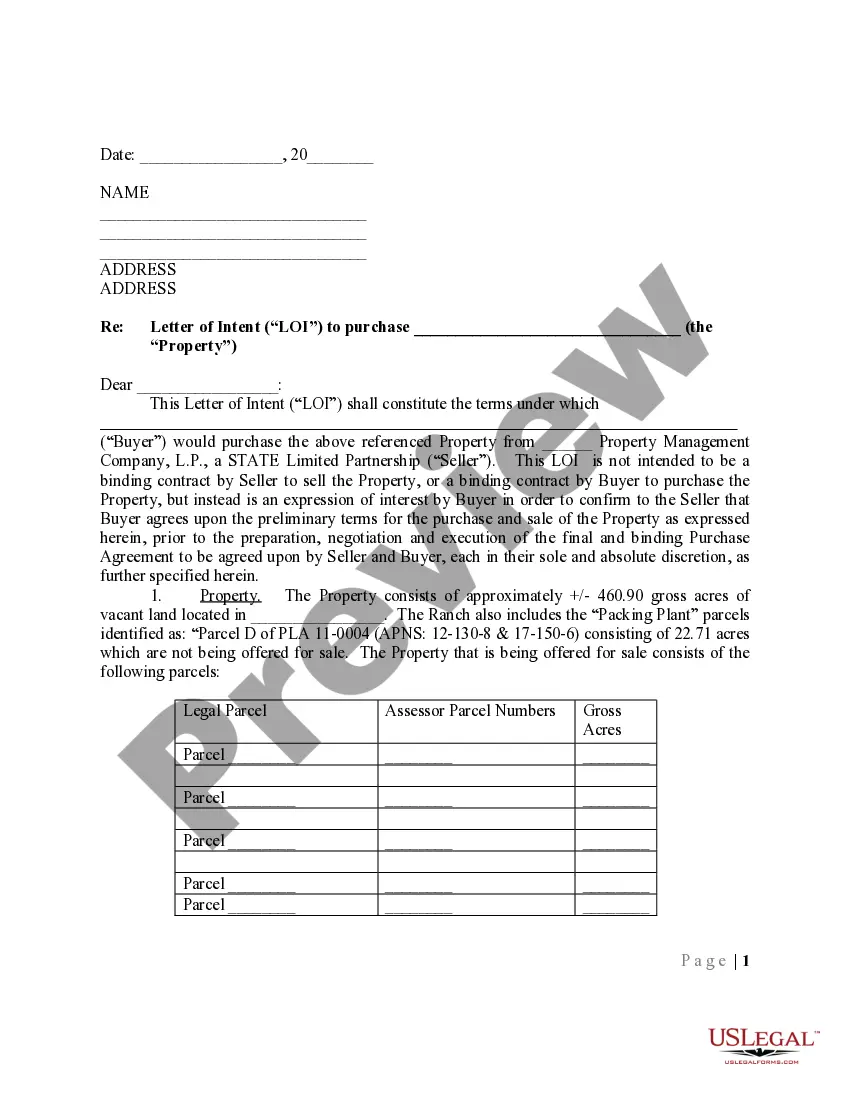
The Letter of Intent to Purchase Commercial Real Estate is a preliminary agreement between a buyer and a seller outlining the key terms of a future real estate transaction. This form serves as a formal expression of interest from the buyer, detailing essential aspects like property description, purchase price, and closing conditions. Unlike a definitive purchase and sale agreement, this letter is not binding but sets the groundwork for negotiations and further agreements.
Form components explained
- Date of the letter
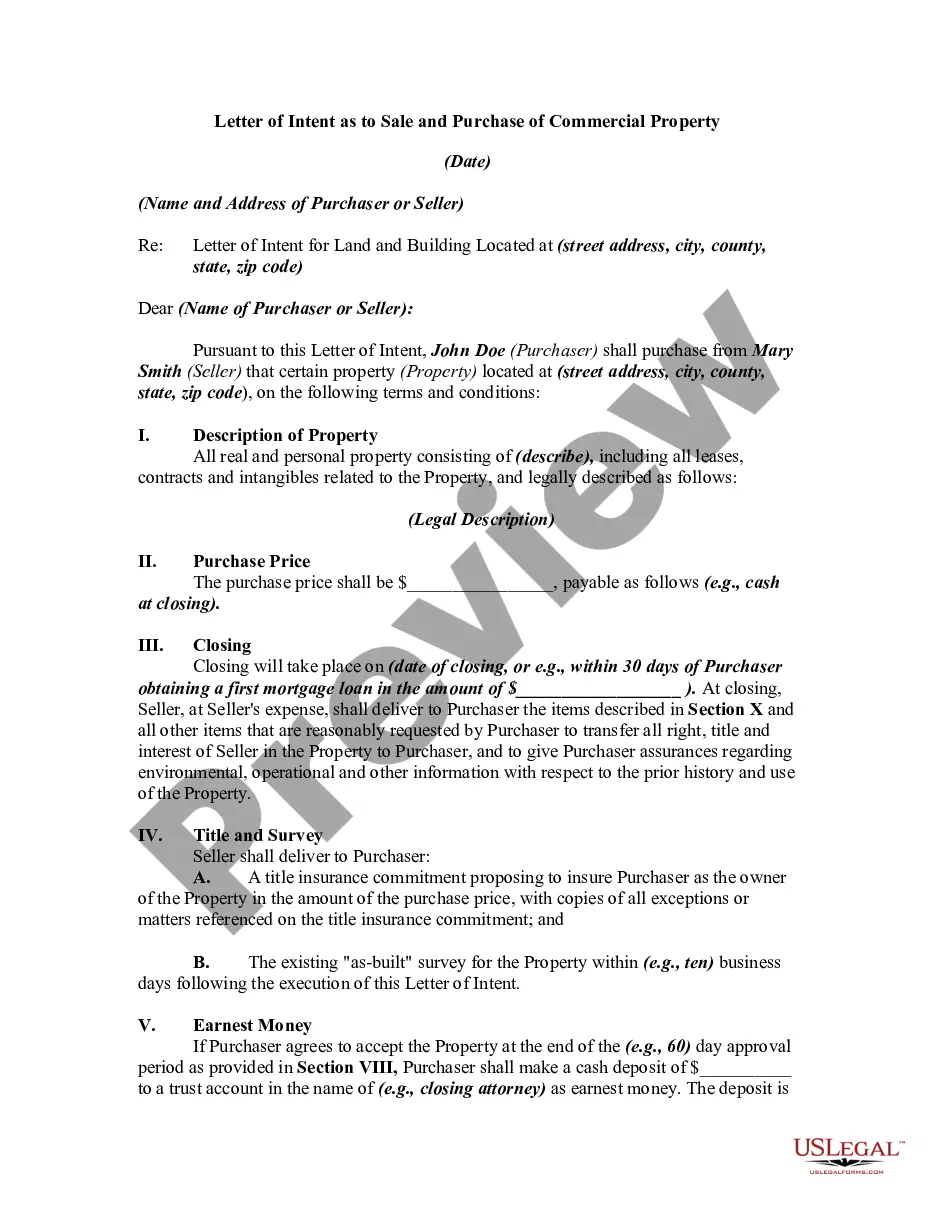
- Seller and Purchaser information
- Description of the property
- Proposed purchase price
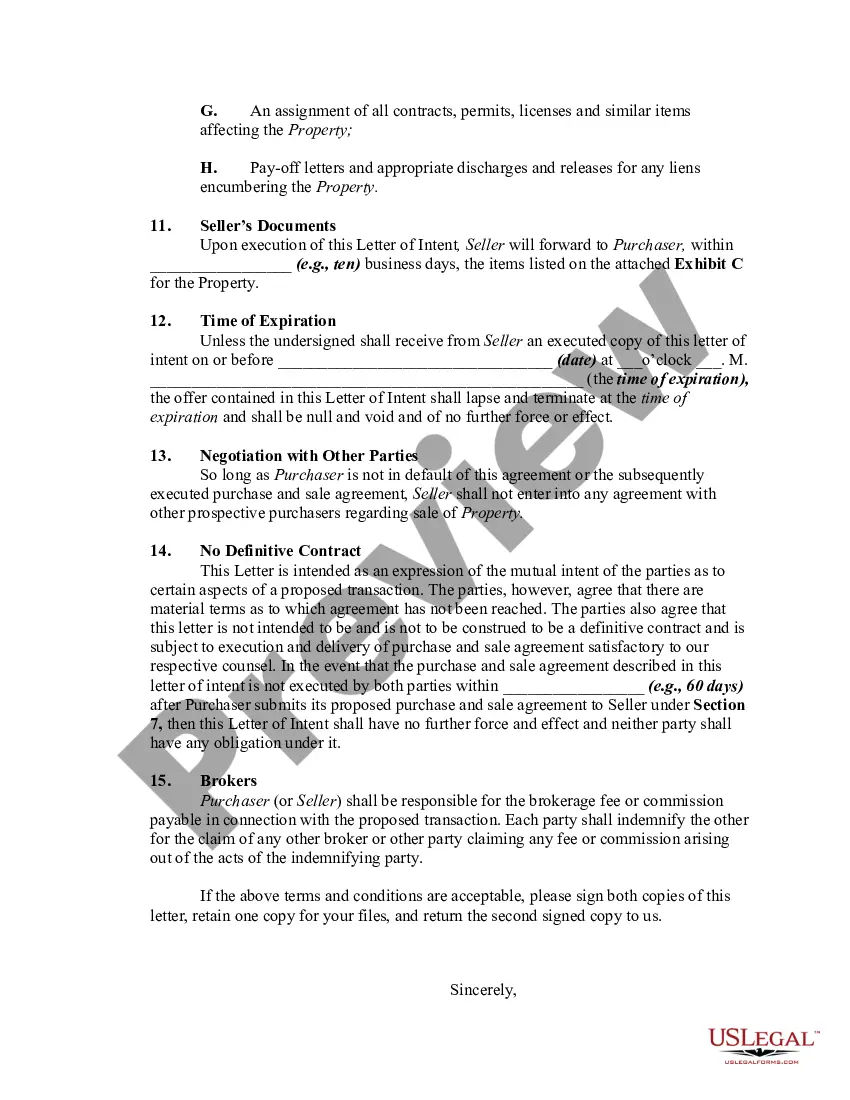
- Closing date and conditions
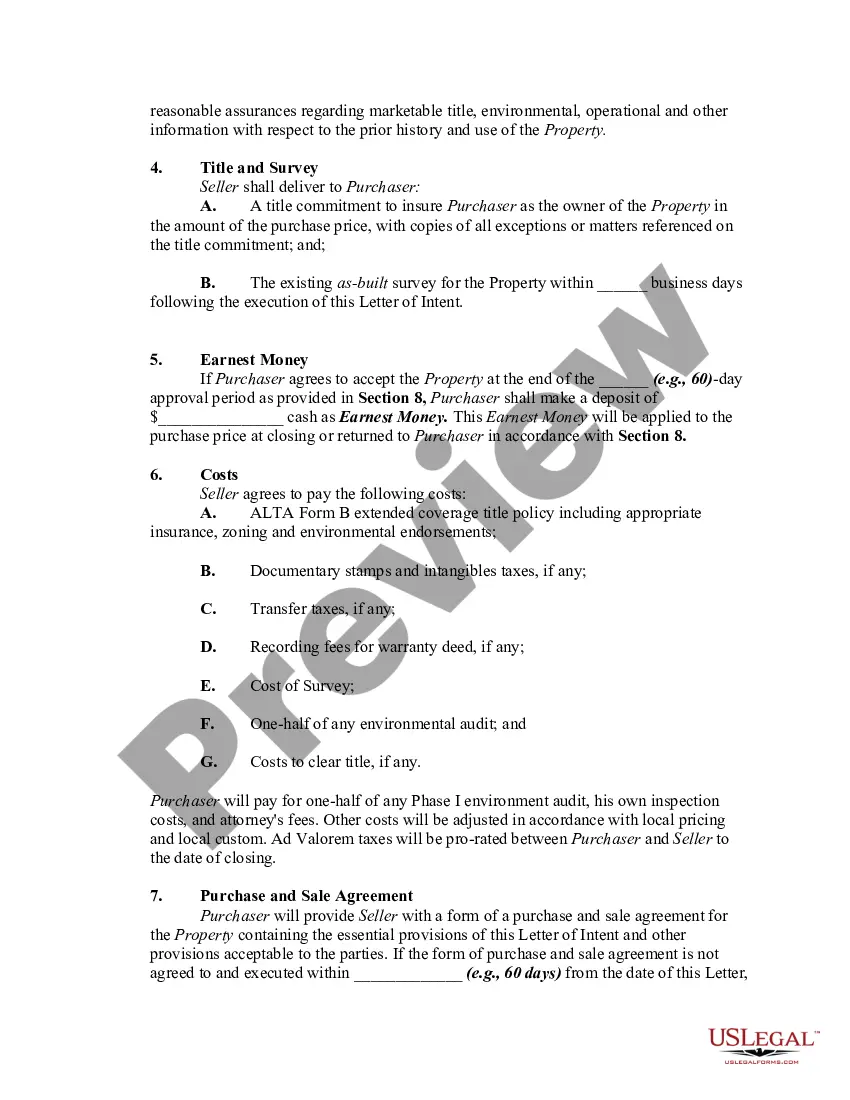
- Earnest money requirements
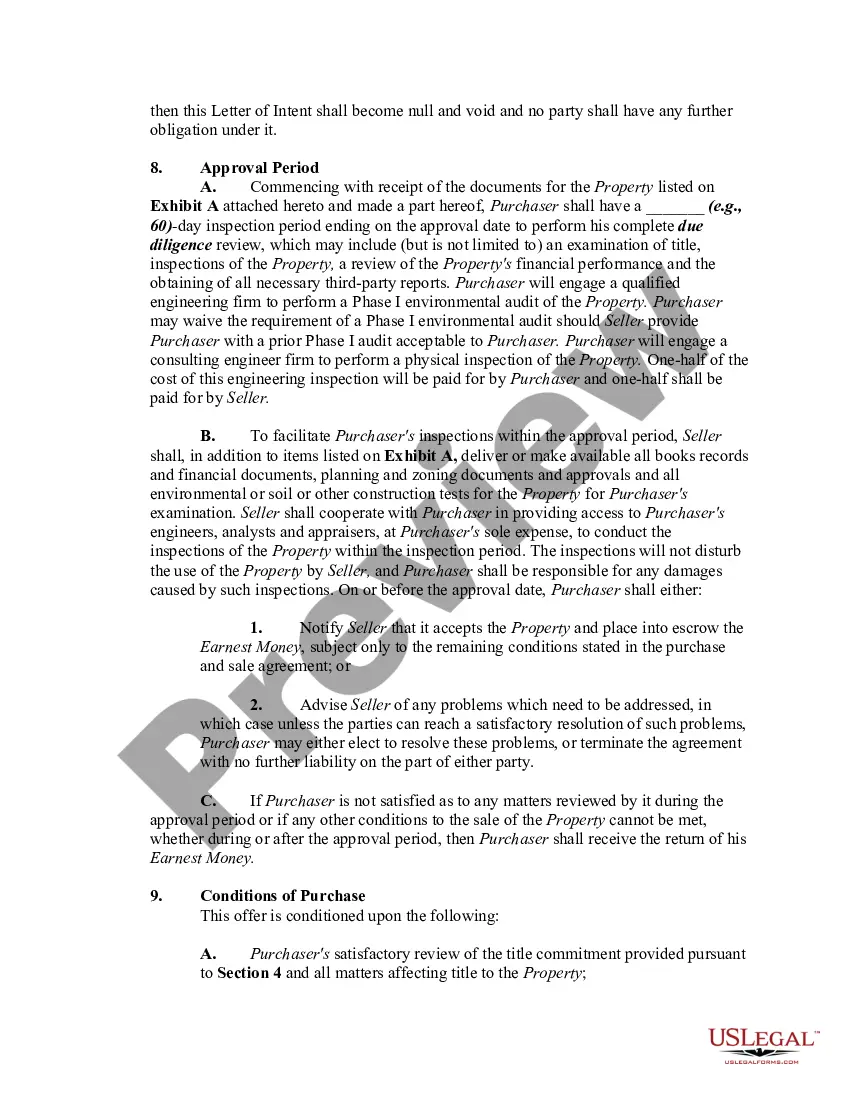
- Approval period for inspections and due diligence
- Conditions of purchase
- Expiration of the offer
- Negotiation restrictions with other parties
When to use this document
This form is suitable for situations where a buyer intends to signal their serious interest in purchasing a commercial property. It can be used when the initial negotiations are underway, and both parties seek to clarify critical aspects of the future sale before committing to a legally binding contract. Utilizing this letter can help establish a framework for negotiations and provide time for necessary inspections and due diligence.
Who needs this form
- Business owners looking to acquire commercial real estate
- Real estate investors seeking to secure property for investment
- Real estate agents or brokers facilitating property transactions
- Legal professionals assisting clients with commercial real estate purchases
Steps to complete this form
- Identify the date and address the letter to the seller.
- Enter the details of the purchaser and the seller, including their addresses.
- Specify the property being purchased, including its legal description.
- Clearly indicate the proposed purchase price and closing date.
- Include any conditions for the offer, such as an inspection period and earnest money deposit.
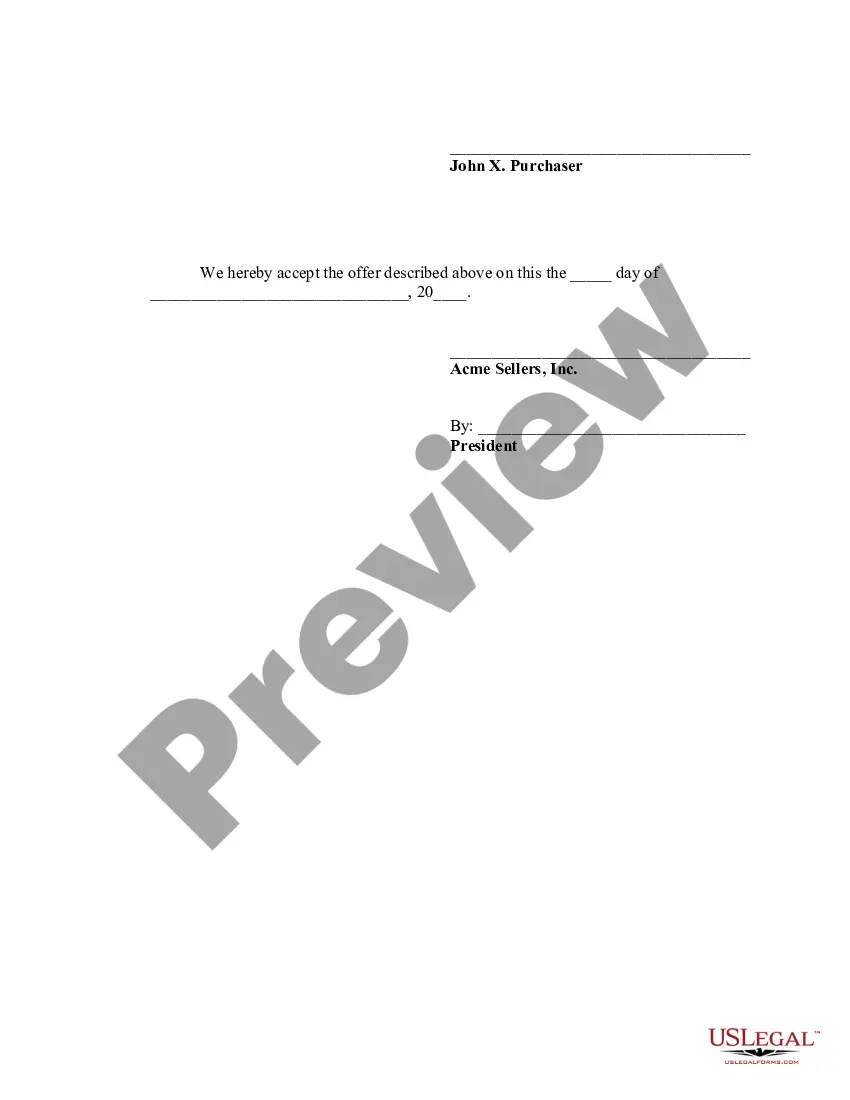
- Ensure both parties sign and date the letter to acknowledge their understanding of its intent.
Notarization guidance
Notarization is required for this form to take effect. Our online notarization service, powered by Notarize, lets you verify and sign documents remotely through an encrypted video session, available 24/7.
Get your form ready online
Our built-in tools help you complete, sign, share, and store your documents in one place.
Make edits, fill in missing information, and update formatting in US Legal Forms—just like you would in MS Word.
Download a copy, print it, send it by email, or mail it via USPS—whatever works best for your next step.
Sign and collect signatures with our SignNow integration. Send to multiple recipients, set reminders, and more. Go Premium to unlock E-Sign.
If this form requires notarization, complete it online through a secure video call—no need to meet a notary in person or wait for an appointment.
We protect your documents and personal data by following strict security and privacy standards.

Make edits, fill in missing information, and update formatting in US Legal Forms—just like you would in MS Word.

Download a copy, print it, send it by email, or mail it via USPS—whatever works best for your next step.

Sign and collect signatures with our SignNow integration. Send to multiple recipients, set reminders, and more. Go Premium to unlock E-Sign.

If this form requires notarization, complete it online through a secure video call—no need to meet a notary in person or wait for an appointment.

We protect your documents and personal data by following strict security and privacy standards.
Typical mistakes to avoid
- Failing to include all necessary property details, including legal descriptions.
- Not defining the approval period for inspections, leading to potential misunderstandings.
- Leaving out specific financial terms, such as the earnest money deposit.
- Failing to sign and date the letter, which may render it ineffective.
Why complete this form online
- Convenient access to legally vetted templates created by licensed professionals.
- Editable fields allow for customization to meet specific transaction needs.
- Instant downloading for immediate use, saving time in real estate negotiations.
Looking for another form?
Form popularity
FAQ
The Letter of Intent to Purchase Commercial Real Estate is a preliminary, typically nonbinding agreement between a buyer and seller that outlines the key terms of a future transaction. It covers the property description, proposed purchase price, closing conditions, and the approval period for inspections and due diligence. It also notes earnest money, expiration, and any negotiation restrictions, and it sets the framework for further, more binding agreements.
Common mistakes include failing to clearly define essential terms—such as the property description and proposed purchase price—and not setting a defined approval period for inspections. Other pitfalls are implying binding commitments, omitting earnest money details, or neglecting to specify conditions of purchase and an expiration of the offer.
To write a Letter of Intent to Purchase Commercial Real Estate, start with the date and the parties, then add a precise property description and the proposed purchase price. Outline closing conditions and the approval period for inspections and due diligence, note any earnest money requirements, and specify the expiration of the offer and any negotiation restrictions.
Even though LOIs are usually nonbinding, unclear language can create perceived obligations. Risks include inadvertently limiting other offers through negotiation restrictions, binding the parties to earnest money or due diligence timelines, or inducing premature decisions before a final, binding Purchase and Sale Agreement is prepared. Always review terms and consider legal counsel before signing.
To stand out, make the terms clear and attractive: specify a realistic purchase price, a defined closing timeline, and a solid due diligence period. Include concrete conditions of purchase, reasonable expiration, and well‑structured earnest money terms. A concise, professional LOI that minimizes ambiguity helps negotiations proceed smoothly.
This Letter of Intent to Purchase Commercial Real Estate is a nonbinding document that signals intent and outlines key terms to guide negotiations, whereas a definitive Purchase and Sale Agreement binds the parties to those terms once executed. The LOI typically includes a framework for due diligence, expiration, earnest money terms, and negotiation restrictions, but final terms are finalized in the PSA.