Utah Landlord Notices for Eviction / Unlawful Detainer Forms Package
What this form package covers
The Utah Landlord Notices for Eviction / Unlawful Detainer Forms Package is a comprehensive collection of legally required notices that landlords in Utah must provide to tenants before initiating eviction proceedings. This package includes a variety of notices tailored to different scenarios, such as lease termination and overdue rent demands. By using this package, landlords can ensure compliance with state laws while effectively managing tenant relationships.
Forms provided in this package
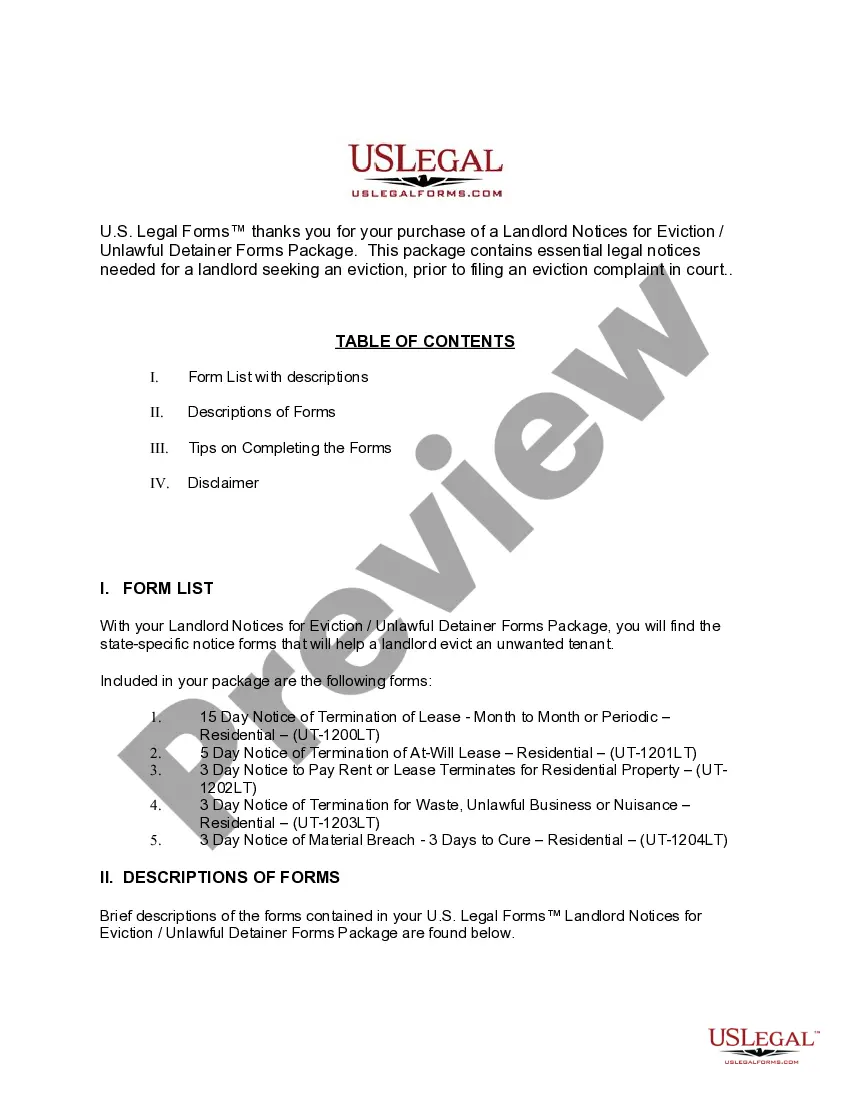
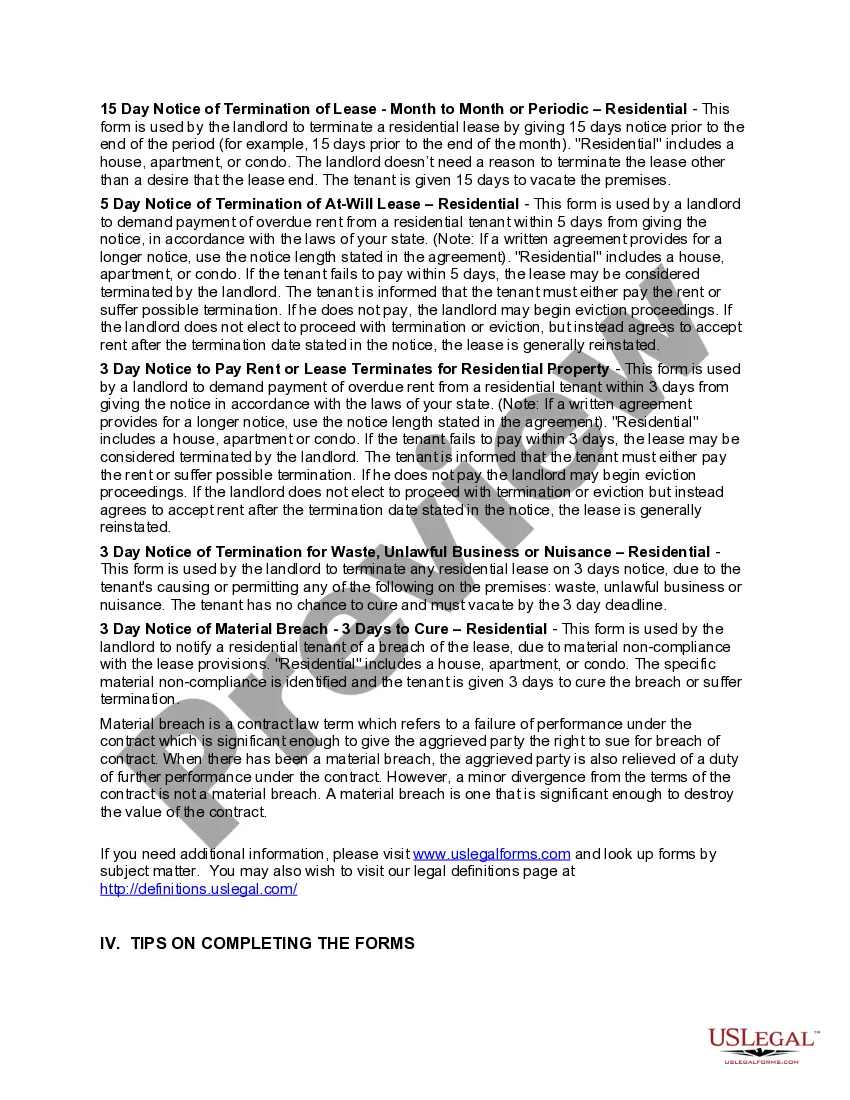
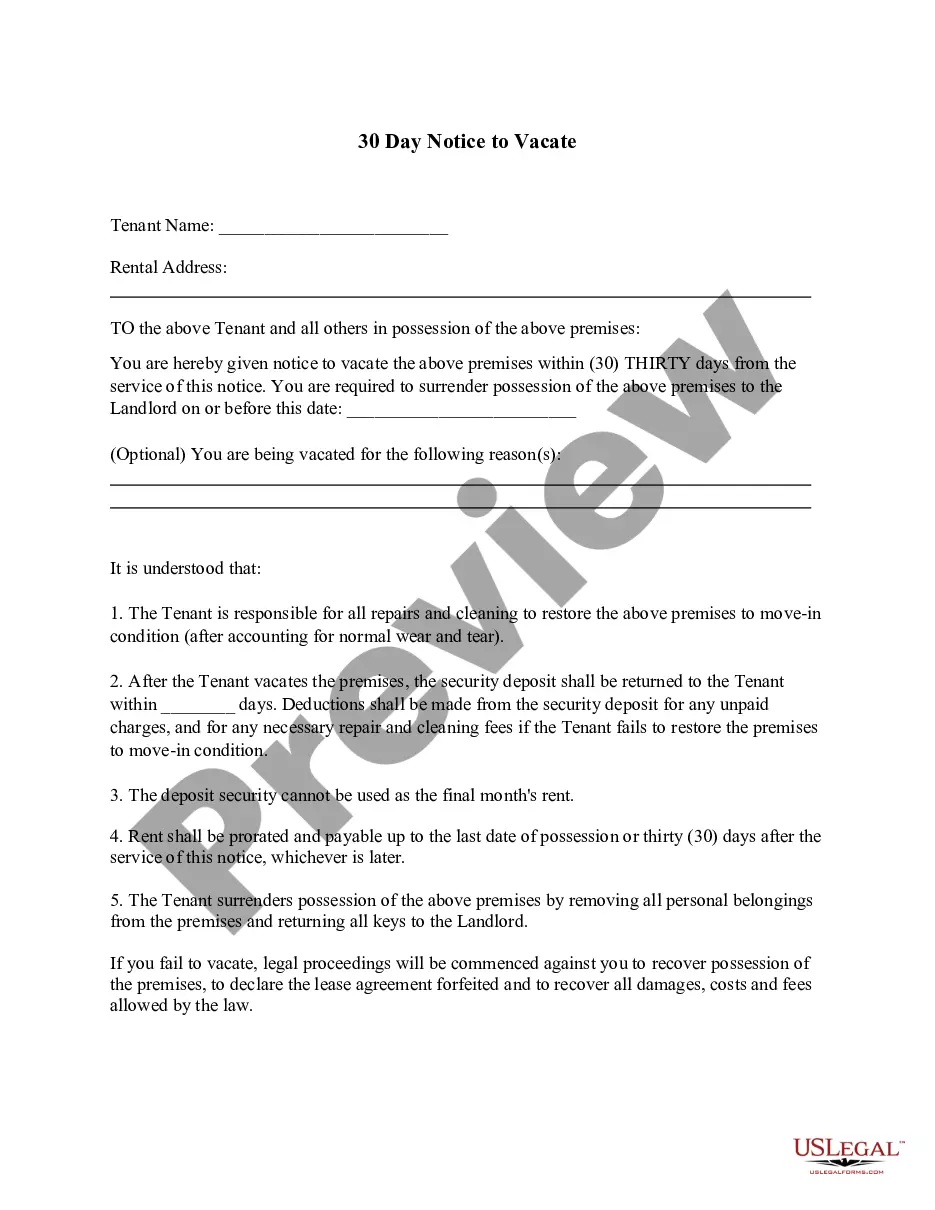
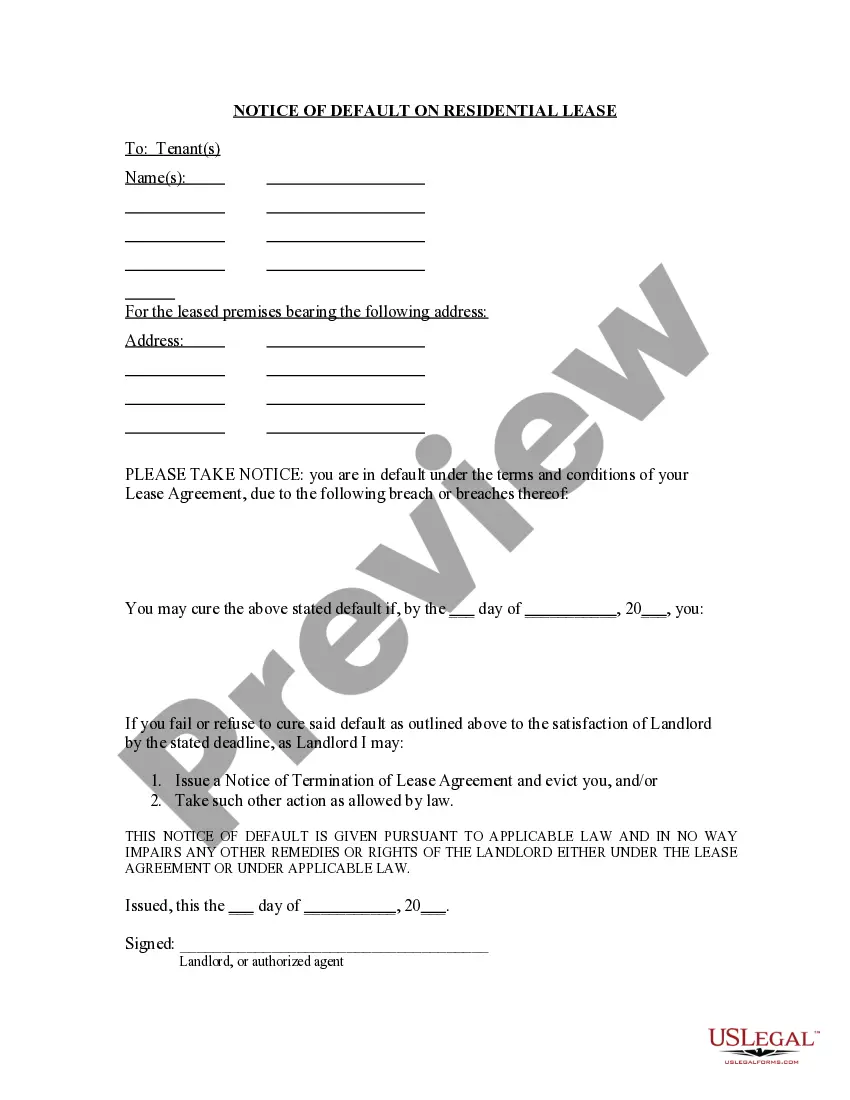
- 15 Day Notice of Termination of Lease - Month to Month or Periodic - Residential
- 5 Day Notice of Termination of At-Will Lease - Residential
- 3 Day Notice to Pay Rent or Lease Terminates for Residential Property
- 3 Day Notice of Termination for Waste, Unlawful Business or Nuisance - Residential
- 3 Day Notice of Material Breach - 3 Days to Cure - Residential
When this form package is needed
This form package is essential in various situations, including:
- When you need to terminate a month-to-month or periodic residential lease.
- If a tenant fails to pay rent and you must issue a demand for payment.
- When you must address nuisances or unlawful behavior by a tenant.
- If there has been a material breach of lease terms by the tenant.
Who can use this document
- Residential landlords looking to manage lease terminations and evictions effectively.
- Property managers responsible for overseeing rental properties and tenant compliance.
- Landlords with tenants who are consistently late on rent or violating lease agreements.
- Any landlord seeking to understand their rights and obligations under Utah law.
Instructions for completing these forms
- Review all included forms and identify the specific notice applicable to your situation.
- Fill in the necessary details such as tenant information and dates.
- Clearly state the reason for the notice, citing relevant lease terms when necessary.
- Deliver the notice to the tenant in accordance with Utah law, ensuring proper documentation.
- Keep a copy of the notice for your records and any future proceedings.
Do forms in this package need to be notarized?
Notarization is generally not required for forms in this package. However, specific circumstances or local laws may require it. You can complete notarization remotely through US Legal Forms, powered by Notarize, with 24/7 availability.
Get your form ready online
Our built-in tools help you complete, sign, share, and store your documents in one place.
Make edits, fill in missing information, and update formatting in US Legal Forms—just like you would in MS Word.
Download a copy, print it, send it by email, or mail it via USPS—whatever works best for your next step.
Sign and collect signatures with our SignNow integration. Send to multiple recipients, set reminders, and more. Go Premium to unlock E-Sign.
If this form requires notarization, complete it online through a secure video call—no need to meet a notary in person or wait for an appointment.
We protect your documents and personal data by following strict security and privacy standards.

Make edits, fill in missing information, and update formatting in US Legal Forms—just like you would in MS Word.

Download a copy, print it, send it by email, or mail it via USPS—whatever works best for your next step.

Sign and collect signatures with our SignNow integration. Send to multiple recipients, set reminders, and more. Go Premium to unlock E-Sign.

If this form requires notarization, complete it online through a secure video call—no need to meet a notary in person or wait for an appointment.

We protect your documents and personal data by following strict security and privacy standards.
Common mistakes
- Failing to provide the required notice within the specified timeframe.
- Not including adequate information about the tenant or rental agreement in the notice.
- Delivering the notice incorrectly, which may lead to complications in eviction proceedings.
Why complete this package online
- Convenience of accessing forms instantly without the need for a physical visit to a lawyer.
- Editable forms allow for customization to fit your specific situation.
- Reliability of attorney-drafted notices ensures compliance with current legal standards.
Looking for another form?
Form popularity
FAQ
Address the Tenant(s) Named in the Residential Lease. List the Lease Information. Notify the Tenant of the Eviction. Give a Reason for the Eviction. Serve the Eviction Notice to the Tenant(s)
Know Your Rights. It goes without saying, but take some time to know your rights as a tenant. Keep Good Records. Make Sure Notice is Proper. Service of the Unlawful Detainer. Talking to an Attorney. Managing Partner Lipton Legal Group, A PC Beverly Hills, CA.
The most effective way to serve a notice of eviction is to send the notice via certified mail with a return receipt. After this is done, the notice of eviction is posted conspicuously on the property, such as the front door or garage.
Address the Tenant(s) Named in the Residential Lease. List the Lease Information. Notify the Tenant of the Eviction. Give a Reason for the Eviction. Serve the Eviction Notice to the Tenant(s)
Eviction notices can generally be served in 4 different ways. Two ways commonly used are to personally hand the notice to the tenant or to tape the notice on the door of the subject residence if the tenant does not answer. If the tenant vacates the property, the landlord need not proceed with the other steps.
Step 1 - Serve an Eviction Notice. First, an eviction notice needs to be served on the tenant. Step 2 - File a Lawsuit. Second, file a lawsuit seeking a court order evicting the tenant. Step 3 - Forcibly Remove the Tenant.
Yes, the landlord can give you a hand-written notice to terminate your tenancy. There is no rule that it needs to be typed.
Addresses. Date. Tenant names. Status and date of the lease. Why the eviction notice is served (clear and concise explanation) Date tenant must vacate the property. Proof of service or delivery of notice.
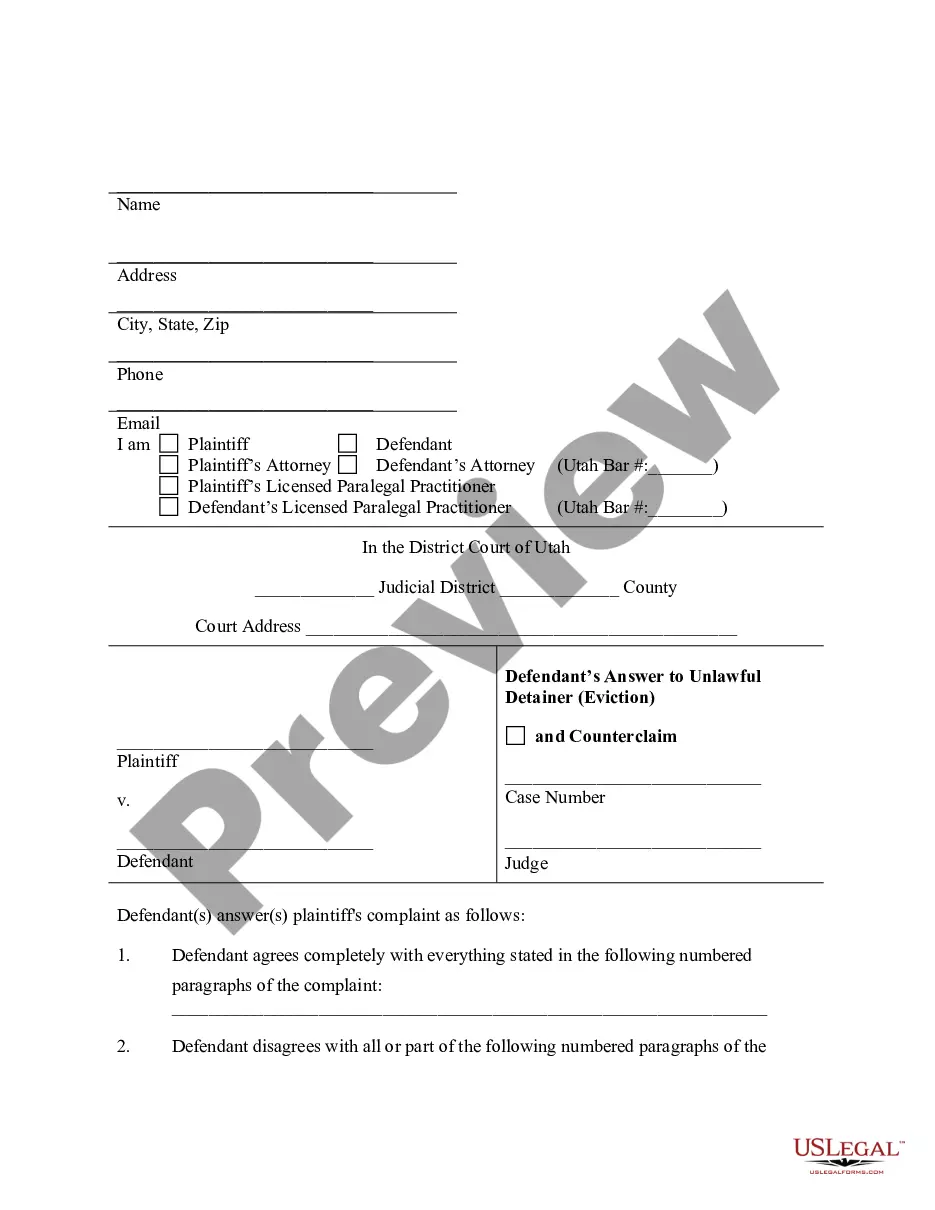
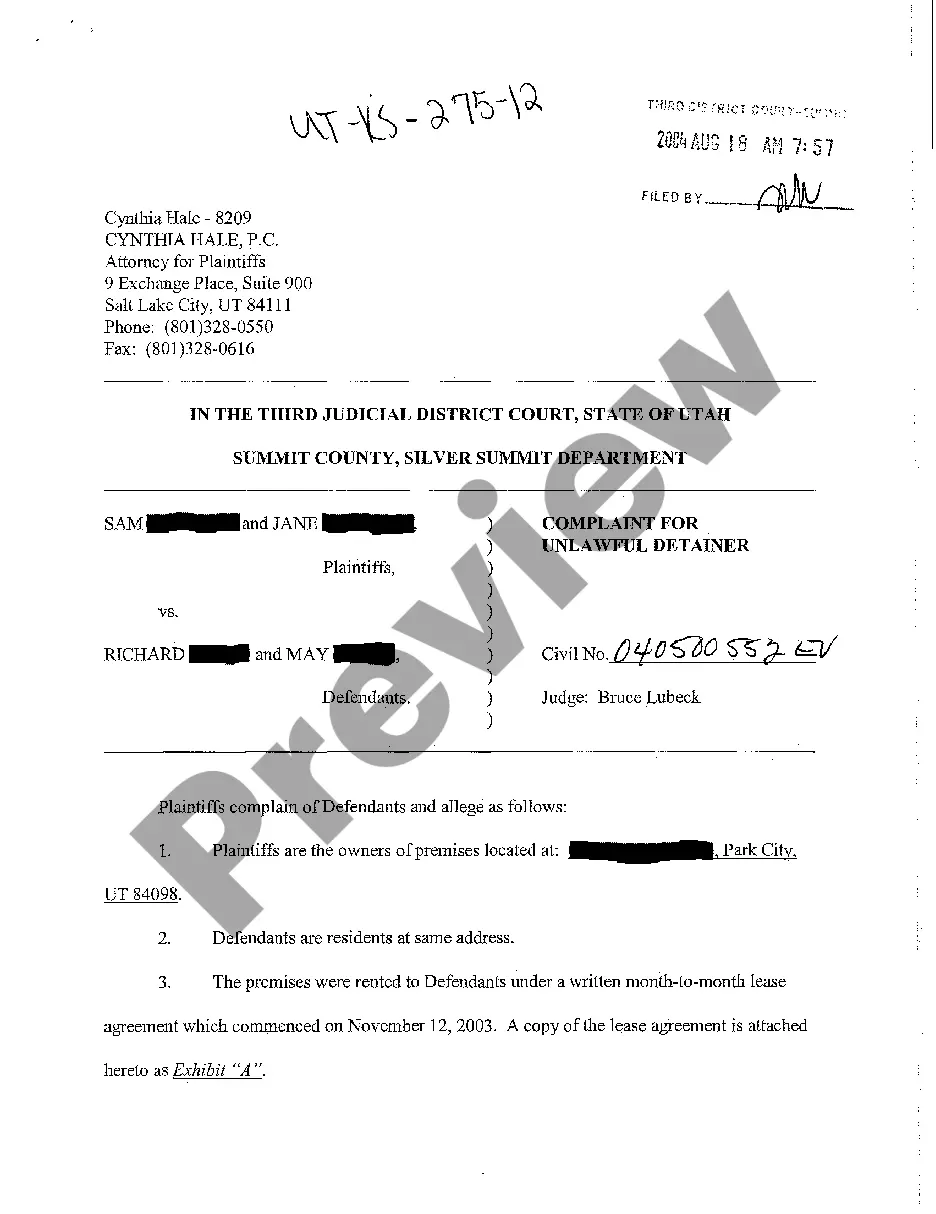
Courts commonly refer to eviction actions as "forcible entry and detainer" or "unlawful detainer" actions. The legal theory is that the landlord alleges the tenant unlawfully continues to have use and possession of the rental property, and the landlord seeks the assistance of the court to have the tenant removed.