Wisconsin Renunciation And Disclaimer of Property received by Intestate Succession
What this document covers
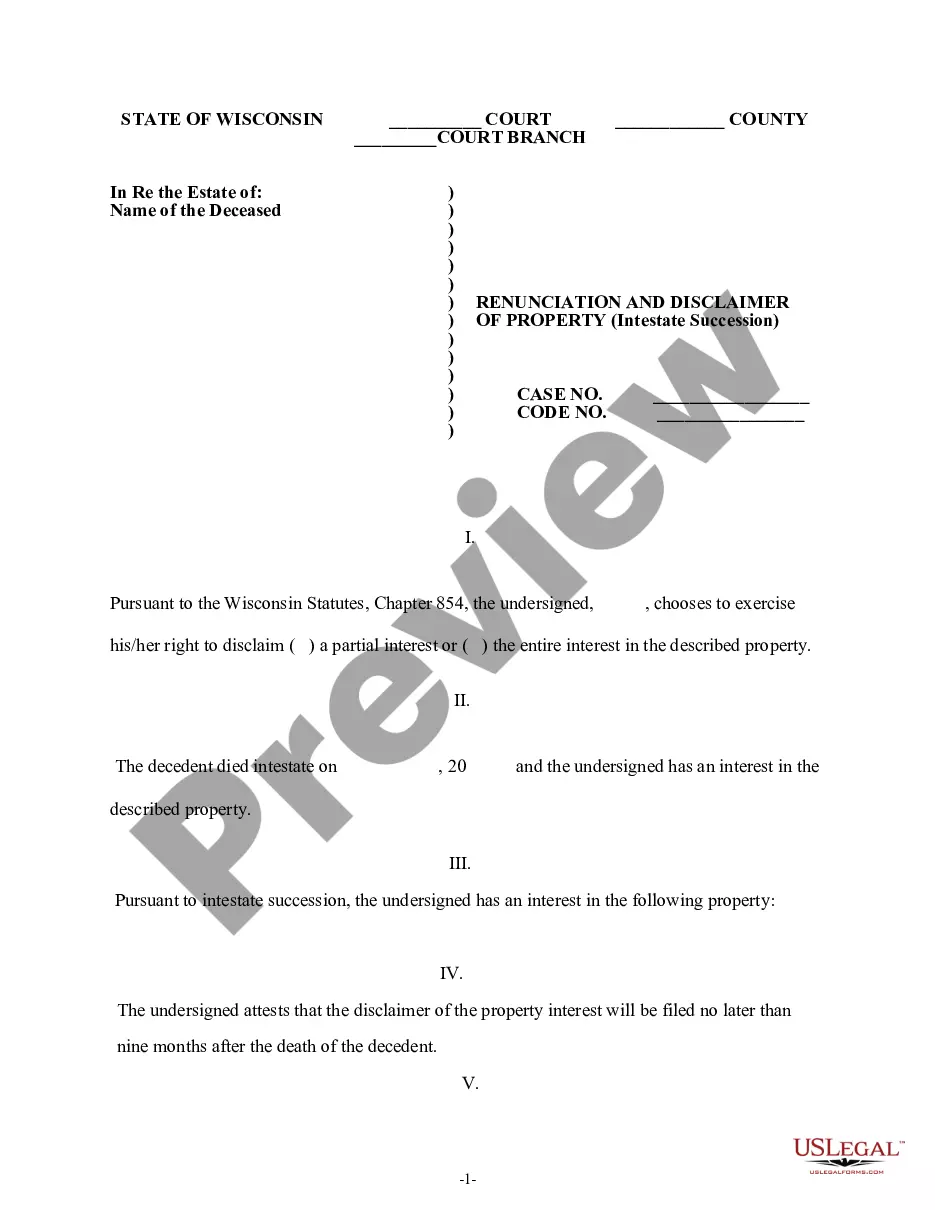
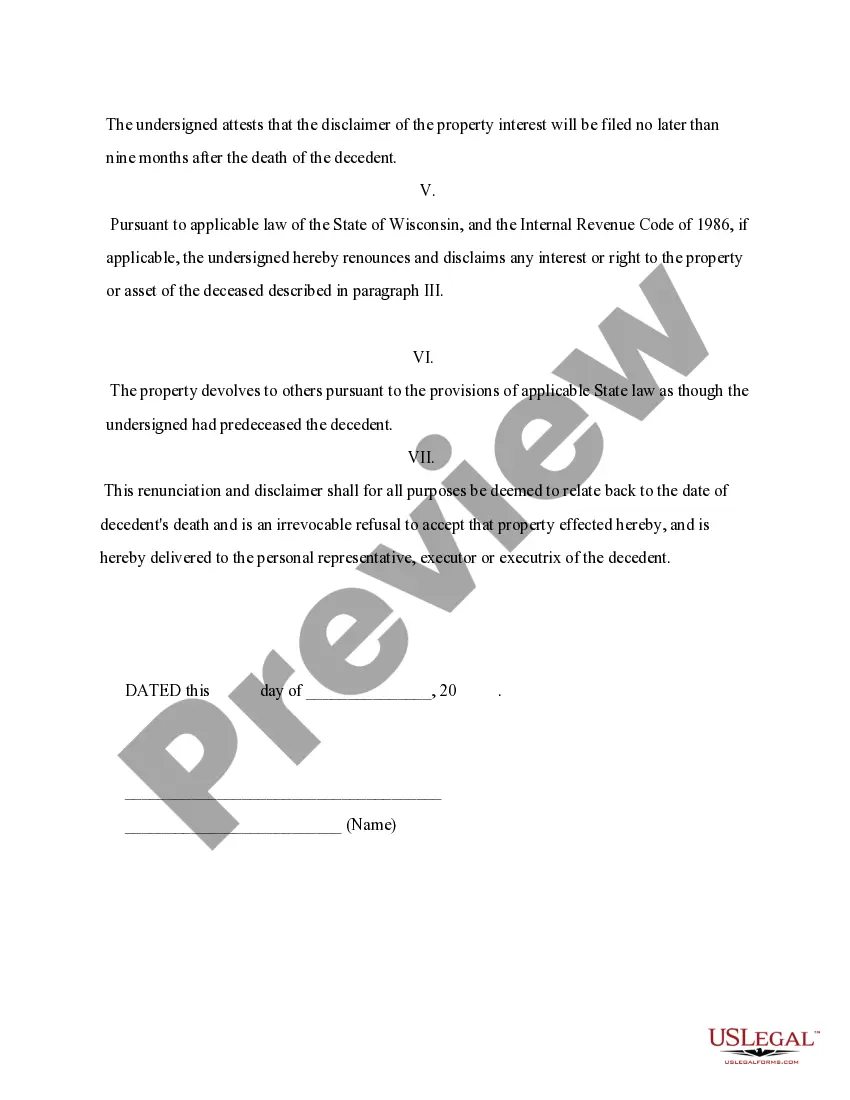
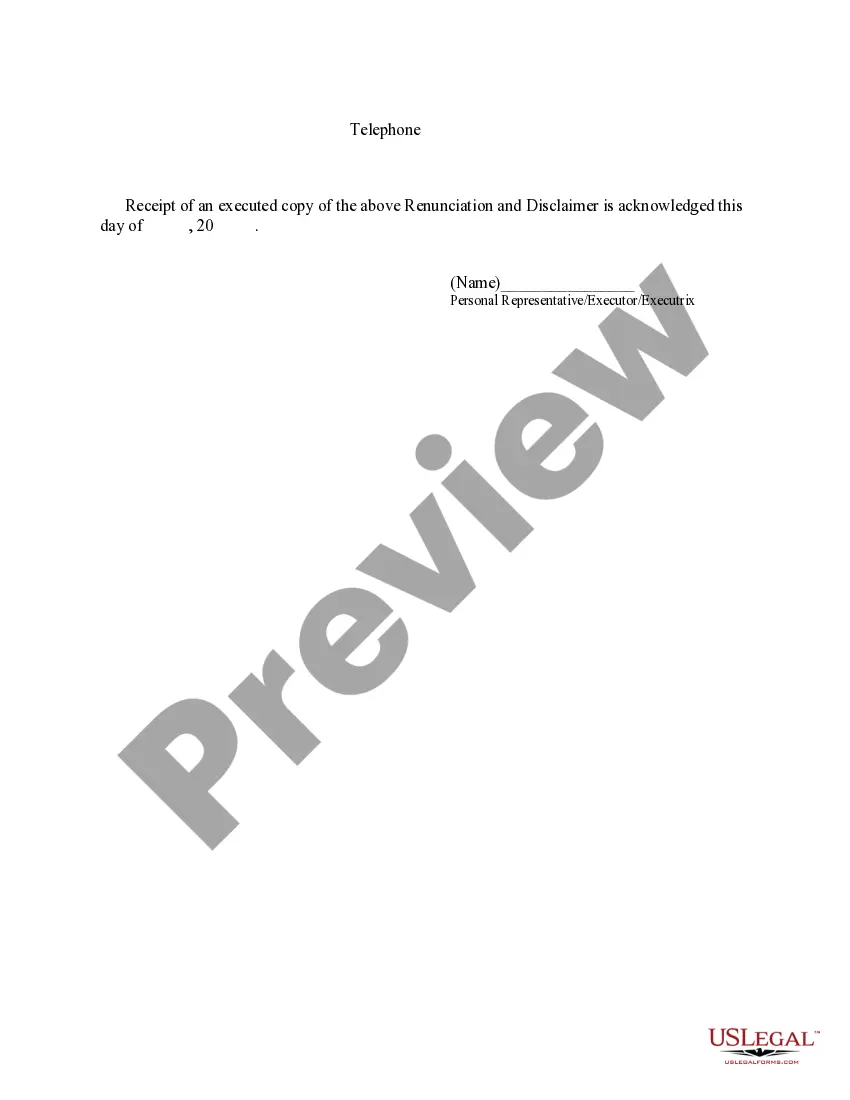
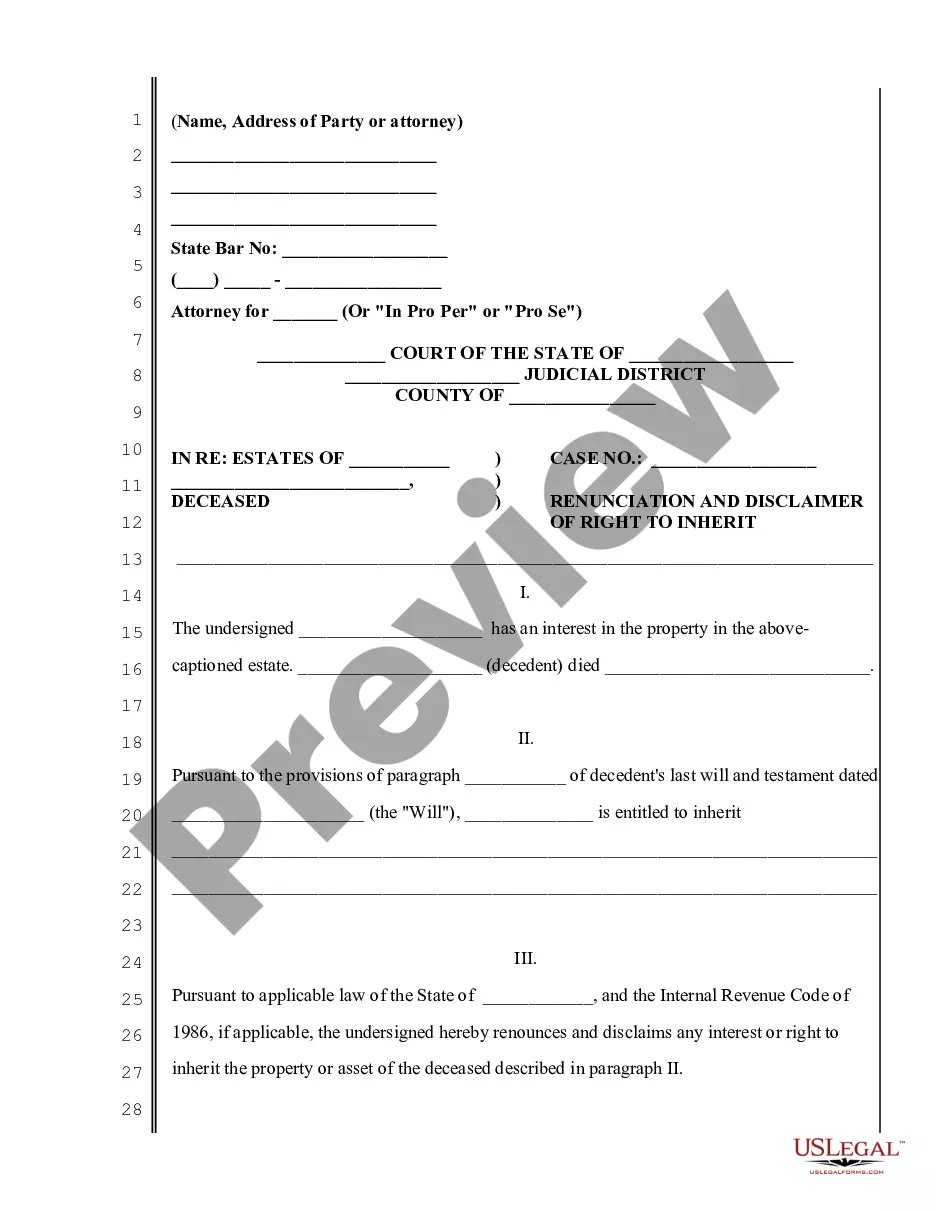
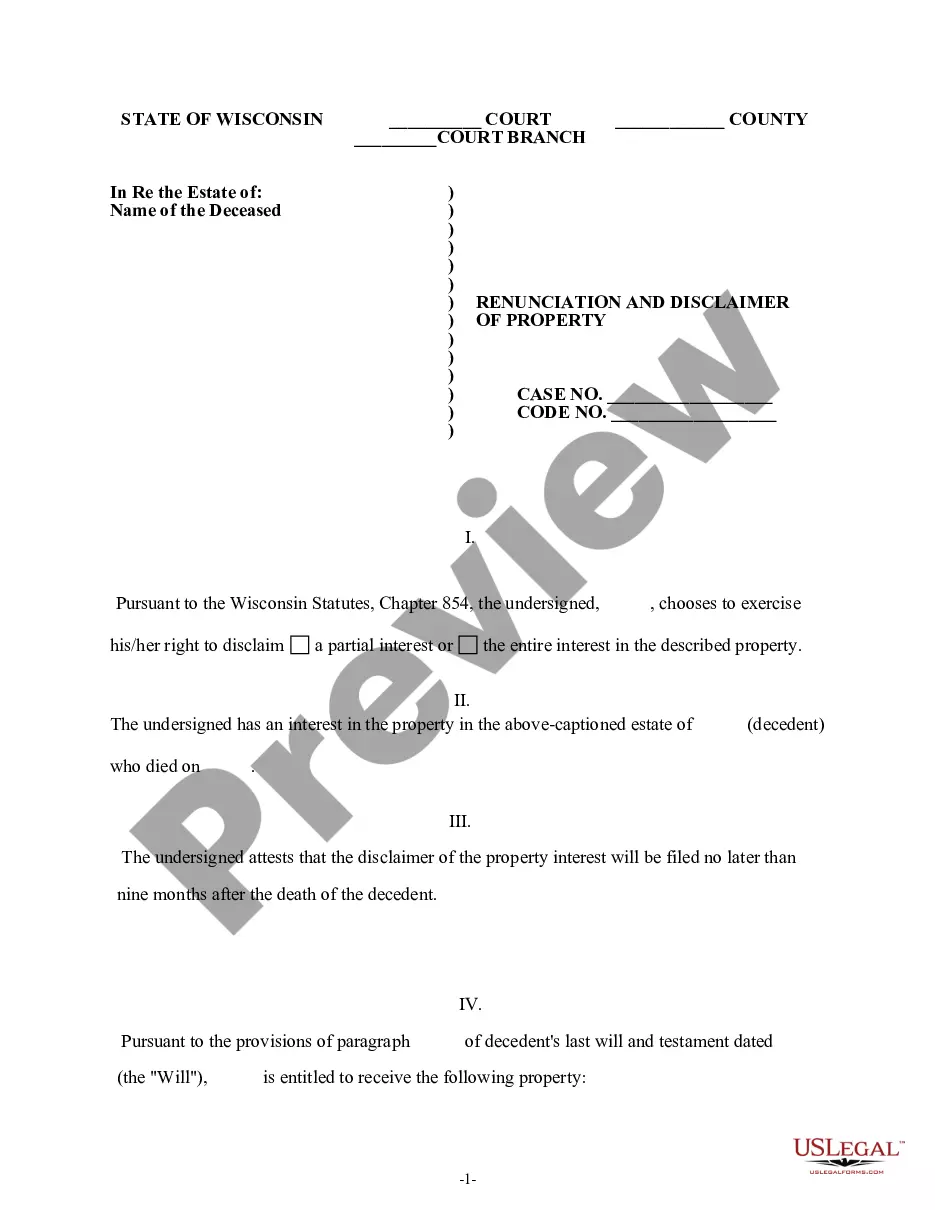
This form is a Renunciation and Disclaimer of Property received by intestate succession. It allows a beneficiary to decline an interest in property acquired upon the death of a decedent. By using this form, the property will then pass to other beneficiaries as though the disclaiming beneficiary had predeceased the decedent. This form is specific to the laws of Wisconsin, ensuring that it meets all legal requirements for disqualification of interest under the state's statutes.
Key components of this form
- Identification of the property or asset being disclaimed.
- Declaration of the beneficiary's intent to renounce their interest.
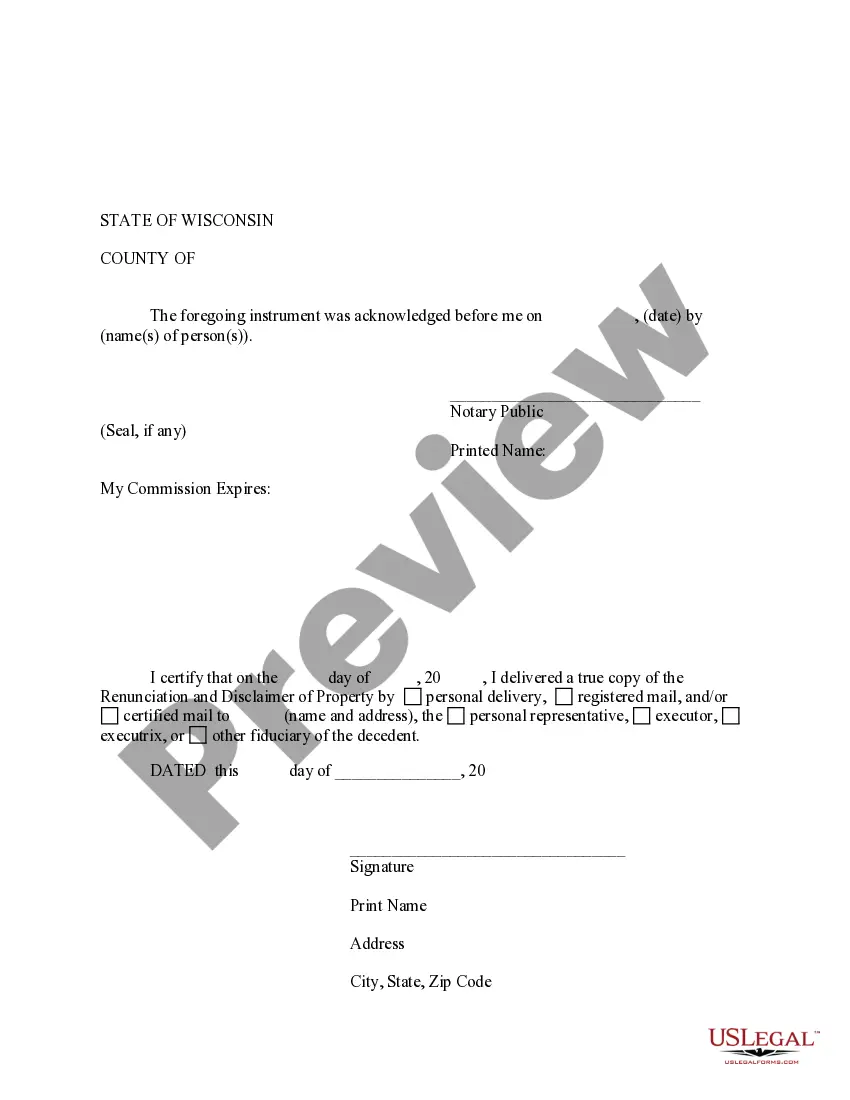
- Legal acknowledgment of the disclaimer under Wisconsin law.
- Certification of the delivery of the documentation.
Common use cases
This form should be used when a beneficiary wishes to disclaim an interest in property gained through intestate succession. Situations may include when the beneficiary cannot or does not want to accept the property for personal, financial, or legal reasons. It is also relevant if the beneficiary believes that accepting the property may result in tax implications or negative financial consequences.
Who should use this form
This form is suitable for:
- Beneficiaries of an intestate estate in Wisconsin who intend to renounce their interest in inherited property.
- Individuals seeking to prevent property from being included in their taxable estate.
- Heirs who wish to redirect property to alternate beneficiaries or heirs.
How to prepare this document
- Identify the specific property or asset you wish to disclaim.
- Clearly state your intent to renounce any interest in the property.
- Complete the acknowledgment section, ensuring it adheres to Wisconsin law.
- Include your signature and date to formalize the disclaimer.
- Provide the necessary certification of delivery, if applicable.
Notarization requirements for this form
This form does not typically require notarization unless specified by local law. Always check for specific requirements based on your circumstances and local legal guidelines.
Get your form ready online
Our built-in tools help you complete, sign, share, and store your documents in one place.
Make edits, fill in missing information, and update formatting in US Legal Forms—just like you would in MS Word.
Download a copy, print it, send it by email, or mail it via USPS—whatever works best for your next step.
Sign and collect signatures with our SignNow integration. Send to multiple recipients, set reminders, and more. Go Premium to unlock E-Sign.
If this form requires notarization, complete it online through a secure video call—no need to meet a notary in person or wait for an appointment.
We protect your documents and personal data by following strict security and privacy standards.

Make edits, fill in missing information, and update formatting in US Legal Forms—just like you would in MS Word.

Download a copy, print it, send it by email, or mail it via USPS—whatever works best for your next step.

Sign and collect signatures with our SignNow integration. Send to multiple recipients, set reminders, and more. Go Premium to unlock E-Sign.

If this form requires notarization, complete it online through a secure video call—no need to meet a notary in person or wait for an appointment.

We protect your documents and personal data by following strict security and privacy standards.
Mistakes to watch out for
- Failing to fully identify the property being disclaimed.
- Not signing the form, which renders it invalid.
- Using outdated versions of the form that do not comply with current Wisconsin law.
- Overlooking the need for an acknowledgment of receipt if required.
Benefits of using this form online
- Immediate access to a legally sound and professionally drafted form.
- Easy to download and fill out, ensuring convenience and efficiency.
- Editable form allows users to tailor the document to their specific situation.
- Complies with legal standards, reducing the risk of errors compared to self-generated forms.
Looking for another form?

Form popularity
FAQ
How Is Next of Kin Determined? To determine next of kin in California, go down the list until someone exists in the category listed.For example, if decedent had no surviving spouse or registered domestic partner, but was survived by adult children, then the adult children would be next of kin.
Next of kin meaning In the event of someone's death, next of kin may also be used to describe the person or people who stand to inherit the most. This is usually the spouse or civil partner, but it could also be their children or parents in certain circumstances.
Dying Without a Will in Wisconsin If there isn't a will, the court will appoint someone, usually a relative, financial institution, or trust company to fill the role of executor or personal representative.
The term usually means your nearest blood relative. In the case of a married couple or a civil partnership it usually means their husband or wife. Next of kin is a title that can be given, by you, to anyone from your partner to blood relatives and even friends.
Your mother's next of kin is her eldest child. The term "next of kin" is most commonly used following a death. Legally, it refers to those individuals eligible to inherit from a person who dies without a will. Surviving spouses are at the top of the list, followed by those related by blood.
Who Gets What: The Basic Rules of Intestate Succession.Generally, only spouses, registered domestic partners, and blood relatives inherit under intestate succession laws; unmarried partners, friends, and charities get nothing. If the deceased person was married, the surviving spouse usually gets the largest share.
Children - if there is no surviving married or civil partner If there is no surviving partner, the children of a person who has died without leaving a will inherit the whole estate. This applies however much the estate is worth. If there are two or more children, the estate will be divided equally between them.
In Wisconsin, you can make a living trust to avoid probate for virtually any asset you own -- real estate, bank accounts, vehicles, and so on. You need to create a trust document (it's similar to a will), naming someone to take over as trustee after your death (called a successor trustee).