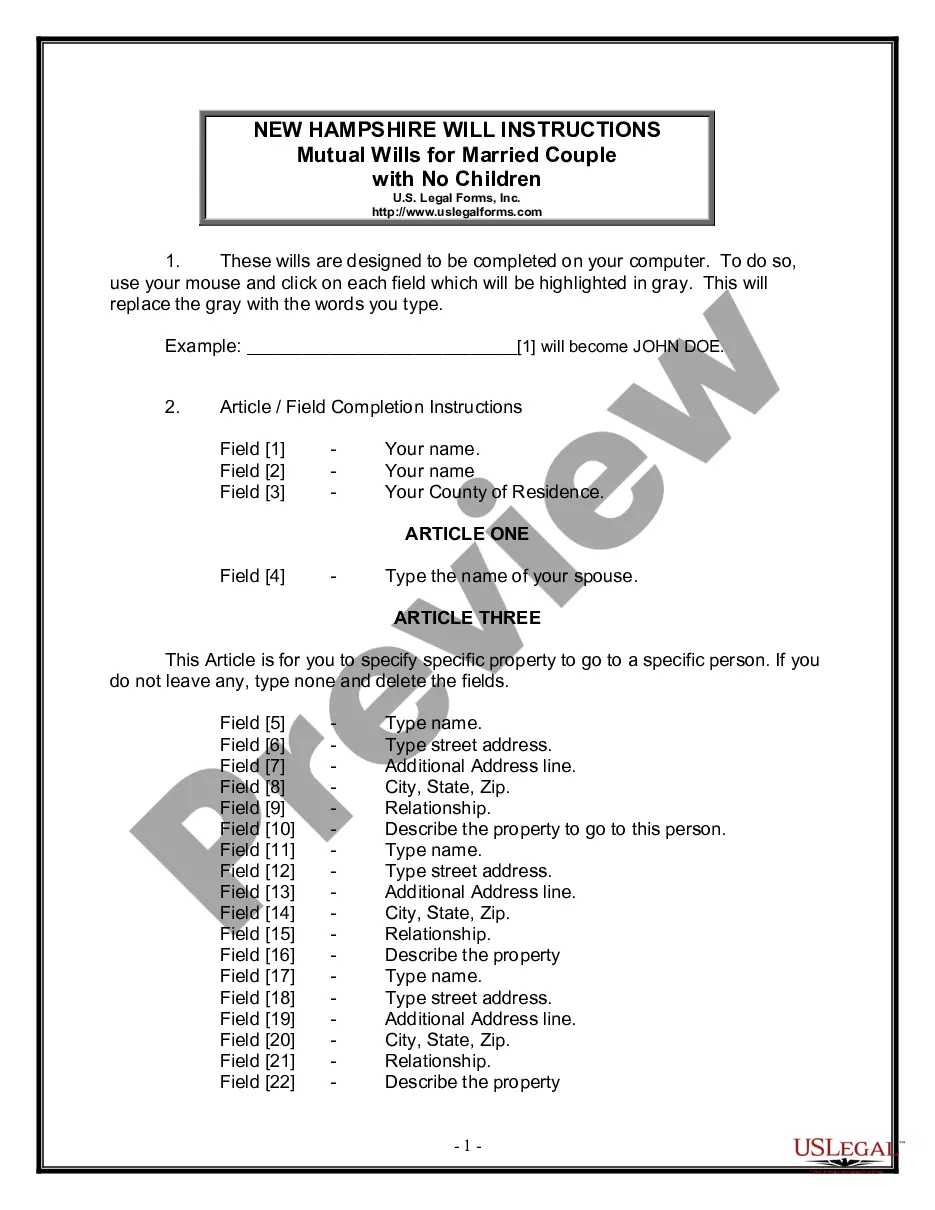
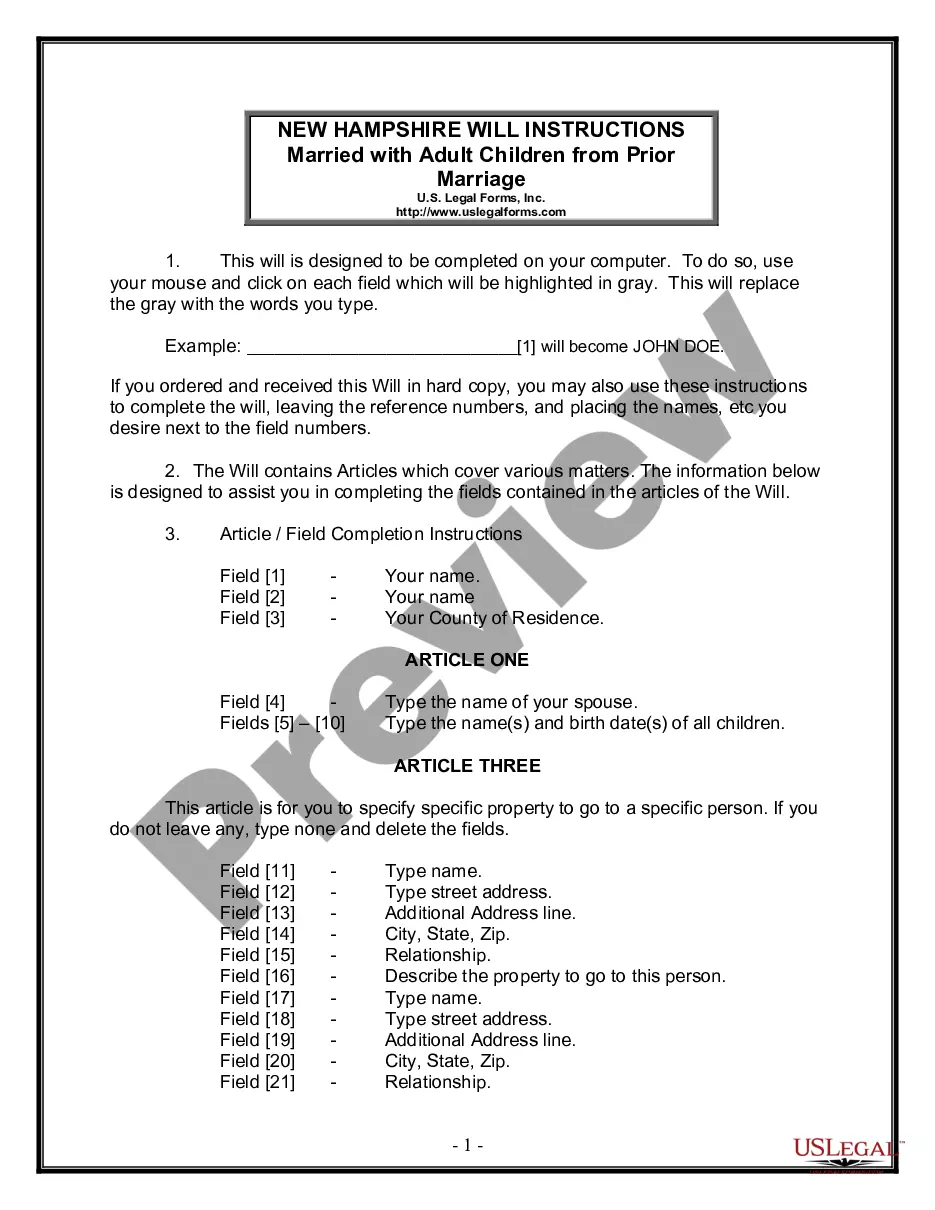
New Hampshire Last Will and Testament
Last Will and Testament documents help clarify asset distribution after death. Attorney-drafted templates are quick and straightforward to complete.
Life Planning Documents Package
PopularA comprehensive estate and life planning package - will, financial POA, healthcare POA, living will directive, guardian declaration, and personal planning worksheets.
Similar documents: key differences
- Will vs. Trust — A will distributes assets after death, while a trust manages them during life and after.
- Formal Will vs. Holographic Will — A formal will is typed and witnessed; a holographic will is handwritten, often less formal.
- Living Will vs. Last Will — A living will states medical preferences during life; a last will governs asset distribution after death.
- Mutual Will vs. Mirror Will — Mutual wills are binding agreements between two parties; mirror wills are similar but do not create an obligation.
Search for more forms
Types of Will forms
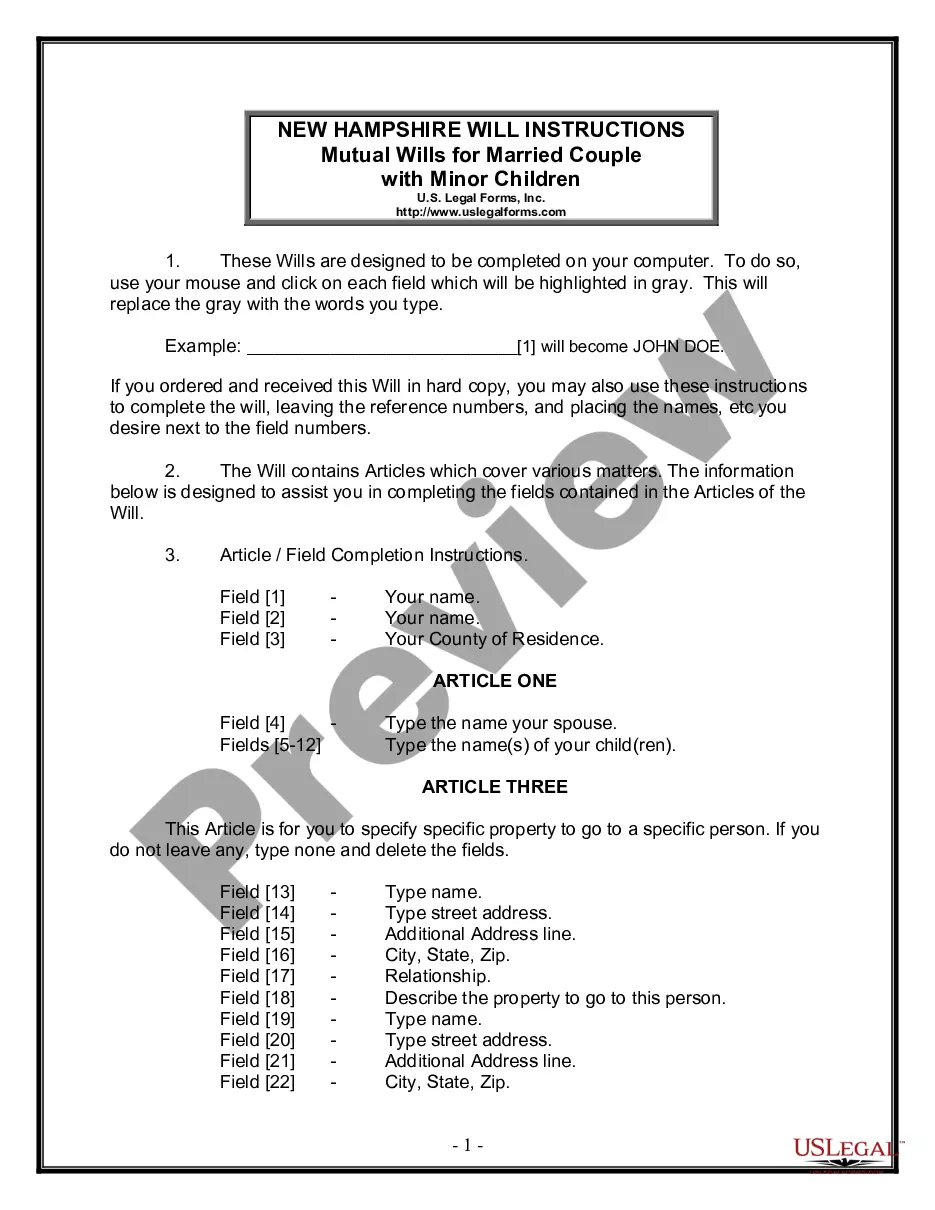
With Minor Children
Ensure your minor children are cared for and your assets are distributed according to your wishes with this comprehensive estate planning document.
With Minor Children (Prior Marriage)
Ensure your minor children from a previous marriage are cared for by creating comprehensive estate plans that reflect your unique family situation.
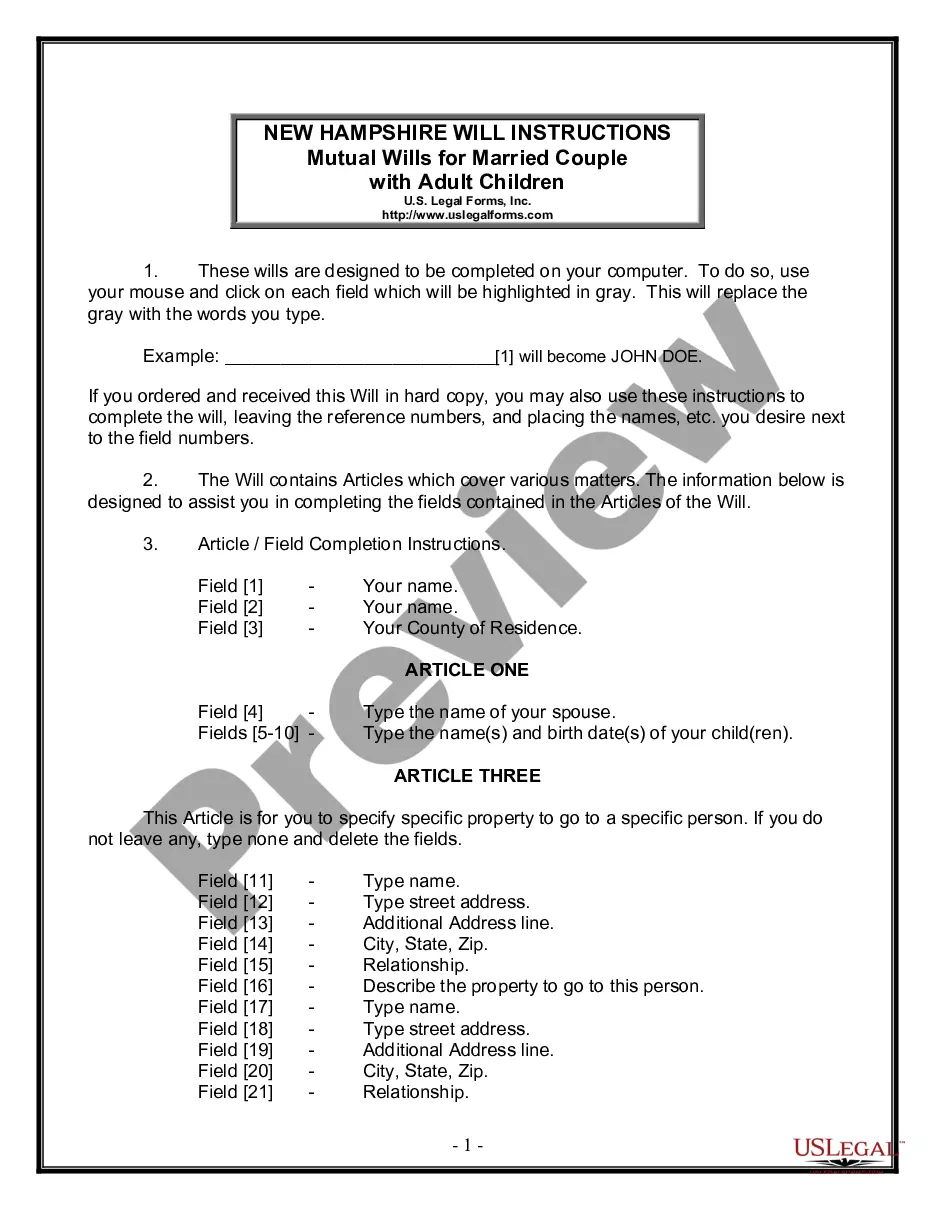
With Adult Children
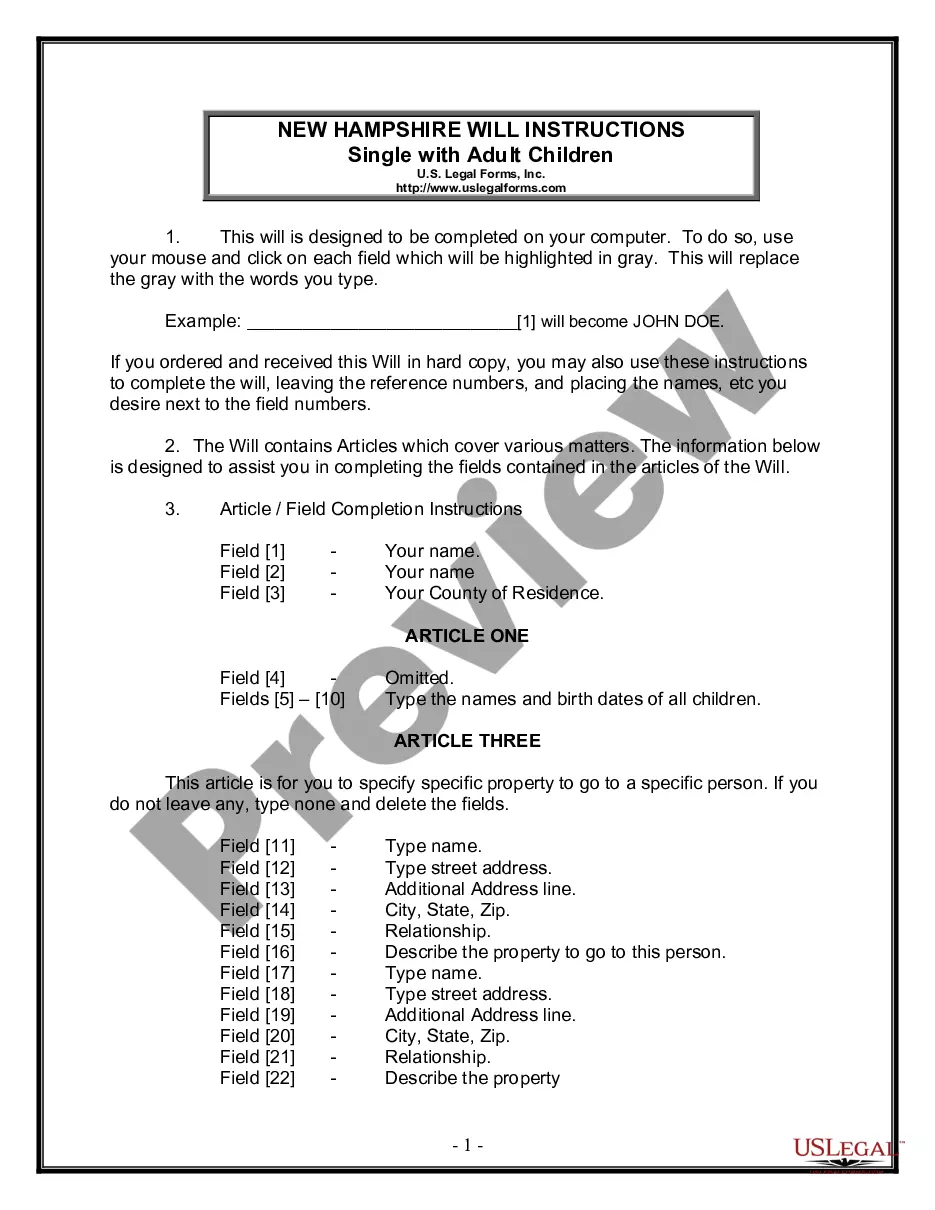
Plan your estate and protect your loved ones by clearly defining property distribution after your death.
With Adult Children (Prior Marriage)
Plan your estate by designating beneficiaries and managing property distribution for a married person with adult children from a prior marriage.
With Adult + Minor Children
Prepare important legal instructions for your loved ones, designating heirs and guardians, while specifying how your assets should be managed and distributed after your passing.
With Adult + Minor Children (Prior Marriage)
Ensure your wishes are clearly defined for your spouse and children, including those from prior relationships.
With No Children
Plan your estate by detailing how your assets will be distributed to your spouse, ensuring your wishes are clearly understood.
Not Married with Minor Children
Create a mutual will to outline the distribution of assets for unmarried partners with minor children.
Not Married with No Children
Ensure your wishes are honored with legally binding wills for unmarried couples without children.
For Civil Union Partner with Minor Children
Provide comprehensive estate planning for your civil union partner and minor children to ensure their future security.
For Civil Union Partner with Minor Children from Prior Marriage
Create personalized estate plans for partners with minor children from previous marriages, ensuring fair distribution of assets.
For Civil Union Partner with Adult Children
Create a legally binding will that outlines how your estate is distributed, specifically tailored for civil union partners with adult children.
For Civil Union Partner with Adult Children from Prior Marriage
Ensure your partner and children are provided for after your passing with a comprehensive estate plan tailored to your civil union.
For Civil Union Partner with Adult + Minor Children
Plan for your partner and children by outlining property distribution and guardianship in case of death.
For Civil Union Partner with Adult + Minor Children from Prior Marriage
Plan your estate and care for loved ones with a customized will that addresses your unique family needs.
For a Civil Union Partner with No Children
Secure your wishes for your partner's future with this essential planning document designed for civil unions without children.
Codicil / Amendment (General)
Modify your existing will with this simple form, ensuring your final wishes reflect your current intentions.
For Other Persons
Create a legally binding document to direct asset distribution upon death and appoint guardians or trustees for minor beneficiaries.
Pour-Over Will (to Trust)
Ensure your assets are transferred to your living trust after death, preventing state laws from deciding their fate.
With Minor Children
Create a plan for your children's future by specifying guardians, making bequests, and ensuring your estate is managed effectively.
With Adult Children
Secure your wishes for your estate and specify who will inherit your property after your passing.
With Adult + Minor Children
Ensure your wishes are honored for your estate and guardianship of your children with a legally binding document.
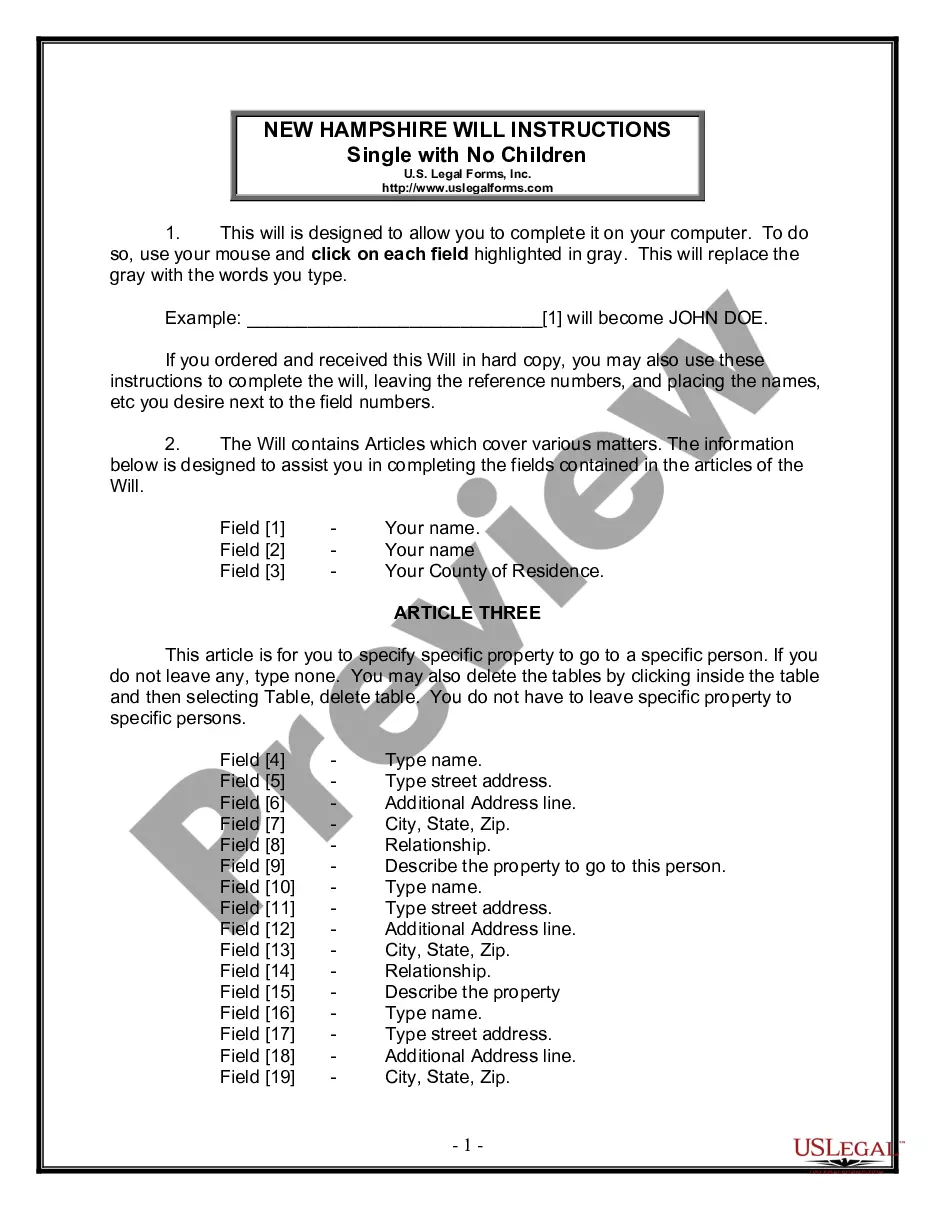
With No Children
Create a simple will tailored for individuals without children, ensuring your assets go where you want them to after your passing.
With Minor Children
Create a legally binding will for yourself as a divorced parent with minor children to ensure your estate is managed and distributed as you intend.
With Adult Children
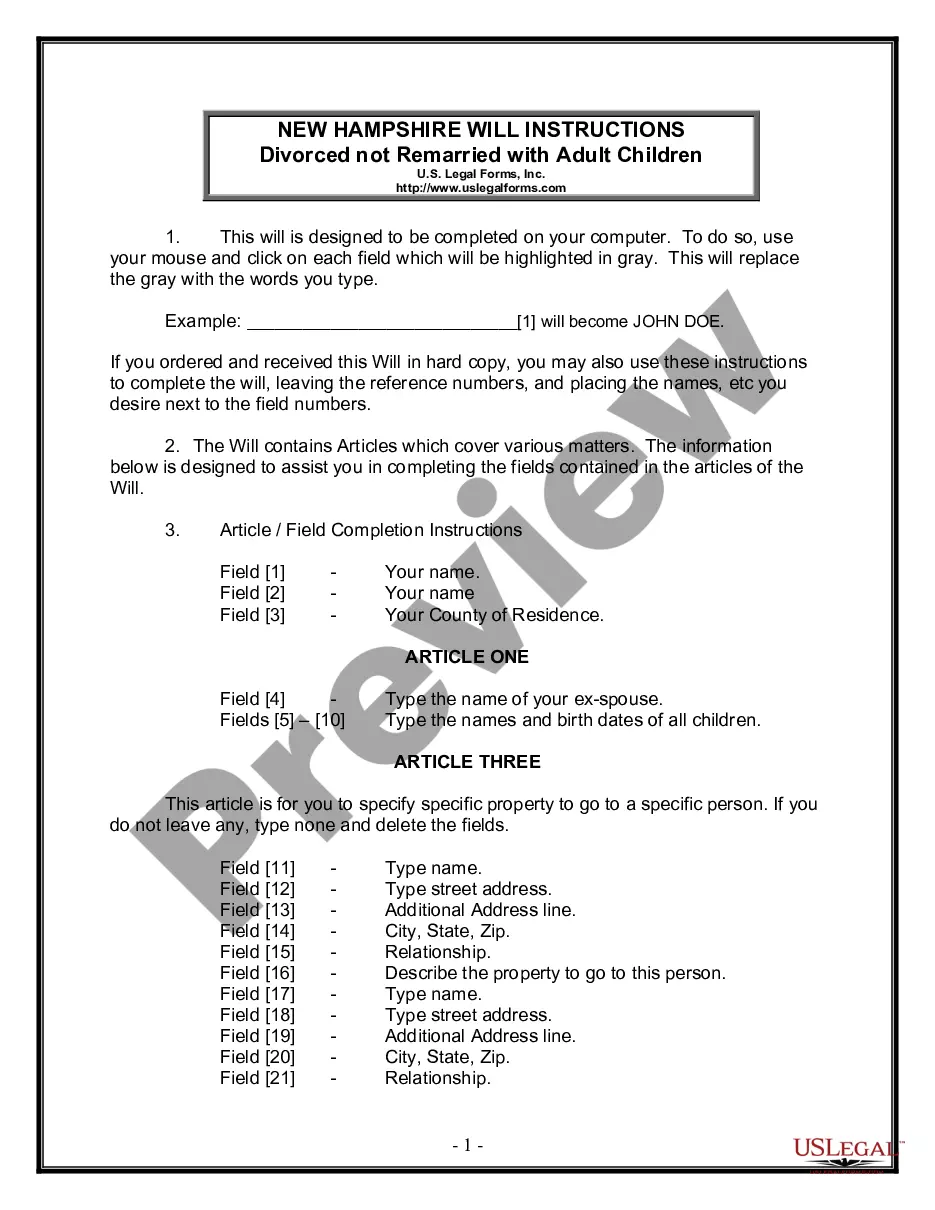
Ensure your property is distributed according to your wishes after passing, especially when you have adult children and have been divorced.
With Adult + Minor Children
Create a comprehensive estate plan while accounting for your divorce and children’s needs.
With Blended Children
Create a comprehensive will tailored for individuals with children from previous marriages, ensuring proper asset distribution and guardianship.
With No Children
Create a legally binding will to outline your wishes for asset distribution after death, specifically suited for divorced individuals without children.
With Minor Children
Create a legal document to ensure your wishes are followed for your minor children and estate.
With Adult Children
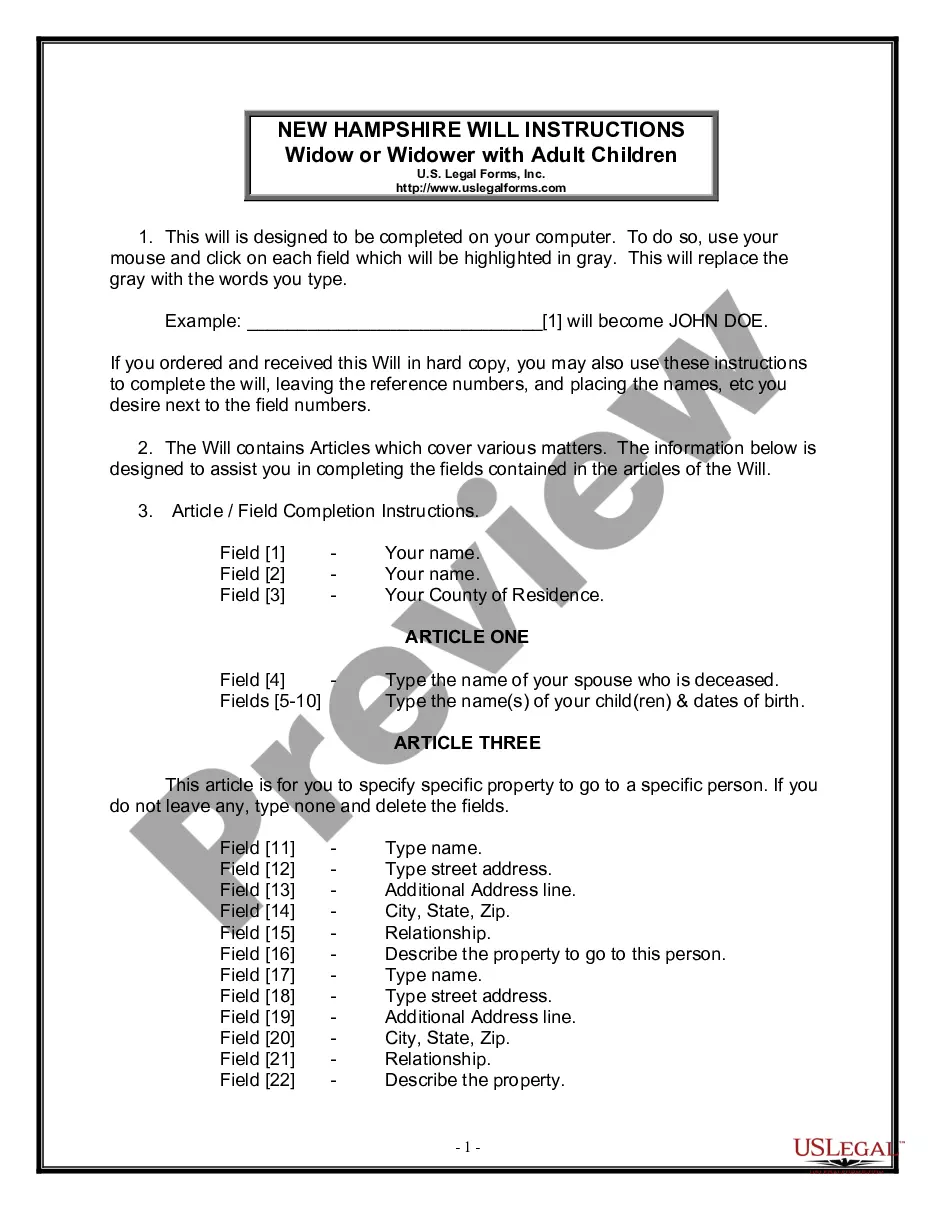
Create a tailored will for a widow or widower with adult children, ensuring your wishes for asset distribution are clearly stated.
With Adult + Minor Children
Prepare a comprehensive estate plan tailored for widows or widowers with both adult and minor children.
With No Children
Create a legally binding will to distribute your assets and appoint a personal representative, ensuring your wishes are honored after your passing.
Common New Hampshire Last Will and Testament documents
- Individual Will — for a single person outlining their wishes after death.
- Pour-Over Will — directs assets into a trust upon death.
- Mutual Will — shared document for couples detailing joint wishes.
- Holographic Will — handwritten will that may not require witnesses.
- Statutory Will — a simplified form that meets state requirements.
FAQs
A trust can offer benefits not provided by a will, like privacy and asset management.
If no will exists, state laws determine asset distribution, potentially not aligning with your wishes.
It's advisable to review your will after major life changes, like marriage or the birth of a child.
Beneficiary designations on accounts may override your will’s directives.
Yes, you can appoint separate individuals for financial and healthcare decisions in your estate plan.
Key legal points
- A Last Will and Testament takes effect after a person dies.
- Wills can be contested in court if there are disputes.
- Witnesses are often required to validate a will.
- Beneficiaries should be clearly named to avoid confusion.
- Updating a will is important after major life events.
How to get started
Begin the process easily with these five steps.
- Find a template or package that suits your needs.
- Review the description, preview, and any signing requirements.
- Access the full template with a subscription.
- Fill it out using the online editor.
- Export or send it by downloading, emailing, mailing, or using e-signature options.
Practical tip
Consider naming a trusted individual as your executor to ensure your wishes are carried out smoothly.